
Jack Kemp (1935-2009)
last updated: August 15, 2012
Please note: The Militarist Monitor neither represents nor endorses any of the individuals or groups profiled on this site.
Affiliations
- Committee on the Present Danger: Former Member
- Jewish Institute of National Security Affairs: Former Member, Board of Advisors
- Foundation for Defense of Democracies: Former Board Chairman Emeritus
- Council on Foreign Relations: Former Co-Chair, Council Task Force on Russian-American Relations
- Townhall.com: Former Contributing Columnist
- International Democratic Union: Former Committee Chair
- Empower America: Cofounder (1993)
- Heritage Foundation: Former Distinguished Fellow, Lecturer
- Hoover Institution: Former Visiting Fellow
Business
- Kemp Partners: Founder, Chairman
- Free Market Global: Former member, Board of Directors
- G2 Satellite Solutions: Former member, advisory board Member
- SmartCOP: Former Board Member
- Oracle: Former Board Member
- Epoch Innovations: Former Board Member
- Hawk Corporation: Former Board Member
- IDT Telecom: Former Board Member
- ING Americas: Former Board member
- Thayer Capital: Former Advisory Board Member
- Thomas Weisel Partners: Former Advisory Board Member
Government
- Department of Housing and Urban Development: Secretary (1989-1993)
- House of Representatives: Republican Congressman for New York (1971-1988)
Education
- Occidental College
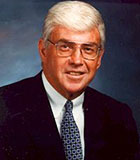
Jack Kemp, who passed away in May 2009, was a member of the U.S. House of Representatives (R-NY) for nearly two decades and was closely associated with the hawkish wing of the Republican Party.
Kemp first rose to national prominence in the 1960s as a quarterback for the San Diego Chargers and later the Buffalo Bills. After retiring from football, he entered politics, becoming a leading figure in the Republican Party for several decades. He represented the area of Buffalo, New York, in the U.S. House from 1971-1988. In 1989, he was given a cabinet post in the administration of President George H. W. Bush, serving as secretary of the Department of Housing and Urban Development.
Kemp was well known for his advocacy of limited taxation and militarist U.S. foreign policies, including waging a broad “war on terror.” He once declared, “Radical Islamists have declared war on freedom, democracy, and modernity. Their weapons are acts of terrorism. We must ask all people who cherish freedom to join us in fighting this war. It must be won and as MacArthur said, ‘There is no substitute for victory.’”[1]
Although a doctrinaire conservative on many foreign policy and social issues, Kemp was known for his efforts to build consensus on U.S. race relations. "Jack Kemp's commitment to public service and his passion for politics influenced not only the direction of his party, but his country," said President Barack Obama after Kemp’s death, adding that Kemp was "a man who could fiercely advocate his own beliefs and principles while also remembering the lessons he learned years earlier on the football field: that bitter divisiveness between race and class and station only stood in the way of the 'common aim of a team to win.'"[2]
Presidential Campaigns
After serving nine terms in the U.S. House of Representatives, Kemp ran for the 1988 GOP presidential nomination. After getting trounced by George H.W. Bush, he was appointed secretary of Housing and Urban Development in the Bush administration. Kemp left government after Bush’s loss in the 1992 election, affiliating himself with a number of rightist think tanks and institutions.[3]
Kemp’s 1988 campaign platform featured starkly conservative stances on economic issues. It also included planks aimed at legitimizing U.S. support for “freedom fighters,” such as the right-wing Nicaraguan Contras, and deploying the “Star Wars” strategic missile defense system. Concerning Star Wars, Kemp once said, “as important as it was to put a man on the moon at the end of the ’60s, it is more important now to defend our country and our allies in Europe and Israel.”[4]
In 1996, Kemp was selected as Sen. Bob Dole’s (R-KS) vice presidential running mate in his failed bid for the White House. Serving as Kemp’s campaign speechwriter was Paul Ryan, then a nascent figure in the Republican Party firmament. During the 2012 presidential campaign, when Mitt Romney chose Ryan—by then a member of the U.S. House from Wisconsin—as his VP running mate, many observers noted Ryan’s connections to Kemp, who served as an important mentor.[5]
In 2008, Kemp served as an economic advisor to 2008 Republican presidential nominee Sen. John McCain (R-AZ). Because of Kemp’s track record as coauthor of the 1981 Kemp-Roth tax-cut legislation (the “Reagan tax cuts”), observers speculated that if elected, McCain would have pursued tax policies in line with Kemp’s views.[6] In a May 2008 column defending McCain’s tax platform, Kemp wrote, “McCain's support for the lower marginal tax rates on capital gains and dividends is on the right side of history, as well as the right side of the electorate—no pun intended.”[7] (Kemp’s 2008 support for McCain contrasts with his opposition to him in 2000, when he told writer Frank Schaeffer, “McCain is a war maker, and I'm a peacemaker, so is George Bush. McCain would be too dangerous as president.”)[8]
Foreign and Defense Policy
Kemp is frequently associated with hawkish U.S. overseas policies, having been a stalwart Cold Warrior, a supporter of the Nicaraguan Contras, and a member of numerous militarist advocacy groups during his political career. However, during the lead up to the 2003 U.S.-led invasion of Iraq, Kemp was reluctant to see the United States use military force, writing in early 2003 that “it would be a tragedy if a few War Hawks pushed us into an unnecessary invasion and occupation of an Arab country.”[9]
After the invasion, Kemp was largely supportive of the Bush administration’s efforts in Iraq and the “war on terror” more broadly, generally limiting his criticisms to the economic realm. In 2006, he explained, “My most serious problem is that there is no economic component to the war on terror. … I think we should be building on President Bush’s idea of a trade zone in the Islamic world, but there has to be aid and some type of hope that life can be better for women, their children, families and, as the general [Peter Pace] pointed out, some economic component that will lead to jobs and an opportunity to better one’s life.”[10]
Until his death, Kemp remained closely tied to policy circles through numerous board and think tank positions, as well as his lobbying and consulting firm, Kemp Partners. The firm counted among its major clients Rafael Armament Development Authority, an Israeli manufacturer of missile defense systems and unmanned aircraft.[11]
Kemp was a member of the revived version of the Cold War-era Committee on the Present Danger and served on the board of advisors of the neoconservative-aligned Jewish Institute for National Security Affairs, which promotes strategic cooperation between the United States and Israel on a variety of defense issues.[12] He also was a fellow at the Heritage Foundation and Hoover Institution[13]; served on the board of the Foundation for Defense of Democracies, a neoconservative think tank founded by Clifford May shortly after the September 11, 2001 terror attacks[14]; and was chairman of the Domestic Policy Committee of the International Democratic Union, “a worldwide organization of political leaders of the ‘center-right,’ dedicated to advancing the cause of democracy, freedom and free market economics.”[15]
In 2005, he became co-chair (with John Edwards) of the Council on Foreign Relations’ Task Force on Russian-American Relations, which focused mainly on exploring security and energy issues between the two superpowers.[16] Task force members came from across the political spectrum and included Lorne Craner of the International Republican Institute, Dov Zakheim of contractor Booz Allen Hamilton, and Michael McFaul of the Hoover Institution. In 2006, the task force concluded that“U.S.-Russian relations are clearly headed in the wrong direction.” “Contention is crowding out consensus,” the report declared. “The very idea of a 'strategic partnership' no longer seems realistic.”[17] Commenting on the report, Kemp told the Inter Press Service, “On a whole host of issues—Iran, energy, HIV/AIDS, and preventing terrorists from acquiring weapons of mass destruction—it's vital to have Russia on our side.”[18]
Kemp cofounded the pro-free market Empower America in 1993 with fellow conservatives William Bennett and Jeanne Kirkpatrick. The group, whose activities included launching the pro-war pressure group Americans for Victory over Terrorism, was later merged with Citizens for a Sound Economy and renamed FreedomWorks, a Tea Party-affiliated group that has played an important role promoting right-wing Republican candidates. The group’s reputation, and Kemp’s, was tarnished in 2007 when FBI agents investigating fraud in the U.N. oil-for-food program in Iraq interviewed Kemp about his ties to lobbyist and oil businessman Samir Vincent. Vincent, who pled guilty to violating U.S. sanctions on Iraq, was listed in a FreedomWorks press release as a member of a committee Kemp had formed to develop a “21st century Marshall Plan” for economic development in the Middle East.[19]
Business and Other Interests
Kemp successfully leveraged his Washington connections to promote numerous business ventures. “I introduce companies to people who have access to capital,” he told the New York Times in 1999. “I'm involved in start-ups, in speed-ups. While I don't consider myself an expert, I can open doors and make introductions.”[20] As the Times reported, “Financiers say Mr. Kemp's advice is invaluable. ‘Only recently has Silicon Valley realized government exercises a big role,’ said Joseph G. Fogg 3rd, a venture capitalist and Empower America board member.” That board, the Times reported, was “filled with top names in private equity.”[21] Among the boards that Kemp sat on were Oracle, Hawk Corporation, Free Market Global, and G2 Satellite Solutions.[22]
Born in Los Angeles, Kemp made large donations to Pepperdine University, a Christian school where his late brother served on the Board of Regents, to found the Jack F. Kemp Institute for Political Economy. As the institute’s nascent website describes it, “The Pepperdine School of Public Policy's unique commitment to American democracy, free markets, and Judeo-Christian values makes it a fitting home for an important part of the Kemp legacy.”[23]