
Danielle Pletka
last updated: September 7, 2015
Please note: The Militarist Monitor neither represents nor endorses any of the individuals or groups profiled on this site.
Affiliations
- American Enterprise Institute: Vice President, Foreign and Defense Policy Studies
- Project for the New American Century: Signatory, PNAC Statements and Letters
- Committee on the Present Danger: Member
- Coalition for Democracy in Iran: Supporter
- NGO Watch: Researcher
Government
- Senate Committee on Foreign Relations: Senior Professional Staffer for Near East and South Asia (1992-2002)
- Task Force on the United Nations: Member
Business
- Insight Magazine: Staff Writer (1987-1992)
- Los Angeles Times: Editorial Assistant, Jerusalem (1984-1985)
Education
- Johns Hopkins University, SAIS: M.A.
- Smith College: B.A.
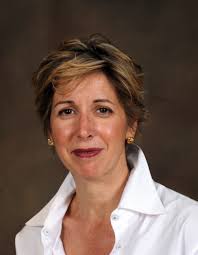
Danielle Pletka is the vice president of foreign and defense policy studies at the neoconservative American Enterprise Institute (AEI). A long-standing advocate of militaristic U.S. foreign and defense policies, Pletka worked as a reporter for Insight Magazine during the George H.W. Bush administration and served as a member of the staff for the Senate Foreign Relations Committee during the Clinton administration. Pletka joined AEI in 2002, shortly after some two dozen AEI fellows and associates were tapped to serve in the George W. Bush administration.[1]
Pletka has supported the work of numerous hawkish advocacy groups. In 2002 and 2003 she signed letters to President George W. Bush and two statements on post-war Iraq produced by the neoconservative Project for the New American Century (PNAC), a now-defunct advocacy group closely associated with AEI that helped rally Beltway support for the war. She was one of a small group of prominent supporters of the now-defunct Coalition for Democracy in Iran, a pro-regime-change activist group that operated out of the office of former AIPAC director Morris Amitay. Pletka has also been a member of the Committee on the Present Danger, a 1970s-era anti-communist pressure group that was re-constituted after the 9/11 attacks to pressure the United States to wage a broad “war on terror.”
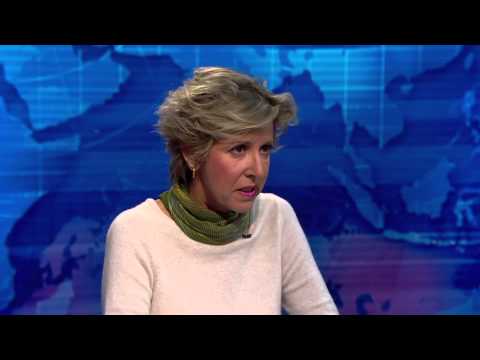
In May 2015, Pletka spoke positively of the candidacy of hawkish Sen. Marco Rubio (R-FL)—who has been advised by several neoconservative activists—for the 2016 GOP presidential nomination, telling Bloomberg: "I like Marco Rubio a lot, but I'm a very unusual person—I care first and foremost about foreign policy. Many Americans believe the Senate doesn't prepare a person to be president, and there are very, very few single issue voters, especially on foreign policy."[2]
Criticisms of Obama Administration
Plekta is a vociferous advocate of an aggressive U.S. foreign policy and has been a strident critic of the Obama administration's comparative reluctance to commit U.S. troops overseas. Pletka has even sought to embellish a common neoconservative trope likening any skeptic of launching a new war to Neville Chamberlain, the British prime minister who sought to "appease" Hitler diplomatically.
In a 2014 op-ed for FoxNews.com titled "Appeaser in Chief," Pletka likened the Obama to Chamberlain's predecessor, Stanley Baldwin, whom Pletka called a "midget of history" and accused of "placat[ing] Hitler for purely cynical reasons: because he sought political benefits from a war weary England." Charging the Obama administration with "wooing" the "murderous" Taliban, "argu[ing] for Tehran," and abandoning a pledge to intervene in Syria's civil war, Pletka concluded by accusing the administration of serving "their own domestic political aims at the expense of mankind."[3]
When reports emerged in October 2014 that a senior Obama administration official had called Israeli Prime Minister Benjamin Netanyahu “chickenshit” for his efforts to goad the United States into war with Iran, Pletka blasted the White House for not accommodating Israel. “The fact that American officials believe it is more advantageous to have a nuclear Iran than to have someone in power in Israel who will not kowtow to the US president says something about the fundamental rot at the core of the Obama administration, its contempt for the national security of the American people—who are at terrible risk from an Iranian nuclear bomb—and the vileness of the cowards and chickenshit officials who people the fiefdom of Barack Obama,” said Pletka, mischaracterizing the status of Iran’s nuclear program as being geared towards building nuclear weapons.[4]
Following Russia's 2014 intervention in Ukraine's civil unrest, Pletka argued that the United States should impose sanctions, isolate Russia, and sell natural gas to Ukraine and Europe as a way of offsetting Moscow's influence. But she claimed that such measures were likely to be ineffective because of Obama's perceived weakness. During anappearance on CNN's Crossfire, Pletka complained: "At the end of the day what we’re going to need is credible American leadership, and unfortunately for the president it’s that word—'credible'—where he has a real deficit.… That's the problem that he has from situation to situation, whether it's in Russia, whether it's Ukraine, whether it's China, whether it's Syria—wherever we see him, he just doesn't have what it takes to be taken seriously by foreign leaders."[5] Her argument, however, drew derision from observers: "Shocking as it may seem," countered one writer from the Guardian, "sometimes countries take actions based on how they view their interests, irrespective of who the U.S. did or did not bomb."[6]
On Iran
Pletka has frequently denounced pursuing diplomatic engagement with Iran. "Any opening from the United States will only lend credibility to that government and forever dash the hopes of a population that, according to reliable polls, despises its own leadership," she argued in a Los Angeles Times op-ed. "We have seen that engagement with the current leadership of Iran would not achieve policy change; all it would do is buy an evil regime the time it needs to perfect its nuclear weapons and to build a network of terrorists to deliver them."[7]
In September 2006, Pletka made it clear that she would support military action to prevent a nuclear-capable Iran: "We have talked about talking for long enough; there must be other options. If those options are unavailable to those most threatened by a nuclear-armed Iran (that is, the American people), then the likelihood of war becomes ever greater. It is not wise to force America into a choice between doing nothing and doing everything. But it may come to that.”[8]
In November 2014, after negotiations between Iran and the P5+1 group of nations were extended, Pletka argued it was a good time for Israel to attack Iran. “Will Israel invade Iran? Now is the time,” Pletka wrote for the American Enterprise Institute. “It’s not as if the Iranians will be ready: Troops in Iraq; troops in Syria; proxies in Syria; Hamas in trouble. This is the window. Who knows what Jerusalem will do.”[9]
After the successful conclusion of negotiations between Iran and the P5+1 over a nuclear deal in July 2015, Pletka again went on the offensive, breathlessly arguing that it was “the worst-constructed deal I could imagine” and claiming that it codified “Iran’s march toward a sophisticated nuclear weapons capability.”[10] She called for Congress to pursue every possible path to prevent the deal from being implemented, including preventing President Obama from appointing new ambassadors. In an August 2015 opinion piece, she wrote:
“What to do? Vote the Iran Deal down. Tell the president what a deal should look like. What if the vote is lost or the veto not overridden? Enshrine the terms of the deal in legislation. Enshrine the president’s promises in legislation. Ensure any violation will reimpose sanctions. Go hammer and tongs after Iran’s support for terrorism, human rights violations and efforts to destabilize the Middle East. There are dozens of options available, and if the president doesn’t like them, let him veto those too. Start withholding funds for the president’s initiatives on issues anathema to American interests. Stop confirming ambassadors. Sit on foreign assistance programs. These are the tools of congressional power. They shouldn’t be used wantonly, but they should be used.”[11]
Use of Anti-Semitism Slur
Pletka has a track record of calling people she disagrees with “anti-Semitic.” For instance, in May 2004, she told a Washington Post reporter: “I think the phrase 'neocon' is much more popular among people who think it shields their anti-Semitism. But it doesn't.”[12]
In January 2013, Pletka joined a campaign orchestrated by a number of “pro-Israel” writers like William Kristol to prevent the confirmation of former Sen. Chuck Hagel (R-NE) as defense secretary for Obama's second term. The nomination was heavily criticized by many foreign policy hawks in part because of the senator’s criticism of the Iraq war and denunciation of the influence of the Israel lobby in Washington. In an op-ed for USA Today, Pletka wrote that the nominee exhibited “troubling hints of anti-Semitism,” a claim that was repeated by many neoconservatives but which was firmly contradicted by a variety of sources both in Israel and the United States. She wrote: “Hagel has decried ‘intimidation’ by the ‘the Jewish lobby’ in Washington. Taken in the context of other positions—including one incident in which Hagel was the only member of the Senate to decline to sign a letter urging action against rising anti-Semitism in Russia—and in light of his consistent willingness to downplay the threat posed by terror groups Hamas and Hezbollah, it is not unreasonable to ask whether Senator Hagel has a problem with Jews and the Jewish state.”[13]
Support for Torture
Pletka has also argued that torture, while distasteful, is an acceptable practice in the war against terrorism. "I'm not a big fan of torture. Unfortunately, there are times in war when it is necessary to do things in a way that is absolutely and completely abhorrent to most good, decent people," she told the BBC in 2005. "If it is absolutely imperative to find something out at that moment, then it is imperative to find something out at that moment, and Club Med is not the place to do it.”[14]
After a highly anticipated Senate Intelligence Committee report detailing the use of torture by the CIA was released in December 2014, Pletka spoke against prosecuting individuals associated with the abuses. “So, what to do?” Pletka asked. “It has become the norm to act based on false reports; to close fraternities because of rapes that may or may not have happened; to release terrorists because it is inconvenient to keep them.”[15]
She added: “The next step should be to consign [Sen. Diane Feinstein’s] partisan screed to the ashbin of history, to reread the Obama Justice Department’s 2012 decision not to prosecute CIA officials for alleged interrogation transgressions, to double down on our own commitment to the rule of law, and to remember that America has real enemies from Yemen to Mali, from Iraq to Syria, from Sinai to Gaza and beyond.”[16]
Neoconservative Creds
Pletka has helped promote numerous neoconservative agenda items, particularly concerning the “war on terror” and the war in Iraq. For instance, in 2006 Pletka helped establish AEI's "Iraq Planning Group," a panel led by AEI scholar Frederick Kagan and Gen. Jack Keane that successfully promoted the controversial “surge” in Iraq. In January 2007, the group released a report that recommended, among other suggestions, that at least 50,000 more U.S. troops be sent to Iraq. In an event marking the report’s release and attended by the likes of Sen. John McCain (R-AZ) and Sen. Joe Lieberman (I-CT), Pletka argued that the United States must stay in Iraq until “victory” is achieved, adding: “Like the war, hate the war, believe in it or not, America is now in Iraq, and we must win. It is as simple as that, because the price of failure is not ignominy for George W. Bush or egg on the face of Dick Cheney, it is the victory of terrorists and their sponsors and the creation of a national homeland for extremists bent on killing Americans.”[17]
The goal of the AEI planning group was to determine how Washington might emerge from Iraq with a win: "The suggestion that victory was unachievable was dismissed from the outset. The idea that the world's greatest economic, political, and military force with more than a million men and women under arms can be trounced by the likes of al-Qaida in Iraq and Iranian-sponsored Shiite fire breathers is ridiculous. We can lose only if we choose to do so," Pletka said.[18]
Pletka even accused the Bush administration itself of falling short in the war on terror. "The Bush revolution has indeed lost its energy," she wrote in October 2005. "The evidence is widespread and disturbing. Whether on the question of Iranian nuclear proliferation, Iraqi constitution-building, or Libyan dictatorship, the rhetoric retains its ring, but it does not resonate through the Department of State, let alone through the region.”[19] Later that year, she complained that "The commitment of the enemy is hardly matched by the commitment of the United States to counter him. True, the United States is engaged in Iraq. Yes, an unprecedented effort has gone into public diplomacy. But how does the West combat Islamic extremism? U.S. officials confronted with the question hem and haw uncomfortably. They mention the 'freedom agenda' and the spread of democracy; and while democracy is indeed the long-term solution to the problem of radical Islam and the appeal of Islamic extremist groups, the problem faces us now. A short-term solution is needed to partner with the long term one.”[20]
The CIA, along with the State Department, came under repeated attack by Pletka, as well as from other neoconservatives who claimed that the agency was playing down intelligence that could be used to justify an attack on Iran. "There are challenges ahead in Iran, North Korea, China, and in the war on terror," warned Pletka in February 2006. "No matter how those issues play out, the American people should be certain that their democratically elected leaders are making decisions based on unbiased intelligence. They won't get that from today's CIA.”[21]
Like many of her neoconservative contemporaries, Pletka was a fervent supporter of Ahmed Chalabi, the chairman of Iraqi National Congress, a U.S.-financed organization that worked closely with the Bush foreign policy team in making the case for the U.S. invasion of Iraq. When the U.S. government began distancing itself from Chalabi in part because of his controversial actions in Iraq, Pletka rose to his defense. Writing in the Los Angeles Times, Pletka called the U.S. government "a faithless friend" and concluded that Washington's agencies, namely the CIA and the State Department, were "more concerned with carrying out vendettas than with pursuing the real enemies of the United States." According to Pletka, Chalabi was one of the "all too few Iraqis who were willing to risk life and limb to topple Hussein; and there were even fewer who believed in Western democratic values."[22]