
Josh Block
last updated: September 26, 2018
Please note: The Militarist Monitor neither represents nor endorses any of the individuals or groups profiled on this site.
Affiliations
- The Israel Project: CEO and President
- Progressive Policy Institute: Senior Fellow
- Truman National Security Project: Fellow, Class of January 2009
- American Israel Public Affairs Committee: Former Spokesperson
- Gore/LiebermanCampaign: Communications Director for Florida
- Clinton/Gore Campaign: Press Secretary
Government
- State Department: Former Spokesperson, USAID
- Office of Senator Edward M. Kennedy: Former Press Aide
Business
- Davis-Block LLC: Partner
- Direct/IMPACT: Former Head
Education
- Brandeis University: B.A.
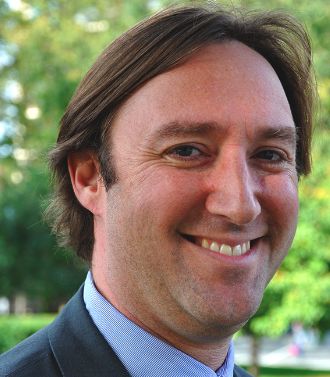
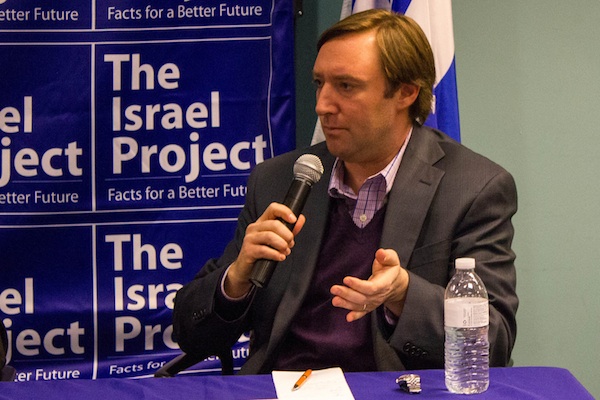
Josh Block is the CEO and president of The Israel Project(TIP),[1]a Washington- and Jerusalem-based lobbying organization that provides “pro-Israel” talking points to journalists and the public with the goal of giving a “more positive public face” to the country.[2]He previously worked for a number of hawkish lobby groups in the United States, including serving as a spokesperson for the American Israel Public Affairs Committee(AIPAC) and as a fellow at the hawkish, Democratic Party-aligned Progressive Policy Institute.[3]
Commenting on Block’s hire at TIP in 2012, the Jewish daily Forward opined: “Block’s reputation as a pro-Israel bulldog seems to stand in stark contrast to that of [former president Jennifer Laszlo] Mizrahi, who chose mostly to engage with journalists and policymakers rather than fight with them.”[4]
Leading TIP
In 2018, Block received public attention when a discussion he had with the Jewish Funders Network (JFN) was published in an online forum. He told the group, “TIP was founded in 2002 based on the recognition that ‘they who control the media, define the narrative—and they who control the narrative secure the outcomes they desire.’ What is ‘MEDIA’ today? Much has changed about where people get information and how they absorb it—but recent political and other events underscore the shift in media and the power it possesses to affect real world outcomes. What is the value of helping define the topography of truth? When Putin says ‘there are no Russian troops in Ukraine’ and it is reported and repeated, does it eventually become true?”[5]
Journalist Eli Clifton commented, “Although Block’s message to the JFN contains no mention of providing factual information and actively promotes TIP’s efforts to hide their involvement in pro-Israel messaging, he insisted to LobeLog that his plan was intended as pushback against the promotion of ‘fake news,’ such as Putin’s lying about Russian troops in Ukraine or Pizzagate.”[6]
Block said: “Citing Putin repeating falsehoods is a point of concern and contrast, underscoring the dangers of a world in which factually false information repeated, on TV, in print, online, can too often come to define reality for too many people. It’s not just Putin, recall the horrors of Pizza-gate and so many other examples. It is a point of contrast for the ideas—the opposite of inspiration. Dismay and alarm at such a terrible trend motivates me to highlight for those with financial means the importance of investing in existing or new media platforms and outlets where the barrier to entry is lower than ever, and of providing ownership that believes in the importance of preserving the topography of truth, of fact-based reporting and content, and the ability to engage audiences with credible information of substance and relevance to their lives.”
Clifton concluded, “The words ‘fake news’ and ‘facts’ weren’t used in Block’s message to the JFN. ‘Truth’ was only contained in Block’s repeated use of the phrase, ‘defining the topography of truth.’”[7]
Block has also opened himself to criticism as being hypocritical when advancing his agenda. For example, in 2011, when discussing the Iranian outcast group the Mojahedin-e Khalq (MEK), Block said, “The MEK is a terrorist organization. Right? Let’s not kid ourselves.” Yet in 2016, journalist Ali Gharib pointed out that “[T]he Israel Project (TIP), which featured Maryam Rajavi (the leader of the MEK) in an online video earlier this month denouncing the Iranian elections, gets no pass on using the MEK as a bludgeon against Iran. That’s because the Israel Project knows damn well what Rajavi and the MEK are.[8]
Block steered TIP away from the global focus it maintained under its former president and toward a more parochial, Washington-centric approach. “There exists today,” Block said shortly after taking over the organization, “a well-coordinated and financed, albeit fringe, echo chamber of organizations and individuals ranging from anti-Zionist conspiracists and apologists for Iran, and [for] terrorists like Hamas and Hezbollah, to anti-Israel advocates and those hypocritically and relentlessly critical of Israel, seeking to spread and mainstream distortions and misinformation in pursuit of their misguided and often hostile agenda.” TIP, Block added, “blunts the spread of false, malignant, even anti-Semitic claptrap.”[9]Block has been a leader in conflating criticism of and action against Israeli policies with anti-Semitism. As an example, in 2017, Block waded into a passionate debate about a bill in Congress which would penalize any American who participated in boycott campaigns against Israel sponsored by international governmental organizations such as the United Nations or European Union. Crucially, the bill would include Israel’s West Bank settlements in its definition of Israeli territory.[10]
Jamil Dakwar, the Director of the American Civil Liberties Union’s Human Rights Program, tweeted about the bill, “Israeli leaders exploit horrible acts of anti-Semitism to encourage Jews to move to Israel. Judaism ≠ Zionism Anti-Zionism ≠ Anti-Semitism.”[11]
Block, writing inThe Hill, responded, “Mr. Dakwar is wrong, and his tweet is anti-Semitic.” Citing statements by U.N. Secretary-General Antonio Guterres—who stated that “denial of Israel’s right to exist is anti-Semitism”—and Jonathan Greenblatt—the CEO of the Anti-Defamation League, who has frequently been accused of using spurious accusations of anti-Semitism to defend potentially criminal Israeli actions[12]—Block continued bombastically, “[I]t is appalling to see one of the longest-standing and most venerated civil rights organizations in our country’s history disseminating misinformation, fomenting anti-Semitism and lauding hatemongers.”[13]
Under Block’s leadership, The Israel Project has engaged directly in divisive partisan battles in Washington, sometimes staking itself in opposition to the White House. For example, when Block derided future Secretary of Defense Chuck Hagel’s “realist” views on Iran as “well outside the mainstream” during Hagel’s confirmation battle, a former administration official familiar with TIP remarked that Block’s confrontational style “calls into question what the role of TIP is, could be and should be.”[14]
Block opposed the Obama administration’s 2013 negotiations with Iran, arguing in favor of increasing sanctions even while talks are underway[15]and warning that any agreement that allows Iran to peacefully enrich uranium on its own soil—a right under the Nonproliferation Treaty—would be an “unacceptable outcome.”[16]In 2017, Block supported U.S. president Donald Trump in his singling out of Qatar for opprobrium for being “a financier of terrorism.” Block took no notice of the fact that Trump leveled this accusation in Saudi Arabia, which has frequently been implicated in much wider financing of terrorism. Presumably, the fact that the Palestinian militant group, Hamas is a prominent recipient of Qatar’s funding is significant to Block.
Doubling down on that apparent contradiction of standards, Block continued, “Western leaders have largely turned a blind eye to Qatar’s abysmal human rights record at home and malevolent behavior abroad. This is partly due to the significance of the al-Udeid air base, from which nearly all coalition airstrikes against Islamic State are being conducted. But there may be more costs to our ongoing partnership with Qatar than benefits. Now that our allies are publicly breaking with the Gulf state, Washington should put pressure on the government in Doha to pick a side. Qatar has gotten away with its opportunistic, two-faced foreign policy for too long.”[17]
Block often uses ad hominem attacks—sometimes on individuals, other times on governments he dislikes—to make his case. In a 2016 exchange with a producer for Voice of America, Block expressed hostile views about a noted and respected Palestinian journalist. “Rula Jabreel (sic) is a crazy person will not (sic) real legitimacy,” he wrote. “The challenge here is to find someone not strident who wants to fight with a slanderous anti-Semite and doesn’t worry about imparting their credibility to a non-entity like her.”[18]
In a 2015 tweet, Block said of Iran, “They want to dominate & enslave every man, woman and child they can reach w/ their nuclear terrorist totalitarian regime.”[19]
Block has also taken aim at professional diplomats, accusing State Department desk officers in late 2013 of being “Arabists” who “make a career of representing their clients. … You’ve got an inbred kind of industry in the foreign policy establishment and in the dialogue is [sic] fomenting a perspective that is not sympathetic to Israel.”[20]
Ali Gharib, a former ThinkProgress blogger whom Block once wildly accused of anti-Semitism, observed that “Block’s accusations about State employees who push Arab states’ interests—so called ‘Arabists’—are not new; they’re a hallmark of right-wing, pro-Israel attacks on American diplomats for what’s seen as hostility to Israel in the professional Foreign Service. … But Block took it a step further in describing Arab states as the ‘clients’ of American Foreign Service Officers; that is, these U.S. diplomats are actually working for the Arab states.”[21]
When he came under fire from current and former Foreign Service officers, Block tweeted a half-hearted apology for the remark, claiming that he had been attempting to paraphrase Francis Fukuyama‘s quip about the so-called State Department “Arabists”—which, Gharib observed, was not substantially different. Fukuyuma, Gharib quoted, referred to the diplomatic corps’ Arab specialists as “an elite within an elite, who have been more systematically wrong than any other area specialists in the diplomatic corps. This is because Arabists not only take on the cause of the Arabs, but also the Arabs’ tendency for self-delusion.” Gharib concluded of Block, “One would think a pro-Israel activist might be self-aware enough to not make baseless accusations that others are dedicated to promoting the interests of foreign countries, but one would be wrong.”[22]
Feud with CAP
Block—who also served as a USAID spokesman during the Clinton administration and co-founded with Lanny Davis the public affairs firm Davis-Block LLC—earned his “bulldog” reputation in part as a result of his efforts to smear critics of Israel and one-sided U.S. support for the country as “anti-Semitic.”[23]
Block was at the center of an important debate in Democratic Party circles that erupted in December 2011 after the publication of an article by Politico’s Ben Smith that contended that some Democratic-allied organizations were diverging from the party’s standard “pro-Israel” line. Smith wrote, “The Center for American Progress [CAP], the party’s key hub of ideas and strategy, and Media Matters, a central messaging organization, have emerged as vocal critics of their party’s staunchly pro-Israel congressional leadership and have been at odds, at times, with Barack Obama’s White House, which has acted as a reluctant ally to Benjamin Netanyahu’s Israeli government.”[24]
Block served as the key source for Smith’s piece[25]and was quoted in the story claiming that some CAP writers at the think tank’s blog, ThinkProgress, were “borderline anti-Semitic”: “There’s two explanations here—either the inmates are running the asylum or the Center for American Progress has made a decision to be anti-Israel. … Either they can allow people to say borderline anti-Semitic stuff and to say things that are antithetical to the fundamental values of the Democratic Party, or they can fire them and stop it.”[26]
A day after Smith’s story broke, Justin Elliott at Salon.com revealed that Block pushed the Politicostory on a neoconservative listserv, urging the writers on the listserv to “AMPLIFY” that article and reiterating his claim that the CAP writers were anti-Semitic. Wrote Block: “This kind of anti-Israel sentiment is so fringe it’s [sic] support by CAP is outrageous, but at least it is out in the open now—as is their goal—clearly applauded by revolting allies like the pro-HAMAS and anti-Zionist/One State Solution advocate Ali Abunumiah [sic] and those who accuse pro-Israel Americans of having ‘dual loyalties’ or being ‘Israel-Firsters’—to shape the minds of future generations of Democrats. These are the words of anti-Semites, not Democratic political players.”[27]
Some observers speculated that Block and Smith intended for the Politicostory to lead to the marginalization of various Israel critics in Democratic Party establishments like CAP and Media Matters. However, Block’s flagrant and disingenuous use of the “anti-Semitic” tag to smear establishment outlets led to a severe backlash in party circles. In a follow-up piece by Smith, Block attempted to deny that he accused CAP of anti-Semitism, stating: “I’ve been accused of leveling the charge of anti-Semitism against the Center for American Progress. That is not true, and suggesting so is an attempt to distract from what I am actually saying.” He added: “As a progressive Democrat, I am convinced that on issues as important as the U.S.-Israel alliance and the threat posed by Iran’s nuclear program, there is no room for uncivil discourse or name calling.”[28]
Block’s business partner, former Clinton adviser and staunchly “pro-Israel” Democrat Lanny Davis, also distanced himself from Block, telling Eli Clifton of ThinkProgress: “I respect Josh Block but I 100 percent disagree with much of his language. People can disagree about Israel’s policies without being anti-Semites. In fact I think it’s a terrible mistake to blur the two. … Impugning motives of people at the Center [for American Progress] and impugning [that] those motives are driven by anti-Semitism is, in my opinion, wrong.”
Commented the Inter Press Service’s Jim Lobe, who was mentioned in the original Politicostory as the producer of a blog that publishes some of the CAP writers targeted by Block (including Eli Clifton and Ali Gharib), “That’s exactly what the neoconservatives and the right-wing leadership of the Israel lobby have been trying to do for the past decade: conflating criticism of Israel with anti-Semitism. While some that criticism is indeed motivated by anti-Semitism, most of it is directed at specific policies pursued by the Israeli state (a political entity and actor); not because the Israeli leadership is Jewish (whether defined culturally, religiously, ethnically, or racially). The ability to play the anti-Semitic card is perhaps the single strongest weapon in the lobby’s arsenal of arguments. … and the fact that Lanny Davis, a not insignificant member of the lobby establishment, is now calling for everyone to use that deadly epithet with much greater care and discrimination seems quite remarkable, particularly in these circumstances.”[29]
Regarding Block’s role in the episode, Philip Weiss of the blog Mondoweiss opined: “Josh Block, once an eminent member of the self-claimed progressive pro-Israel establishment, has been revealed as a sleaze-merchant working with neocons and has had to hobble off the field. I wonder how long his association with the Progressive Policy Institute and Lanny Davis will last. … Most importantly, the Israel critics inside Democratic Party thinktanks are more entrenched than ever. They have won this battle. Even Lanny Davis has said, we must debate this subject.”[30]
AIPAC Reputation
At AIPAC, Block developed a reputation as a “pro-Israel” hardliner who helped overhaul the lobby’s public image. According to Politico’s Ben Smith, “Block turned AIPAC from a group known for not returning phone calls into one of Washington’s most aggressive media operations.”[31]
Block was known for leading AIPAC’s attacks against figures and organizations critical of Israeli actions and U.S-Israeli relations. Along with such neoconservative ideologues as Steven Rosen, also a former AIPAC employee, Block worked to derail the nomination of Chas Freeman, a respected career Foreign Service officer and former ambassador to Saudi Arabia but also an outspoken critic of some Israeli policies, for a top intelligence post in the Barack Obama administration.[32]
According to Smith, Block “also sparred with J Street, the pro-Israel lobbying group established as a liberal alternative to AIPAC,” particularly when right-wing bloggers and pro-Israel hawks attacked the group over its funding sources. “It’s nice to leave on a high note,” Block told Smith when asked about J Street.[33]
Progressive and “Pro-Israel”?
Block equates “progressive” politics with Israel-centric policies.
“There is an important debate taking place inside the Democratic Party and the progressive movement, and I’m relishing my return to the political, as well as the policy, conversation,” Block said in 2010 as he moved from AIPAC to the Progressive Policy Institute (PPI).[34]
He added: “There are actually Democrats out there these days calling themselves ‘progressives’ who don’t care about the debt we’re laying on our children, who think it’s a good idea to let Iran get nukes, and no longer see America as the leader of the free world, and these guys are so out of touch with reality, they actually think those positions will help get folks elected. It’s incumbent upon those of us who know better to stand up and be counted.”[35]
Block has written on several issues regarding Middle East politics. In a mid-February 2011 article for PPI’s Progressive Fix blog, Block applauded the get-tough-on-Iran rhetoric adopted by the Obama administration since the uprisings in Egypt.[36]
Wrote Block: “The current tone. …is a welcome contrast to the unseemly vacillation that marked the first days of the Green Revolution, when White House and State Department spokespeople refused to throw their weight behind the protesters. That won us no good will from the Iranian regime and it risked alienating many of the freedom-loving Iranians with whom we should have been standing in solidarity. The truth is that we have nothing to lose and much to gain by supporting the protesters.”
SOURCES
[1]The Israel Project, “Clinton Administration & AIPAC Veteran Josh Block Named Chief Executive Officer & President of The Israel Project,” August 23, 2012, http://www.theisraelproject.org/site/apps/nlnet/content3.aspx?c=ewJXKcOUJlIaG&b=7712197&ct=12124213#.UEC8sFt8HTo.
[2]The Israel Project, “About TIP,” http://www.theisraelproject.org/site/c.hsJPK0PIJpH/b.672811/k.DFA5/About_TIP.htm.
[3]PPI, “Josh Block,” http://progressivepolicy.org/josh-block.
[4]Nathan Guttman, “Ex-AIPAC Flack to Head The Israel Project,” Forward, August 22, 2012,http://forward.com/articles/161458/ex-aipac-flack-to-head-the-israel-project/?p=all.
[5]Eli Clifton, “Israel Project President Urged Funders To Anonymously Promote Pro-Israel Messaging,” September 19, 2018, https://lobelog.com/israel-project-president-urged-funders-to-anonymously-promote-pro-israel-messaging/
[6]Eli Clifton, “Israel Project President Urged Funders To Anonymously Promote Pro-Israel Messaging,” September 19, 2018, https://lobelog.com/israel-project-president-urged-funders-to-anonymously-promote-pro-israel-messaging/
[7]Eli Clifton, “Israel Project President Urged Funders To Anonymously Promote Pro-Israel Messaging,” September 19, 2018, https://lobelog.com/israel-project-president-urged-funders-to-anonymously-promote-pro-israel-messaging/
[8]Ali Gharib, “The Israel Project Boosts An Iranian ‘Terrorist Organization,’” Lobelog, March 18, 2016, https://lobelog.com/the-israel-project-boosts-an-iranian-terrorist-organization/
[9]Josh Block, “New Leader Josh Block Gives Makeover to The Israel Project,” The Forward, April 5, 2013, http://forward.com/articles/173737/new-leader-josh-block-gives-makeover-to-the-israel/?p=all.
[10]Bryant Harris, “Israel anti-boycott bill inches closer to passing Senate after revisions,” Al-Monitor, March 8, 2018, http://www.al-monitor.com/pulse/originals/2018/03/israel-anti-boycott-bill-closer-passing-senate-revisions.html#ixzz5SGpOmjpq
[11]Jamil Dakwar, Twitter, July 2, 2017, https://twitter.com/jdakwar/status/881497780560302080
[12]Ben Sales, “How a Jewish civil rights group became a villain on the far-left,” Times of Israel, April 20, 2018, https://www.timesofisrael.com/how-a-jewish-civil-rights-group-became-a-villain-on-the-far-left/
[13]Josh Block, “Congress can send a powerful message by passing the Israel Anti-Boycott Act,” The Hill, July 25, 2017 https://thehill.com/blogs/congress-blog/foreign-policy/343716-congress-can-send-a-powerful-message-by-passing-the-israel
[14]Josh Block, “New Leader Josh Block Gives Makeover to The Israel Project,” The Forward, April 5, 2013, http://forward.com/articles/173737/new-leader-josh-block-gives-makeover-to-the-israel/?p=all.
[15]Jennifer Rubin, “Administration bashed over Iran deal,” Washington Post “Right Turn” blog, November 11, 2013, http://www.washingtonpost.com/blogs/right-turn/wp/2013/11/11/administration-bashed-over-iran-deal/.
[16]Josh Gerstein, “Iran talks delay puts White House on defense,” Politico, November 12, 2013, http://dyn.politico.com/printstory.cfm?uuid=C3DB39A1-19E3-427B-822B-DD98ABFBDFE3.
[17]Josh Block, “Qatar is a financier of terrorism. Why does the U.S. tolerate it?” Los Angeles Times, June 9, 2017, http://www.latimes.com/opinion/op-ed/la-oe-block-qatar-terrorism-syria-20170609-story.html#
[18]Glenn Greenwald and Murtaza Husain, “Read the Sexist Email Exchange About Rula Jebreal With Former AIPAC Spokesman,” The Intercept, March 2, 2016, https://theintercept.com/2016/03/02/demeaning-sexist-emails-about-rula-jebreal-between-ex-aipac-spokesman-josh-block-and-voa-producer/
[19]Josh Block, Twitter, February 6, 2015, https://twitter.com/JoshBlockDC/status/563856134260674560
[20]Ali Gharib, “Pro-Israel Activist Josh Block Attacks U.S. Foreign Service As Working For Arab States,” The Daily Beast “Open Zion” blog, November 1, 2013, http://www.thedailybeast.com/articles/2013/11/01/pro-israel-activist-josh-block-attacks-u-s-foreign-service-as-working-for-arab-states.html.
[21]Ali Gharib, “Pro-Israel Activist Josh Block Attacks U.S. Foreign Service As Working For Arab States,” The Daily Beast “Open Zion” blog, November 1, 2013, http://www.thedailybeast.com/articles/2013/11/01/pro-israel-activist-josh-block-attacks-u-s-foreign-service-as-working-for-arab-states.html.
[22]Ali Gharib, “Pro-Israel Activist Josh Block Attacks U.S. Foreign Service As Working For Arab States,” The Daily Beast “Open Zion” blog, November 1, 2013, http://www.thedailybeast.com/articles/2013/11/01/pro-israel-activist-josh-block-attacks-u-s-foreign-service-as-working-for-arab-states.html.
[23]See, for example, Justin Elliot, “Right-wing listserv targets Israel’s critics,” Salon.com, December 8, 2011, “http://www.salon.com/2011/12/08/right_wing_listserv_targets_israels_critics/singleton/.
[24]Ben Smith, “Israel rift roils Democratic ranks,” December 7, 2011, https://www.politico.com/story/2011/12/israel-rift-roils-democratic-ranks-069929
[25]Philip Weiss, “The Lobby Blinks,” Mondoweiss, December 10, 2011, http://mondoweiss.net/2011/12/the-lobby-blinks-democratic-insiders-throw-josh-block-under-the-bus.html.
[26]Ben Smith, “Israel Rift Roils Democratic Party,” Politico, December 7, 2011, http://dyn.politico.com/printstory.cfm?uuid=160A33C8-58FE-45A6-949B-1A6C9ED1A31A.
[27]Justin Elliott, “Right-wing Listserv Targets Israel’s Critics,” Salon.com, December 8, 2011, http://www.salon.com/2011/12/08/right_wing_listserv_targets_israels_critics/singleton/.
[28]Ben Smith, “What’s Anti-Semitic?” Politico, December 9, 2011, http://www.politico.com/blogs/bensmith/1211/Whats_antiSemitic.html?showall.
[29]Jim Lobe, “The Politico Episode, Part II,” Lobelog, December 10, 2011, http://www.lobelog.com/the-politico-episode-part-ii/.
[30]Philip Weiss, “The Lobby Blinks,” Mondoweiss, December 10, 2011, http://mondoweiss.net/2011/12/the-lobby-blinks-democratic-insiders-throw-josh-block-under-the-bus.html.
[31]Ben Smith, “AIPAC spokesman moves to PPI,” Politico, September 27, 2010, http://www.politico.com/news/stories/0910/42788.html.
[32]Ben Smith, “AIPAC spokesman moves to PPI,” Politico, September 27, 2010, http://www.politico.com/news/stories/0910/42788.html.
[33]Ben Smith, “AIPAC spokesman moves to PPI,” Politico, September 27, 2010, http://www.politico.com/news/stories/0910/42788.html.
[34]Ben Smith, “AIPAC spokesman moves to PPI,” Politico, September 27, 2010, http://www.politico.com/news/stories/0910/42788.html.
[35]Ben Smith, “AIPAC spokesman moves to PPI,” Politico, September 27, 2010, http://www.politico.com/news/stories/0910/42788.html.
[36]Barbara Slavin, “As Talks Stall with Iran, US Steps Up Propaganda War,” Right Web, February 18, 2011, https://rightweb.irc-online.org/as_talks_stall_with_iran_us_steps_up_propaganda_war/