
Kenneth Adelman
last updated: February 10, 2016
Please note: The Militarist Monitor neither represents nor endorses any of the individuals or groups profiled on this site.
Affiliations
- Project for the New American Century: Signatory
- Committee on the Present Danger: Former Member
- Noel Foundation: Executive Board Member
- Freedom House: Member, Board of Trustees
- Shakespeare Theatre of Washington, DC: Former member, Board of Trustees
- Princeton Review: Former Advisory Board Member
- American Committee for Peace in Chechnya: Former Member
- Fox News: Guest Commentator
- American Refugee Committee: Former Board Member
- Institute for Contemporary Studies: Former Vice President
- RAND: Member, Transition 2001 Panel
Government
- Defense Policy Board: Member (2001-2006)
- White House Forum on the Role of Science and Technology in Promoting National Security and Global Stability: Chair (March 1995)
- Bush-Quayle 1992 Campaign: Adviser for Quayle-Gore Debate, 1992 Arms Control and Disarmament Agency: Director (1983-1987)
- U.S. Team on Annual Arms Control Discussions with China: Leader (1983-1986)
- State Department: Deputy Permanent Representative to the United Nations (1981-1983)
- Department of Defense: Assistant to the Secretary of Defense (1976-1977)
Business
- Movers and Shakespeares: Cofounder (with Carol Adelman)
- Washingtonian Magazine: Contributing Editor; Former National Editor
- Edelman Public Relations Worldwide: Senior Counselor
- Grabow & Associates, Inc.: Speaker
- USA for Innovation: Former Executive Director (2007)
- Keppler Associates, Inc.: Former Speaker
- Commodore Applied Technologies: Former Vice Chairman and Executive Vice President
Education
- Grinnell College:Bachelor’s
Georgetown: Master’s in Foreign Service Studies, PhD in Political Theory
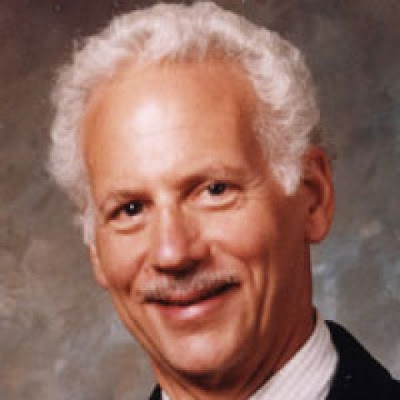
Ken Adelman, a longtime Washington insider closely aligned with neoconservatives, has served several Republican administrations since the mid-1970s.[1] A member of the Defense Policy Board during the George W. Bush administration, Adelman championed the “war on terror” and pushed for the invasion of Iraq, both as a media pundit and as a supporter of neoconservative-led groups like the Project for the New American Century (PNAC). Although he eventually turned against some Bush administration policies, Adelman remained a proponent of aggressive U.S. foreign policies.
Adelman was a member of the Committee on the Present Danger (CPD), the now-defunct Cold War-era anticommunist group that was revived after 9/11 to promote the war on terror. Adelman is quoted on the CPD website as saying: “Just as America defeated totalitarian threats from, first, Nazism and then Communism last century, so must we defeat totalitarian threats from radical Islam this century. It is our duty, and destiny.”[2]
In 2014, Adelman released a book, Reagan at Reykjavik: Forty-Eight Hours That Ended the Cold War, which detailed a 1986 summit between President Ronald Reagan and former Soviet Union leader Mikhail Gorbachev. In an interview about the book, Adelman interlaced his praise of Reagan with criticisms of President Obama, stating: “President Reagan was then facing a far stronger adversary than President Obama now faces with Vladimir Putin. Russia’s army today is one-fourth the size of the Soviet army then, and its nuclear arsenal one-fifth the size. Yet despite U.S. leaders now facing a far weaker adversary, few today pursue any radical change comparable to ending the Cold War. It is inconceivable that President Obama would think, let alone say, that the current standoff with Russia would end with ‘We win, they lose.’ This administration seems quite content to settle for a tie.”[3]
Adelman was one of several conservatives who in 2006 began denouncing the Bush administration for its failed strategies in Iraq.[4] During the run-up to the 2008 presidential election, Adelman surprised observers when he joined other high-profile conservatives and Republican Party figures (including former Secretary of State Colin Powell) in endorsing Sen. Barack Obama (D-IL) for president. In an email to the New Yorker’s George Packer, Adelman wrote that Sen. John McCain’s (R-AZ) response to the economic crisis and decision to have Alaska Gov. Sarah Palin be his vice presidential running mate had spurred his decision to oppose the Republican senator.[5]
In a blog entry posted on the Huffington Post, Adelman further explained his decision: “I’ve considered myself less of a partisan than an ideologue. I cared about conservative principles, and still do, instead of caring about the GOP. Granted, McCain’s views are closer to mine than Obama’s. But I’ve learned over this Bush era to value competence along with ideology. Otherwise, our ideology gets discredited, as it has so disastrously over the past eight years. McCain’s temperament—leading him to bizarre behavior during the week the economic crisis broke—and his judgment—leading him to Wasilla—depressed me into thinking that ‘our guy’ would be a(nother) lousy conservative president. Been there, done that.”
Iraq War
Adelman is perhaps most notorious for having predicted in a February 2002 Washington Post commentary that a U.S. invasion of Iraq would be a “cakewalk.”[6] Three weeks after the 2003 invasion, he remained confident in that assessment and in U.S. conduct of the war, writing in a Post piece called “‘Cakewalk’ Revisited” that, “My confidence 14 months ago sprang from having worked for Don Rumsfeld three times—knowing he would fashion a most creative and detailed war plan—and from knowing Dick Cheney and Paul Wolfowitz well for many years.”[7]
During the lead-up to the Iraq War, Adelman advocated targeting the regime of Saddam Hussein as part of the U.S. reaction to the 9/11 attacks, pushed for allying with Israel in the “war on terror,” and savaged opponents of U.S. military intervention in the Mideast. In a July 2002 piece titled “The Ankle Biters,” in which he slammed critics of the United States, Adelman wrote: “Without excellence in any endeavors today, the Arabs should avoid criticizing others for much of anything. And without being able to offer much militarily or intellectually, European criticism of our policies becomes bitter carping, and little more.”[8]
In April 2002, Adelman signed an open letter to President George W. Bush organized by PNAC that advocated a broad antiterror fight in the Middle East predicated at least in part on the notion that Israel and the United States have practically identical security interests. The letter read: “No one should doubt that the United States and Israel share a common enemy. We are both targets of what you have correctly called an ‘Axis of Evil.’ Israel is targeted in part because it is our friend, and in part because it is an island of liberal, democratic principles—American principles—in a sea of tyranny, intolerance, and hatred. As Secretary of Defense Rumsfeld has pointed out, Iran, Iraq, and Syria are all engaged in ‘inspiring and financing a culture of political murder and suicide bombing’ against Israel, just as they have aided campaigns of terrorism against the United States over the past two decades. You have declared war on international terrorism, Mr. President. Israel is fighting the same war.”[9]
Post-Invasion Reconsideration
By 2004, Adelman began to admit that he had been wrong about certain aspects of the U.S. invasion of Iraq. In a USA Today op-ed, he wrote: “Those of us who championed Iraq’s liberation were way too sanguine. We were wrong about Iraq having weapons of mass destruction. Wrong about Iraqis cooperating fully after Saddam Hussein was deposed. And probably wrong about close ties between Saddam’s henchman and al-Qaida’s fanatics.”[10] Adelman stopped short of a full change of heart, saying that on just about everything else, he and his neoconservative cohorts had been correct—especially about the need to promote democracy in the Middle East. He derided the “panicky cries for a change of course,” arguing that “calling for a new U.S. approach, for its own sake, risks undermining this battle.”[11]
By mid-2006, Adelman showed signs of increasing disenchantment with Bush and his administration. He criticized Bush for meeting with President Denis Sassou-Nguesso, Marxist leader of the Republic of Congo (Brazzaville). In a letter of protest to the State Department, Adelman wrote: “How then can the likes of Sassou-Nguesso, given his long record of brutality, Marxist politics, and stunning rip-offs, be given the biggest prize of American approval: a White House meeting with the president?”[12]
But by late 2006, Adelman was denouncing what he saw as the Bush administration’s failed strategies in Iraq—strategies that he had helped to design and promote. Adelman gave high profile interviews to Vanity Fair, the New Yorker, and Washington Post in which he joined the growing chorus of neoconservatives who blamed the failures of the Iraq War on administration incompetence. Regarding his infamous “cakewalk” quote, Adelman told Vanity Fair: “I just presumed that what I considered to be the most competent national-security team since Truman was indeed going to be competent. They turned out to be among the most incompetent teams in the post-war era. Not only did each of them, individually, have enormous flaws, but together they were deadly, dysfunctional.”[13]
Others jumping on the anti-administration bandwagon included Richard Perle, the former chairman of the Defense Policy Board and a scholar at the American Enterprise Institute (AEI); Michael Ledeen, then of AEI and now of Foundation for Defense of Democracies; Frank Gaffney of the Center for Security Policy; and Joshua Muravchik, who in a widely noted 2006 Foreign Policy article chided the administration and his fellow neoconservatives for failing to keep alive the post-9/11 interventionist momentum in U.S. foreign policy.[14]
Adelman told the New Yorker‘s Jeffrey Goldberg that he initially began voicing his disappointment in summer 2006, claiming that he had used his perch as a member of the Defense Policy Board to push for a new strategy: “I suggested that we were losing the war. What was astonishing to me was the number of Iraqi professional people who were leaving the country. People were voting with their feet, and I said that it looked like we needed a Plan B. I said, ‘What’s the alternative? Because what we’re doing now is just losing.'”[15]
Then in fall 2006, Rumsfeld, an old friend of Adelman’s since their days working together in the Nixon administration, called him to his office to ask him to resign from the board. Adelman told Rumsfeld he was “negative about two things: the deflection of responsibility and the quality of decisions,” specifically mentioning the looting in Iraq and Abu Ghraib. “He was really in denial that this was his fault.”[16]
According to Adelman, the meeting ended inconclusively, and shortly before the midterm elections he received a letter from Rumsfeld saying he would be replaced on the board. According to the website of the Federal Advisory Committees Database, Adelman’s term on the Defense Policy Board expired on October 30, 2006.[17]
The Cold War and More
Adelman, who has described himself as “not really a neo-con but a con-con,”[18] has been involved in a number of key hardline policy efforts dating back to the 1970s, when he was a member of the original CPD. He joined the reincarnated CPD, which was revived in June 2004 by a number of erstwhile Cold Warriors with the aim of “winning the global war against terrorism and the movements and ideologies that drive it.”[19]
Adelman’s government experience includes working as assistant to Secretary of Defense Donald Rumsfeld under President Richard Nixon; serving as a deputy to Jeane Kirkpatrick when she was U.S. ambassador to the United Nations; and serving as director of the Arms Control and Disarmament Agency during the Reagan administration.[20]
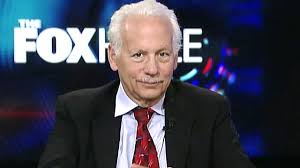
Adelman has also been active in the private sphere. He was the executive director of USA for Innovation, a short-lived organization that worked to stop Thailand from issuing licenses for the distribution of medications that had U.S. patents.[21] He has been commentator on Fox News and was the longtime national editor of the Washingtonian magazine. He is married to Carol Adelman, a project director at the conservative Hudson Institute,[22] and together they run Movers and Shakespeares,[23] a company that trains high-powered CEOs from firms like Northrop Grumman in management and communication strategies. According to People magazine: “The Adelmans have long looked to the Bard as an aid in navigating the labyrinths of politics, business, and family life.… Their workshops—which last from 90 minutes to several days and cost from $4,000 to $18,000—are taught at such institutions as Harvard’s Kennedy School of Government and the U.S. Naval Academy in Annapolis, MD. The idea: to use the playwright’s words to teach managerial skills.”[24]
Adelman authored the 1989 book The Great Universal Embrace, in which he criticized U.S.-Soviet arms control negotiations. In a review, arms control expert Michael Krepon wrote: “Adelman acknowledges the cynicism behind the Reagan administration’s verification proposals (anywhere/anytime inspections without a right of refusal) for the draft treaty to abolish chemical weapons. ‘This seemingly nifty approach,’ he writes, ‘had one slight problem—we could not live with it.’ When the Soviets unexpectedly called the U.S. bluff, the administration had to ‘search for other grounds for stalling.’ Adelman promoted this treaty, which he opposed, because it was ‘the only real way of enticing Congress to fund the chemical weapons program we needed.’ The reasons for such candor are puzzling. Adelman is heavily implicated when he cites Shakespeare: ‘What tangled webs we do weave when first we practice to deceive,’ yet there is none of the master dramatist’s sense of reckoning or balancing of accounts. Presumably, it is harmless to advance unacceptable proposals as long as arms reduction agreements are avoided.”[25]