Overview
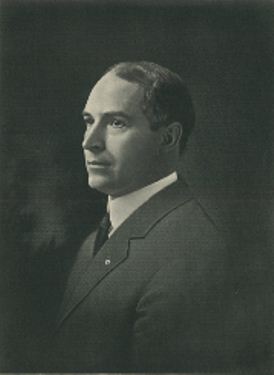
Harry B. Earhart began his foundation in 1929 using profits from his White Star Oil Company. According to Earhart’s grandson, David Kennedy, the “basic role [of the foundation] is to influence ideas.” It accomplishes this mission, writes Martin Davis, “by providing fellowships to young scholars, usually graduate students or junior faculty, who are committed to the principles of a free society and who show the potential for high-quality work in political philosophy, economics, and other disciplines in the humanities and social sciences.” (1)
The foundation was family run until 1949, when Earhart converted the board into an independent operation. However, family members continue to serve on the board and trustees are elected by a family board. David Kennedy served as the board’s president until 2004, when Ingrid Gregg took over the reins. Other foundation officers, according to its 2003 Form 990, include: Dennis Bark, chairman; Elayne Ellis, assistant secretary; and Kathleen Mason, treasurer. Earhart’s total assets as of 2003 were about $74 million. (1) (8)
Origins and History
Much of Earhart’s early history seems shrouded in a fog. It has no known web site and few scholars seem to have delved deep into the foundation’s past. In a 2004 article for Philanthropy, a journal published by the conservative Philanthropy Roundtable, Martin Davis writes that one of the foundation’s “early beneficiaries was Friedrich von Hayek of the London School of Economics, who wrote The Road to Serfdom and The Constitution of Liberty, two of the most influential works of classical liberalism in the 20th century.” Of The Road to Serfdom, a book revered by many conservatives, Justin Raimondo, a scholar associated with the libertarian-run web site antiwar.com, writes: “Arguing that fascism, Communism, Nazism, and Social Democracy all came from the same root, and that the economic and ideological antecedents of Hitlerism were present in the Weimar Republic … the book’s popularity sent shockwaves through the Liberal establishment.” (22)
Earhart’s success in funding social theorists, particularly economists, did not end with von Hayek. Writes Davis: “ Though relatively small, the foundation has enjoyed incredible success identifying and supporting those who will go on to Stockholm. The prize in economics was established in 1969 and has been awarded 35 times. Nine of those winners had received Earhart support. ‘This is a pretty good measure of success,’ says outgoing president David Kennedy. ‘Each one of our Nobel laureates had received support early in his career, several as graduate students, or at least long before being awarded the Nobel prize’.” Earhart grantees who have won the Nobel Prize include Gary Becker, James M. Buchanan, Ronald Coase, Milton Friedman, Friedrich A. Hayek, Robert Lucas, Daniel McFadden, Vernon L. Smith, and George Stigler. (1)
Earhart was active in the 1980s supporting burgeoning conservative think tanks like the American Enterprise Institute, which became a prominent source of ideas and people for the Reagan administration. According to a 1981 New York Times article, “About 60 percent of [AEI’s] money comes from foundations, such as the Lilly Endowment, the Smith Richardson Foundation, the Rockefeller Brothers Trust, and the Earhart Foundation. The rest of the money is donated by major corporations, including Bethlehem Steel, Exxon, J.C. Penney, and the Chase Manhattan Bank.” (5)
Also in the early 1980s, Earhart teamed up with several over-conservative foundations—including Scaife and Olin—to fund rightist newspapers on college campuses. One notable example was The Dartmouth Review, where a young Dinesh D’Souza, author of Illiberal Democracy, got his start attacking the purported “liberal bias” at U.S. universities. The Review made a controversial splash when it published letters that had been stolen from the university’s Gay Student Alliance. Parents of these students discovered their children’s sexual orientation through the Review’s reports. (6)
Earhart aided the religious right’s effort to take charge of the democracy movement in the United States, which rightist and neoconservative leaders had long accused of being under the sway of leftist ideologues in the National Council of Churches and the World Council of Churches. The leading figures in this conservative campaign, which was led by the Institute on Religion and Democracy, included Richard John Neuhaus, Michael Novak, Ed Robb, and Social Democrats/USA’s David Jessup and Penn Kemble.
In a 1981 New York Times article about the work of the Institute on Religion and Democracy, Charles Austin wrote: “Though small, the institute has a vigorous leadership and is spending about $300,000 annually to spread its views. ‘God has given us no one set pattern for the ordering of societies or of the world,’ the institute’s policy statement says, but it argues that religion has always fared better in democratic, capitalist countries. ‘Marxist-Leninism promulgates a doctrine that is incompatible with a Christian understanding of humanity’.” (7)
In 1993, Earhart attracted attention when the Washington Post reported on a controversial study on the causes of cancer that had been funded by the Earhart, Sarah Scaife, and William H. Donner foundations. The authors of the report—Robert Lichter, Stanley Rothman, and Mark Mills—concluded that news reports focused too much on the carcinogenic, man-made causes of cancer and too little on things like sunlight and diet. The researchers analyzed some 1,150 stories that had been published during a twenty-year period (1972-1992). They also surveyed a random sample of 401 members of the American Association for Cancer Research (AACR). (9)
Reported the Post: “In a subjective part of the survey, a majority of the cancer experts said the media overstate the cancer risks associated with nuclear power, pollution, and food additives, but said coverage of sunlight, tobacco, and radon was accurate. Pluralities said the risk from pesticides and natural chemicals in food is exaggerated. Curt Suplee, the Washington Post’s science editor, said some carcinogens are simply less newsworthy because their danger is widely accepted. ‘We report what other people do in studies,’ he said. ‘If you’re a doctor, you don’t get funding to report that asbestos causes cancer.’ Suplee suggest[s] that news stories might include an ‘obligatory paragraph’ putting each newly reported risk in perspective by comparing it to known hazards.’ It would be annoying to read, but perhaps it’s something we owe our readers’.” (9)
In contrast to this assessment, the Environmental Working Group argued that it is important to take into consideration that man-made carcinogens are often preventable, in contrast to naturally occurring ones. The working group criticized what it called “pesticide industry propaganda,” arguing: “Just because natural sources of cancer risk exist, it doesn’t follow that we should add more synthetic carcinogens to the food, air, and water supply. Americans want avoidable cancer risks reduced, whether they are from naturally occurring aflatoxins or man-made pesticides.” (10)
In 2003, Earhart again helped make headlines because of its funding—along with the Randolph Foundation—of anti-affirmative action campaigns in institutions of higher education, which included supporting the publication of articles on the subject published by the International Journal of Public Opinion Research and Irving Kristol’sThe Public Interest. (11) (12) (13) (14) (15)
Other recent Earhart-supported activities include a 2005 National Endowment for the Humanities event hosted by the Hoover Institution and Stanford University in honor of historian Bernard Lewis, a U.S. Food and Drug Administration study on the health effects of fluoride compounds in the water supply, and a report by Jeffrey Miron on the economic impact of narcotics prohibition. (16) (17) (18) (19)
During the period 1995-2002, Earhart awarded several tens of thousands of dollars to the Louisiana State University (LSU) Foundation to support the publication of the collected works of Eric Voegelin, a relatively obscure social theorist who, after fleeing Vienna in the wake of the Nazi Anschluss, taught at LSU and Stanford’s Hoover Institution. (23) (24)
In an essay about Voegelin’s impact on contemporary conservatism, the scholar Enrico Peppe cites the opinion of Joseph Stromberg, a professor at the libertarian Mises Institute: “[Stromberg] feels that Voegelin’s ideas support the Paleo case against the Neo’s love of war since Voegelin pinpoints the gnosticism inherent in ‘pietist’ theology, especially that part of the belief system that concentrates on Dispensationalism. The pietist mission to translate Christ’s second coming onto a favored nation leads to the notion of a U.S. mission—the fervor of which is seen in the American Revolution (a combination of puritan gnosticism with federalism), the Civil War, and the 2003 War in Iraq (honest, I’m not making this up!). Stromberg says that all millenial thinking points in the direction of war. He quotes Voegelin: ‘Gnostic politics is self-defeating insofar as its disregard for the structure of reality leads to continuous warfare. This system of chain wars can end only in two ways: either it will result in horrible physical destructions and concomitant revolutionary changes of social order beyond reasonable guesses; or, with the natural change of generations, it will lead to the abandoning of Gnostic dreaming before the worst has happened.’ Stromberg is convinced that Post-millenialism led to Comte(ism), which led to Hegelianism, then to Darwinism, to pragmatism, and to ex-Trotskyism. This reviewer wonders if Paul Wolfowitz knows he’s a Gnostic.” (25)
According to a contributing writer to Wikipedia, one of Voegelin’s “more oft-quoted passages” from his work on Gnosticism is: “ The problem of an eidos in history, hence, arises only when a Christian transcendental fulfillment becomes immanentized. Such an immanentist hypostasis of the eschaton, however, is a theoretical fallacy.” This line inspired the catch phrase, “Don’t immanentize the eschaton!”, a phrase popularized by the likes of writer Robert Anton Wilson which in plain language means: “Do not try to make that which belongs to the afterlife happen here and now” or “don’t create heaven on earth.” (26)
For Voegelin, whose views on twentieth-century society and liberalism bear a resemblance to another Earhart-funded thinker Friedrich von Hayek, grand theories like communism represent efforts by mankind to “immanentize the eschaton.” Writes Peppe: “ Voegelin saw communism as only the latest of man’s attempt to ‘shortcut’ heaven and have it on earth. This Marxist ideology had ancient roots, stemming from the medieval heresy called gnosticism. … Voegelin is part of the group of metaphysical conservatives consisting of such as Frederick D. Wilhelmsen, Thomas Molnar, Leo Strauss, Richard Weaver and Russell Kirk. All these great conservative theorists reject relativism, secularism, and politics based solely on ideology since this triad comes from the immanentist mind. Transcendental truth from God is rejected. The Left embodies mass-movement ideology as Truth. The metaphysical conservative knows that Truth is not necessarily rational—that it must be learned by logic and faith. For theorists like Strauss and company, human beings attempt to lead moral lives based on sanctions and by the awe created from a study of Judeo-Christian symbols.” (25)
Funding
According to Mediatransparency, Earhart awarded $ 36,362,272 in grants between 1995 and 2003. Top recipients include:
Top 10 Policy Institutes |
Atlas Economic Research Foundation |
$1,524,742 |
Intercollegiate Studies Institute, Inc. |
$926,100 |
Citizens Research Council of Michigan |
$569,844 |
History and Economics Research Institute |
$565,008 |
Institute of Economic Affairs |
$542,291 |
Institute of World Politics |
$516,580 |
Political Economy Research Center |
$386,000 |
Social Philosophy and Policy Foundation |
$385,000 |
Federalist Society |
$380,000 |
Jamestown Foundation |
$365,000 |
Top 10 Think Tanks |
American Enterprise Institute |
$448,800 |
Hoover Institution |
$380,474 |
Manhattan Institute |
$315,000 |
Cato Institute |
$217,600 |
Hudson Institute |
$71,783 |
Foreign Policy Research Institute |
$63,000 |
National Institute for Public Policy |
$44,945 |
Rand Corporation |
$30,000 |
Goldwater Institute |
$20,000 |
Center for Strategic and Intl Studies |
$15,600 |
Center for Security Policy |
$3,000 |
Top 20 Universities |
Boston University |
$1,098,106 |
University of Chicago |
$1,033,290 |
George Mason University |
$980,155 |
Duke University |
$690,925 |
Claremont Graduate University |
$690,599 |
Tufts University |
$578,913 |
Boston College |
$576,640 |
Catholic University of America |
$574,984 |
Michigan State University |
$571,323 |
University of Dallas |
$547,939 |
Fordham University |
$463,295 |
New York University |
$445,005 |
Princeton University |
$386,385 |
Bowling Green State University |
$370,476 |
University of Virginia |
$366,822 |
University of Maryland at College Park |
$343,007 |
Temple University |
$308,006 |
Georgetown University |
$289,374 |
Harvard University |
$263,653 |
University of Notre Dame |
$263,084 |
|
Right
Web connections
Individuals
Gary Becker
Penn Kemble
Irving Kristol
Richard John Neuhaus
Michael Novak
Organizations
American Enterprise Institute
Ashbrook Center for Public Affairs
Capital Research Center
Center for Individual Rights
Center for Equal Opportunity
Center for Security Policy
Center for Strategic and International Studies
Ethics and Public Policy Center
Federalist Society
Foreign Policy Research Institute
Hoover Institution on War, Revolution and Peace
Hudson Institute
Independent Women’s Forum
Institute on Religion and Democracy
Intercollegiate Studies Institute
Jamestown Foundation
Manhattan Institute for Policy Research
National Endowment for Democracy
National Institute for Public Policy
National Strategy Information Center
New Citizenship Project
Philanthropy Roundtable
Project for the New American Century
Contact Information
Earhart Foundation
2200 Green Rd, Suite H
Ann Arbor, MI 48105
Phone: (734) 761-8592
|