
James Woolsey
last updated: January 5, 2017
Please note: The Militarist Monitor neither represents nor endorses any of the individuals or groups profiled on this site.
Affiliations
- Foundation for Defense of Democracies: Chair, Leadership Council
- Set America Free:Founding Member
- Committee on the Present Danger:Co-Chair
- Jewish Institute for National Security Affairs:Member, Advisory Board
- Institute of World Politics:Chancellor
- Atlantic Council:Lifetime Director
- Freedom House:Former Board of Trustees Chair
- Center for Security Policy:Former Honorary Co-Chair of National Security Advisory Council
- Coalition for Democracy in Iran:Supporter
- Committee for the Liberation of Iraq:Former Member
- Americans for Victory over Terrorism:Former Senior Advisor
- National Institute for Public Policy:Study Participant
- Project for the New American Century:Signatory, PNAC Advocacy Letters
- Center for Strategic and International Studies:Former Trustee
- Washington Institute for Near East Policy:Member, Advisory Board
- Institute for the Analysis of Global Security:Advisor
- NGO Monitor:Member, International Advisory Board
- Jamestown Foundation:Former Board member
- Fuel Freedom Foundation: Board Member
- American Freedom Law Center: Member, Advisory Board
Government
- National Commission on Energy Policy: Member
- Defense Department: Defense Policy Board Member (2001-2005); Deterrence Concepts Advisory Panel: Member (2001-2003)
- National Commission on Terrorism: Member (1999-2000)
- Rumsfeld Missile Commission: Member (1998)
- Central Intelligence Agency: Director (1993-1995)
- Negotiations on Conventional Armed Forces in Europe: Ambassador and U.S. Representative (1989-91)
- President’s Commission on Federal Ethics Law Reform: Member (1989)
- President’s Blue Ribbon Commission on Defense Management (Packard Commission): Member (1985-1986)
- U.S.-Soviet Strategic Arms Reduction Talks: Delegate at Large (1983-1986)
- Nuclear and Arms Space Talks: Delegate at Large (1983-1986)
- President’s Commission on Strategic Forces (Scowcroft Commission): Member (1983)
- Department of the Navy: Under Secretary of the Navy (1977-1979)
- U.S. Senate: General Counsel, Committee on Armed Services (1970-1973)
- Strategic Arms Limitation Talks: Advisor, U.S. Delegation (1969-1970)
Business
- Woolsey Group: Chair
- Executive Action, LLC: Chair
- Lux Capital: Venture Partner
- BioDefense Corporation: Advisor
- Booz Allen Hamilton: Former Vice President, Global Strategic Security Division (2002-2008)
- Paladin Capital Group: Chair of Strategic Advisory Group
- GridPoint: Board of Advisors
- GreenZone: Member, Board of Directors
- Vantage Point Venture Partners: Partner and Senior Advisor
- Shea & Gardner: Former Managing Partner
- Philadelphia Stock Exchange: Former Member, Board of Governors
- Invicta Networks, Inc.: Board Member
- Agorics, Inc.: Former Board
- Linsang Partners, LLC: Former Board Member
- BC International Corporation: Former Board Member
- Fibersense Technology Corporation: Former Board Member
- Sun HealthCare Group, Inc.: Former Board Member
- Global Options LLC: Former Vice Chairman, Advisory Board
- Martin Marietta: Former Board Member
- Fairchild Industries: Former Board Member
- DynCorp: Former Board Member
- British Aerospace: Former Board Member
- Titan Corporation: Former Board Member
- Yurie Systems, Inc.: Former Board Member
- USF&G: Former Board Member
- Aerospace Corporation: Former Director
- Fuels for Global Energy Markets: Member, Strategic Advisory Board
Education
- Yale Law School:L.L.B. (1968)
- Oxford University: MA, Rhodes Scholar (1963-1965)
- Stanford University: Bachelor’s (1963)
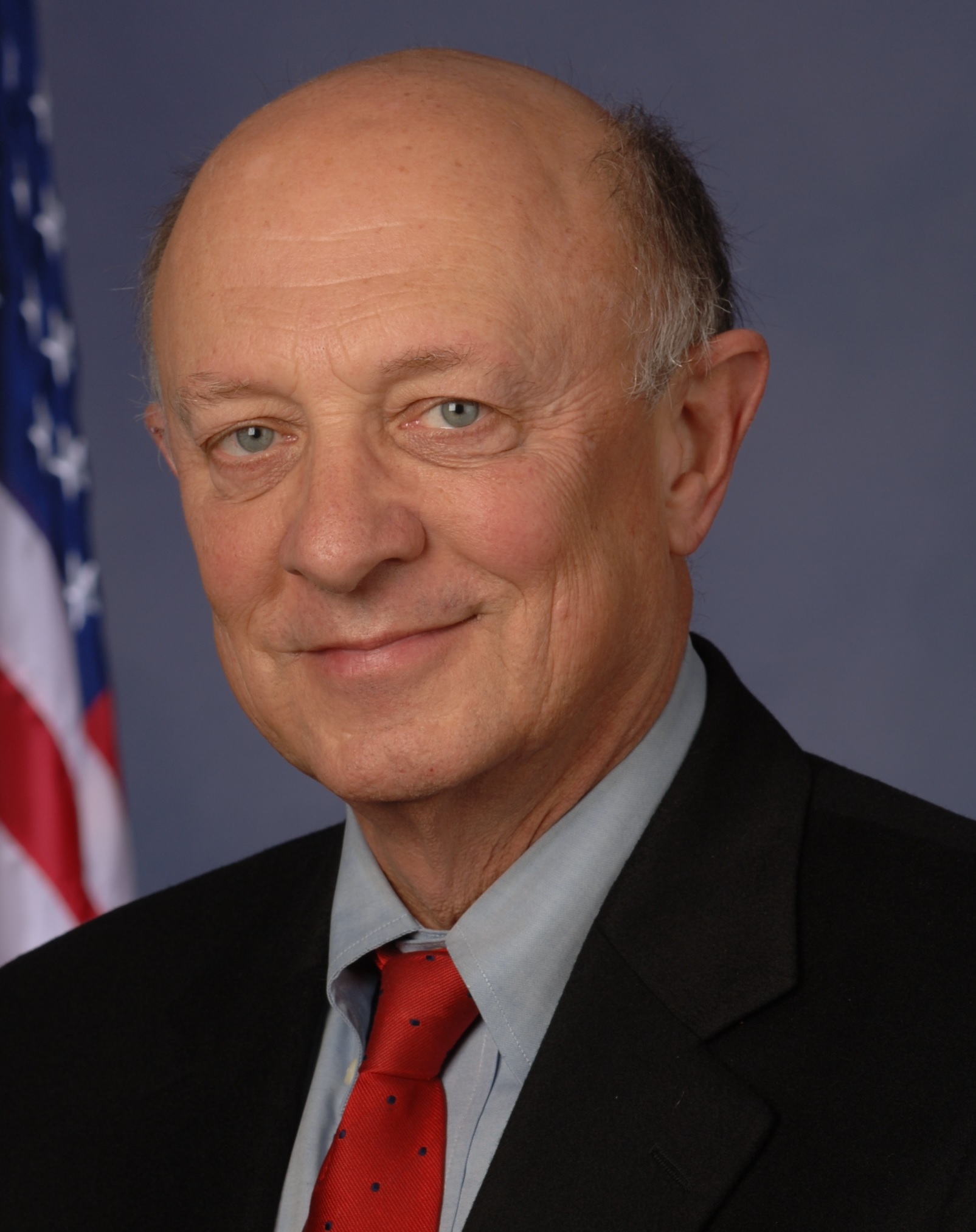
James Woolsey, the director of the Central Intelligence Agency (CIA) under President Bill Clinton, is a well-connected advocate of militarist U.S. foreign policies. He has supported the work of several neoconservative-led groups, including the Committee on the Present Danger, the Committee for the Liberation of Iraq, the Project for the New American Century, the Center for Security Policy, among others.
Woolsey chairs the Leadership Council of the Foundation for Defense of Democracies, an important bastion of hawkish “pro-Israel” advocacy in the United States that has served as an outpost for many well-known rightist ideologues.[1] Among his activities at FDD has been to support the work of its Energy Security” program, which advocates for the United States to break “break the oil monopoly” that helps prop up “regimes and individuals who fund terrorist activities.”[2]
Woolsey has also served on the board of advisors of the Washington Institute for Near East Policy, a spinoff of the American Israel Public Affairs Committee,[3] and the advisory board of the right-wing Jamestown Foundation.[4]
Woolsey’s advocacy extends to electoral politics. During the 2016 presidential race, the former CIA director broke ranks with many fellow neoconservative activists like Robert Kagan to back the campaign of Donald Trump, serving as the real estate mogul’s campaign national security adviser. “Mr. Trump’s commitment to reversing the harmful defense budget cuts signed into law by the current administration, while acknowledging the need for debt reduction, is an essential step toward reinstating the United States’ primacy in the conventional and digital battlespace,” said Woolsey said in a September 2016 Trump campaign statement. He also pushed back against critics of Trump’s cozy embrace of Russia’s Vladimir Putin, arguing in an interview with CNN. “I think what Mr. Trump does is much more important than what he says,” Woolsey said. “You don’t succeed at something like this based just on language. Language is a tool. I don’t think it is an absolute.”
However, shortly before Trump’s inauguration in January 2017, Woolsey quit the president-elect’s transition team. He told CNN, “I’ve been an adviser and felt that I was making a contribution. … But I’m not really functioning as an adviser anymore.” The Washington Post reported that “People close to Woolsey said that he had been excluded in recent weeks from discussions on intelligence matters with Trump and retired Lt. Gen. Michael Flynn, the incoming White House national security adviser. They said that Woolsey had grown increasingly uncomfortable lending his name and credibility to the transition team without being consulted. Woolsey was taken aback by this week’s reports that Trump is considering revamping the country’s intelligence framework.” One person “close” to Woolsey said, “Jim is very uncomfortable being considered an adviser in an area where one might consider him an expert when he is not involved in the discussions. To be called ‘senior adviser’ and your opinion is not sought is something he cannot handle.”
Woolsey is a frequent consultant and advisor to private businesses and defense contractors, as well as government boards and panels. A former vice president of Booz Allen Hamilton, a Pentagon contractor, and partner at the high-profile D.C. law firm Shea and Gardner, Woolsey’s experience includes serving as chair of his firm Woolsey Partners, serving as venture partner and senior advisor to VantagePoint Venture Partners, chairing an advisory group of the private equity fund Paladin Capital Group, and serving as counsel to the law firm Goodwin Procter.[5]
Woolsey’s government work, aside from the CIA, has included being a member of the National Commission on Energy Policy, serving on the George W. Bush-era Defense Policy Board, advising the Deterrence Concepts Advisory Panel, serving on the controversial “Rumsfeld Missile Commission” (chaired by Donald Rumsfeld), and serving on various arms control treaty negotiation teams.[6]
Advocacy Agenda
A long-standing hawk on U.S. Middle East policy, Woolsey has championed President Obama’s decision to broaden U.S. involvement in rolling back the Islamic State (ISIS) in Iraq and Syria. In a September 2014 interview, he argued that Obama was “heading in the right direction” on ISIS but that he should call it war instead of counterterrorism. He also said the United States should commit ground troops: “We may not need large military units fighting in a tradition fashion, but Special Forces, SEALs, Army rangers, CIA officers helping put together ways to advise and oversee our allies are all going to be necessary.”[7]
After the November 2015 terrorist attacks in Paris, Woolsey called for a “coalition with us and France and NATO” to “go after them.” He added that if the “American president isn’t going to take the lead … we’re going to have another 15 months of the world believing we are sort of flaccid dupes.”[8]
Woolsey has also long pushed for a confrontational approach on Iran. He has pushed back against the notion that Iranian President Hassan Rouhani, who was elected in 2013 on a platform of improving Iranian relations with the West, is a “moderate.” In an October 2013 op-ed for The Hill coauthored with Bijan Khan and David J. Smith, Woolsey argued that before the United States engages with Rouhani, he must demonstrate Iran’s “unequivocal commitment” to the Nuclear Nonproliferation Treaty (NPT) and its additional protocols, as well as end the country’s support for anti-Israel militant groups in the Levant, protest China and Russia’s mistreatment of their ethnic and religious minority populations, denounce the common “Death to America” slogan in Iran, and improve conditions for Iran’s own marginalized populations.[9]
Woosely has been a stern critic of negotiations with Iran. Regarding the interim nuclear deal signed between Iran and world powers in November 2013, Woolsey said, “We are basically caving in.” “Now it’s going to be hard to move it where we should move it if we want to cause major disruption in the Iranian government, and I think we should want to do that.”[10]
Woolsey derided the July 2015 nuclear deal between Iran and the P5+1 world powers as “worse than worthless.”[11] In separate interviews after the deal he stated Iran’s leaders are “theocratic, totalitarian, genocidal, imperial liars” and even claimed that “Iran was involved [in]… the support to the terrorists that brought about 9-11.”[12]
In November 2006, Woolsey was the keynote speaker at a conference sponsored by the hawkish American Foreign Policy Council titled “Understanding the Iranian Threat.” He told the audience, “First of all, the Persians invented chess, and they are very good at it,” he began, calling Iran’s nuclear program a “queen” that it was protecting various other “lesser pieces,” such as Syria, Muqtada al-Sadr, Hezbollah, and Hamas. Woolsey suggested that North Korea might ship Iran plutonium or highly enriched uranium in diplomatic pouches in exchange for weapons purposes. Other speakers at the conference included Patrick Clawson of the Washington Institute for Near East Policy and Walid Phares of the Foundation for Defense of Democracies.[13]
In a September 2008 Wall Street Journal op-ed, Woolsey and his co-authors (Richard Holbrooke, Dennis Ross, and Mark Wallace) announced the creation of an advovacy group called United Against Nuclear Iran (UANI).[14] While the authors’ claimed that the group did “not aim to beat the drums of war,” UANI has pushed a number of confrontational policies. In mid-2009, for example, UANI made headlines when it began running an ad on cable news channels that called for the Obama administration to take a tougher line on Iran. The narrator of the 30-second ad, titled “Unclenched Fist,” says, “This is Iran. Young, vibrant — a people Americans have no quarrel with. Unfortunately, this is also Iran — radical rulers seeking nuclear weapons, threatening the world. Americans can do something about it. We can put economic pressure on the Iranian regime-pressure to keep them from building a nuclear arsenal. And that will ensure security for all of us.”[15]
Drawing on his background at the CIA and as a former vice president of Booz Allen Hamilton—the military contractor that employed NSA whistleblower Edward Snowden—Woolsey has also defended the U.S. government’s extensive domestic surveillance program and inveighed against Snowden for alerting the public to its existence.
“It would have been wonderful if we’d had something like this before 9/11,” Woolsey told NPR in June 2013, claiming that “thousands of people died” in part because “we had tilted so far toward privacy” with respect to intelligence gathering before the 9/11 attacks.
Woolsey accused Snowden of providing “classified information to people who are enemies of the United States,” concluding that “You can’t segregate off Hezbollah and the Iranian Revolutionary Guard and so forth and keep them in the dark while you tell Mr. and Mrs. America exactly how this intelligence collection works. If you could, all of this would be easy, but when you tell anybody, you tell the terrorists.”[16]
Woolsey has blasted suggestions of giving Snowden amnesty and argued he should be “hanged” if convicted for treason. “He should be prosecuted for treason. If convicted by a jury of his peers, he should be hanged by his neck until he is dead,” Woolsey said in a 2013 interview with Fox News.[17] After it was revealed that the NSA had spied on German Chancellor Angela Merkel, Woolsey defended the practice of spying on allies but conceded that “the U.S. has taken a heavy blow” and was risking its counter-terrorism capabilities by targeting Merkel. Woolsey linked the concession to a more general indictment of the Obama administration’s foreign and domestic apologies, arguing that U.S. allies have “rather frequently seen the U.S. make unilateral concessions to enemies and refuse to lead. And whereas those badly served by the ObamaCare website have received a presidential apology, those badly served by our weakness overseas have not. At our worst, we have suggested by our behavior that it is better to be an enemy of the United States (Assad) than a friend (Hosni Mubarak).”[18]
After the terrorist attacks in Paris in November 2015, Woolsey sought to partly blame Snowden for the attacks, arguing that changes in communications methods and the use of encryption by ISIS were spurred by Snowden’s leaks. “I’m no fan of the changes that were made after Snowden’s leaks of classified information,” he said of the minor NSA reforms implemented after the Snowden revelations. “I think Snowden has blood on his hands from these killings in France.”[19]
ArsTechnica responded to this claim, saying: “That blame seems a bit far-fetched, given that terrorist organizations have been using encryption of various sorts for more than 15 years at least. And additional details shared by officials since the attack suggest that metadata from the encrypted communications provided early warning that an attack in France was imminent.”[20]
Woolsey also promotes a hard line on North Korea, invoking in May 2013 the generally discredited threat that North Korea could launch a nuclear device in the stratosphere to trigger an electromagnetic pulse (EMP) that would cripple U.S. infrastructure. “An EMP attack,” Woolsey claimed in a Wall Street Journal op-ed that month, “would collapse the electric grid and other infrastructure that depends on it—communications, transportation, banking and finance, food and water—necessary to sustain modern civilization and the lives of 300 million Americans.” Woolsey concluded by calling for a U.S. attack on the country, writing that “A surgical strike to prevent North Korean development of an ICBM has never been more urgent. Such a strike would draw a necessary line in the sand for North Korea—and Iran.”[21] (Commenting on Woolsey’s op-ed, a writer for Foreign Policy subsequently described the EMP scenario as “a wild claim” peddled by a “crowd of cranks and threat inflators.”)[22]
An erstwhile proponent of the notion that the “War on Terror” is World War IV, Woolsey has described himself as a “Scoop Jackson/Joe Lieberman Democrat.”[23] Together with the likes of Lieberman and Michael O’Hanlon, Woolsey blends Democratic Party domestic politics with advocacy for neoconservative foreign policy causes, including interventionist military policies in the Middle East. Despite his party affiliation, Woolsey has advised a number of Republican Party figures, including President George W. Bush and Sen. John McCain.
Woolsey has been an influential and unrepentant voice in championing hawkish U.S. foreign policies. In a mid-2008 interview, he said, “I’d support [Saddam Hussein’s] ouster again if there weren’t a drop of oil in Iraq. If all that had been at issue was the oil, the simple thing to do would have been to just buy it.”[24]
Woolsey was an outspoken proponent of invading Iraq even before 9/11. As a supporter of the Project for the New American Century (PNAC), the influential letterhead group founded by William Kristol and Robert Kagan to champion a “Reaganite policy of military strength and moral clarity,” Woolsey signed several PNAC open letters to government figures encouraging an aggressive military agenda.[25] One such letter was PNAC’s 1998 missive to Clinton, which served as the opening salvo in neoconservative efforts to support a U.S. invasion of Iraq. The letter argued that deterring Saddam Hussein had failed and that the “only acceptable strategy is one that eliminates the possibility that Iraq will be able to use or threaten to use weapons of mass destruction. In the near term, this means a willingness to undertake military action as diplomacy is clearly failing. In the long term, it means removing Saddam Hussein and his regime from power.”[26]
Like other neoconservatives, Woolsey is a staunch backer of Middle East policies similar to those of Israel’s right-wing Likud Party, including the expansion of settlements in Palestinian territory. In an October 2009 op-ed for the Wall Street Journal, Woolsey argued that efforts by the Barack Obama administration to halt Israeli settlement growth amounted to tacit acceptance of Palestinian hostility to Jews. Ignoring the fact that most inhabitants of the settlements hold hardline right-wing views and would never accept Palestinian governance, Woolsey argued that the administration’s anti-settlement position “implies acquiescence in the banning of Jews from a future Palestinian state.” Woolsey bizzarely claimed that the Obama administration, “rather than promoting the rule of law in a future Palestine … essentially urges us to accept that, because Palestinians will kill unprotected Jews, Jews cannot be permitted in a Palestinian state.”[27]
Woolsey is also a longstanding backer of controversial weapons programs. In a July 2010 Wall Street Journal op-ed, Woolsey hyped the idea that Iran could in a few years be able to launch a nuclear-armed missile at the United States. Thus, he warned, it was imperative for the United States to deploy a “robust and comprehensive ballistic missile defense” — this despite the fact that such a system has never proven workable. Such a system, he added, should be coupled with additional missile defense systems in Europe.[28]
Despite holding core neoconservative views, Woolsey has some idiosyncratic tendencies, as Laura Rozen has reported. “An independent streak has run throughout Woolsey’s 40-plus years in Washington. He has served in four administrations, both Republican and Democratic. In the twilight of the Cold War, he found himself increasingly identifying with Republicans on national security. He spent three years as a member of then-defense Secretary Donald Rumsfeld‘s Defense Policy Board. When I met with him [in early 2008], he was expecting another career change, leaving the federal contractor Booz Allen Hamilton to join a California firm that invests in alternative-energy technology. He’d also just appeared in an anti-oil print ad for the American Clean Skies Foundation, a PR group started by a natural gas company.”[29]
Woolsey’s Peculiar “War on Terror”
After 9/11, Woolsey was among the first government advisors to call for ousting Hussein, joining Paul Wolfowitz and Richard Perle in pressing for an expanded war on terror to include regime change in Iraq. According to the Atlantic Monthly‘s James Fallows, “The very next day, September 12, 2001, James Woolsey, who had been Clinton’s first CIA director, told me that no matter who proved to be responsible for this attack, the solution had to include removing Saddam Hussein, because he was so likely to be involved next time.”[30]
Woolsey became a prominent media presence after 9/11, criticizing opponents of the Bush administration’s “war on terror” and characterizing the conflict in stark, existential terms. Regarding European and Arab reluctance to support an invasion of Iraq, in December 2001 Woolsey argued “only fear will reestablish [Arab] respect for the U.S. … We need to read a little bit of Machiavelli. … We really don’t need the Europeans. Anyways, they will be the first in line patting us on the back following our success and saying they were with us all along.”[31]
In late 2002, Woolsey gave a widely quoted speech at the Restoration Weekend convention, an annual conference of high-profile conservative figures, during which he argued that the United States was fighting “World War IV”—a term promoted by Norman Podhoretz, a key neoconservative ideologue, and Eliot Cohen, one of Woolsey’s Defense Policy Board colleagues and a supporter of the Bush administration’s response to 9/11— against totalitarian movements “coming out of the Middle East.”[32] (Woolsey repeated the main items of this speech during another conference at UCLA that was organized by campus Republicans and Americans for Victory over Terrorism, a Claremont Institute-sponsored letterhead group for which Woolsey once served as a senior advisor.[33])
Two years later, Woolsey had refined his terminology. To the crowd at Restoration Weekend 2004, Woolsey explained his new phrase for the “War on Terror”: “I used to call it World War IV, following my friend Eliot Cohen, who called it that in an op-ed right after 9/11 in the Wall Street Journal. Eliot’s point is that the Cold War was World War III. And this war is going to have more in common with the Cold War than with either World War I or II. But people hear the phrase World War and they think of Normandy and Iwo Jima and short, intense periods of principally military combat. I think Eliot’s point is the right one, which is that this war will have a strong ideological component and will last some time. So, in order to avoid the association with World Wars I and II, I started calling it the Long War of the 21st Century.”[34]
Woolsey sees differences between the Cold War and this new war, as evident in his rationalization for supporting expanded government powers post-9/11. In February 2006 testimony before the Senate Judiciary Committee, Woolsey supported the controversial phone-tapping program of the National Security Agency, saying, “Unlike the Cold War, domestic terrorism in this country cannot solely be dealt with by criminal law. It is difficult to understand how one deters through criminal law individuals who want to die themselves while killing thousands of others. Unlike the Cold War, security can come more into conflict with liberty than we wish would be the case.”[35]
Though still supportive of the U.S. invasion of Iraq, by 2006 Woolsey (along with other hawks, including Ken Adelman and Richard Perle) had begun to be critical of the way the Bush administration had carried out the invasion,[36] while at the same time pushing for bombing other states like Syria, a country long present on Woolsey’s list of targets for the war on terror.[37]
Activist, Businessman, Government Consultant
During President George W. Bush’s first term, Woolsey was appointed to official panels that advised Defense Secretary Rumsfeld, including the Defense Policy Board Advisory Committee (DPB), chaired by Richard Perle at the time of Woolsey’s appointment,[38] as well as the Deterrence Concepts Advisory Panel.[39]
During Clinton’s second term, Woolsey served on the controversial Rumsfeld-chaired Commission to Assess the Ballistic Missile Threat, whose final 1998 report issued the alarmist conclusion that several “rogue” countries would be able to target the United States with ballistic missiles in a few short years. Other members of the congressionally mandated commission included William Schneider Jr., Stephen Cambone, and Paul Wolfowitz.[40]
Woolsey also participated in the nongovernmental study group that produced the 2001 report “Rationale and Requirements for Nuclear Forces and Arms Control,” published by the hawkish National Institute for Public Policy (NIPP). According to the World Policy Institute, the NIPP study served as a blueprint for Bush’s Nuclear Posture Review, a comprehensive review of U.S. nuclear weapons policies. Among the study participants were Cambone, Hadley, Robert Joseph, and Keith Payne (NIPP’s director).[41] Woolsey, along with several other study participants, moved directly from the NIPP report into the Pentagon’s Deterrence Concepts Advisory Panel, which was led by Payne and tasked with implementing the findings of the Nuclear Posture Review.[42]
While he maintained his positions on the DPB and Deterrence Concepts Advisory Panel, in 2002 Woolsey became a vice president of Booz Allen Hamilton,[43] a high-powered consulting firm and military contractor based in Virginia that has been characterized “as one of the biggest suppliers of technology and personnel to the U.S. government’s spy agencies.”[44] Woolsey also maintained close relations with a number of militarist advocacy groups.
Critics have decried Woolsey’s simultaneous service in government and the private sector. In a March 2003 report about potential conflicts of interest of several DPB members, the Center for Public Integrity highlighted Woolsey as an example: “Former CIA Director James Woolsey is a principal in the Paladin Capital Group, a venture-capital firm that, like Perle’s Trireme Partners, is soliciting investment for homeland security firms. Woolsey joined consulting firm Booz Allen Hamilton as vice president in July 2002. The company had contracts worth more than $680 million in 2002. Woolsey told the Wall Street Journal that he does no lobbying and that none of the companies he has ties to have been discussed during a Defense Policy Board meeting.”[45]
After a brief and unhappy tenure as CIA director during Clinton’s first term, Woolsey rejoined the law firm of Shea & Gardner (where he had first worked in 1973). Shea & Gardner represents a number of major corporate clients, including defense contractors Boeing and Lockheed Martin, and counts among its former employees Stephen Hadley, national security advisor during Bush’s second term. In 2003, the firm was registered as a foreign agent performing lobbying and legal services for the Iraqi National Congress.[46] After Shea & Gardner became part of Goodwin Procter LLP, the latter registered as a foreign agent for the Iraqi National Congress Support Foundation, which “contacted U.S. Government officials to refute allegations made against Dr. Ahmed Chalabi.”[47]
“Green” Politics
During John McCain’s 2008 presidential campaign, Woolsey served as an adviser—along with a number of high-profile neoconservatives like Randy Scheunemann, Gary Schmitt, and William Kristol—on the candidate’s national security policies.[48] Woolsey also advised McCain on energy security, an issue long at the heart of Woolsey’s policy discourse.[49] Woolsey is sometimes referred to as a “greenocon,” a mélange of ideologies shared by those who, according to one critic, advocate “a Fortress America of tanks and solar panels, plug-in hybrids and nuclear reactors.”[50]
A founding member of the Set America Free coalition, a pressure group aimed at highlighting the “security and economic implications of America’s growing dependence on foreign oil,”[51] Woolsey sees himself as helping pioneer a new political coalition that combines his militarist security ideology with green politics. He says, “The combination of 9/11, concern about climate change, and $4 a gallon gasoline has brought a lot of people together. I call it the coalition of the tree-huggers, the do-gooders, the cheap hawks, the evangelicals, and the mom and pop drivers. All of those groups have good reasons to be interested in moving away from oil dependence.”[52]
According to Woolsey, he is not alone among neoconservatives in holding these views. As Rozen reports, “Being a green neoconservative is becoming less lonely, Woolsey says, especially as more hawks come to see energy as a security issue. He tells a story about an argument with a friend who is a global warming skeptic. When Woolsey explained how improvements to the electrical infrastructure could make it safer from terrorists, his friend replied, ‘Oh, well, that’s fine, then—we can do all that as long as it’s not because of this fictional global warming.’ Former House leader Newt Gingrich recently came out in support of renewable energy, and the members of Woolsey’s Set America Free Coalition include such prominent hawks as Daniel Pipes, Frank Gaffney, and Cliff May. ‘It’s less that hawks are going green as that hawks and greens have some common interests,’ May explains.”[53] Other members of Set America Free include Gary Bauer, Sam Brownback, and Meyrav Wurmser.[54]
[1] Foundation for Defense of Democracies, “Press Release: Clinton Administration CIA Director R. James Woolsey Named Chairman of the Foundation for Defense of Democracies,” March 24, 2011, http://www.defenddemocracy.org/index.php?option=com_content&task=view&id=11792400&Itemid=351.
[2] FDD, Energy Security, http://www.defenddemocracy.org/issues/energy-security-project/.
[3] Washington Institute for Near East Policy, “Board of Advisors,” http://www.washingtoninstitute.org/about/board-of-advisors/.
[4] The Jamestown Foundation, “An Interview with the Honorable R. James Woolsey,” December 18, 2003, http://www.jamestown.org/programs/tm/single/?tx_ttnews%5Btt_news%5D=26186&tx_ttnews%5BbackPid%5D=178&no_cache=1#.VEaOnPnF-1c.
[5] For more on Woolsey’s career, see his bios on the websites of FDD, http://www.defenddemocracy.org/index.php?option=com_content&task=view&id=23759&Itemid=326; as well as the Jewish Institute for National Security Affairs, http://www.jinsa.org/node/450.
[6] For more on Woolsey’s career, see his bios on the websites of FDD, http://www.defenddemocracy.org/index.php?option=com_content&task=view&id=23759&Itemid=326; as well as the Jewish Institute for National Security Affairs, http://www.jinsa.org/node/450.
[7] Newsmax, “James Woolsey: We’re At War With ISIS,” 12 September 2014, http://www.newsmax.com/Newsmax-Tv/James-Woolsey-Islamic-State-ground-troops-Special-Forces/2014/09/12/id/594340/
[8] Fred Imbert, “Ex-CIA director Woolsey: We have to go after ISIS,” CNBC, November 16, 2015, http://www.cnbc.com/2015/11/16/ex-cia-director-woolsey-we-have-to-go-after-isis.html.
[9] Bijan R. Kian, R. James Woolsey and David J. Smith, “Rouhani’s Rooster Tail,” The Hill, October 3, 2013, http://thehill.com/opinion/op-ed/326221-rouhanis-rooster-tail.
[10] Dave Urbanski, “Ex-CIA Director Compares Obama’s Dealings with Iran to Actions of Notorious Nazi Appeaser,” The Blaze, February 1, 2014, http://www.theblaze.com/stories/2014/02/01/ex-cia-director-compares-obamas-dealings-with-iran-to-actions-of-notorious-nazi-appeaser/.
[11] Todd Beamon, “Ex-CIA Director James Woolsey: Iran Deal ‘Worse Than Worthless,’” Newsmax, September 2, 2015, http://www.newsmax.com/Newsmax-Tv/james-woolsey-peter-vincent-pry-iran-deal/2015/09/02/id/673281/.
[12] Clarion Project, “Ex-CIA Head: Iran is Genocidal, Theocratic, Imperial, Totalitarian,” June 15, 2015, http://www.clarionproject.org/news/join-our-conference-call-iran-james-woolsey.
Upfront, “James Woolsey: 9-11 attacks linked to Iran and Iraq,” Al Jazeera English, September 19, 2015, http://www.aljazeera.com/programmes/upfront/2015/09/james-woolsey-9-11-attacks-linked-iran-iraq-150919143757532.html.
[13] James Woolsey, Keynote Address at Conference on “Understanding the Iranian Threat,” American Foreign Policy Council, November 15, 2006.
[14] Woolsey et al, “Everyone Needs to Worry About Iran,” WSJ, September 22, 2008, http://online.wsj.com/article/SB122204266977561331.html.
[15] Mike Allen, “Anti-Iran nuke group launches TV ad,” Politico, July 8, 2009.
[16] Talk of the Nation, “Opinion Roundup: Edward Snowden And The NSA Leaks,” NPR, June 10, 2013, http://www.npr.org/2013/06/10/190398617/opinion-roundup-edward-snowden-and-the-nsa-leaks.
[17] Lucas Tomlinson, “Ex-CIA director: Snowden should be ‘hanged’ if convicted for treason,” Fox News, December 17, 2013, http://www.foxnews.com/politics/2013/12/17/ex-cia-director-snowden-should-be-hanged-if-convicted-for-treason/.
[18] James Woolsey, “Why Spying on Merkel Is So Damaging,” Wall Street Journal, October 31, 2013, http://online.wsj.com/news/articles/SB10001424052702303471004579165293684348658?mod=djemEditorialPage_h.
[19] NPR, “Former CIA Chief On ISIS: ‘We Have To Go After Them In Their Homeland,’” November 15, 2015, http://www.npr.org/2015/11/15/456132192/former-cia-chief-on-isis-we-have-to-go-after-them-in-their-homeland.
[20] ArsTecnica, “ISIS using encrypted apps for communications; former intel officials blame Snowden [Updated],” 16 November 2015, http://arstechnica.com/information-technology/2015/11/isis-encrypted-communications-with-paris-attackers-french-officials-say/.
[21] James Woolsey and Peter Pry, “How North Korea Could Cripple the U.S.,” Wall Street Journal, May 21, 2013, http://online.wsj.com/news/articles/SB10001424127887324482504578455451910706908.
[22] Jeffrey Lewis, “The EMPire Strikes Back,” Foreign Policy, May 23, 2013, http://www.foreignpolicy.com/articles/2013/05/23/the_empire_strikes_back_emp?page=full .
[23] Laura Rozen, “James Woolsey, Hybrid Hawk,” Mother Jones, May/June 2008.
[24] Laura Rozen, “James Woolsey, Hybrid Hawk,” Mother Jones, May/June 2008.
[25] Right Web, “A Complete List of PNAC Signatories and Contributing Writers,” https://rightweb.irc-online.org/profile/pnac_chart/pnac.html.
[26] PNAC, “Letter to President Clinton on Iraq,” January 26, 1998, http://web.archive.org/web/20070810113947/www.newamericancentury.org/iraqclintonletter.htm.
[27] James Woolsey, “The Ugly Premise of ‘Settlement’ Opponents,” Wall Street Journal, October 11, 2009.
[28] Woolsey, ‘IRAN AND THE MISSILE DEFENSE IMPERATIVE,” WSJ, July 14, 2010, http://www.defenddemocracy.org/index.php?option=com_content&task=view&id=11790869&Itemid=0.
[29] Laura Rozen, “James Woolsey, Hybrid Hawk,” Mother Jones, May/June 2008.
[30] James Fallows, “Blind into Baghdad,” Atlantic Monthly, January/February 2004.
[31] Nina J. Easton, “The Hawk: James Woolsey Wants Iraq’s Saddam Hussein Brought to Justice,” Washington Post, December 27, 2001, p. C01.
[32] James Woolsey, “World War IV,” speech at Restoration Weekend, November 16, 2002, reprinted in FrontPageMagazine.com, November 22, 2002 (available at http://www.globalsecurity.org/military/library/report/2002/021116-ww4.htm).
[33] “The Pentagon’s (CIA) Man in Iraq,” The Nation Blog, April 4, 2003.
[34] James Woolsey, “The War for Democracy,” Speech at Restoration Weekend 2004, December 9, 2004, http://frontpagemag.com/Articles/Printable.aspx?GUID=086976C5-12E2-4C2B-ADA5-79F4EC635DDC.
[35] Testimony of James Woolsey, Hearing of The Senate Judiciary Committee, “Wartime Executive Power and The NSA’s Surveillance Authority,” February 28, 2006.
[36] David Rose, “Neo Culpa,” Vanity Fair, January 2007.
[37] See, for example, Woolsey 2006 interview with FoxNews, posted on ThinkProgeress.org, “Former CIA Director Woolsey: ‘I Think We Ought To Execute Some Air Strikes Against Syria,’” July 17, 2006, http://thinkprogress.org/2006/07/17/woolsey/.
[38] Federal Advisory Committees Database, “DOD 412—Defence Policy Board Advisory Committee—Agency Authority,” Fiscal Year 2004, available at http://fido.gov/facadatabase/default.asp.
[39] Federal Advisory Committees Database, “DOD 10763—Deterrence Concepts Advisory Group—Agency Authority,” Fiscal Year 2001, available at http://fido.gov/facadatabase/default.asp.
[40] William D. Hartung with Jonathan Reingold, “About Face: The Role of the Arms Lobby in the Bush Administration’s Radical Reversal of Two Decades of U.S. Nuclear Policy,” World Policy Institute, Arms Trade Resource Center, May 2002.
[41] William D. Hartung with Jonathan Reingold, “About Face: The Role of the Arms Lobby in the Bush Administration’s Radical Reversal of Two Decades of U.S. Nuclear Policy,” World Policy Institute, Arms Trade Resource Center, May 2002.
[42] William D. Hartung with Jonathan Reingold, “About Face: The Role of the Arms Lobby in the Bush Administration’s Radical Reversal of Two Decades of U.S. Nuclear Policy,” World Policy Institute, Arms Trade Resource Center, May 2002; “Advisers of Influence,” Center for Public Integrity, March 2003.
[43] Booz Allen Hamilton, “R. James Woolsey Joins Booz Allen as Vice President,” Press Release, July 15, 2002.
[44] Tim Shorrock, “Carlyle Group May Buy Major CIA Contractor: Booz Allen Hamilton,” CorpWatch, March 8, 2008, http://www.corpwatch.org/article.php?id=14963.
[45] “Advisers of Influence,” Center for Public Integrity, March 2003.
[46] Department of Justice, “Report of the Attorney General to the Congress of the United States on the Administration of the Foreign Agents Registration Act,” December 2003, p. 118, http://www.usdoj.gov/criminal/fara/reports/December31-2003.pdf.
[47] Department of Justice, “Report of the Attorney General to the Congress of the United States on the Administration of the Foreign Agents Registration Act,” December 2004, p. 99, http://www.usdoj.gov/criminal/fara/reports/December31-2004.pdf.
[48] The Connect U.S. Fund, “John McCain: Foreign Policy Advisers,” http://www.connectusfund.org/mccain (accessed on September 8, 2008).
[49] Tim Shipman, “John McCain Hires Former CIA Director Jim Woolsey As Green Advisor,” Daily Telegraph, June 21, 2008, http://www.telegraph.co.uk/news/newstopics/uselection2008/johnmccain/2169365/John-McCain-hires-former-CIA-director-Jim-Woolsey-as-green-advisor.html.
[50] Jackson West, “R. James Woolsey and the Rise of the Greenocons,” Valleywag blog, May 22, 2008, http://valleywag.com/392752/r-james-woolsey-and-the-rise-of-the-greenocons#viewcomments.
[51] Set America Free Coalition, http://www.setamericafree.org/.
[52] Tim Shipman, “John McCain Hires Former CIA Director Jim Woolsey As Green Advisor,” Daily Telegraph, June 21, 2008, http://www.telegraph.co.uk/news/newstopics/uselection2008/johnmccain/2169365/John-McCain-hires-former-CIA-director-Jim-Woolsey-as-green-advisor.html.
[53] Laura Rozen, “James Woolsey, Hybrid Hawk,” Mother Jones, May/June 2008.
[54] Set America Free, “Coalition Members,” http://www.setamericafree.org/index.php?option=com_content&task=view&id=19&Itemid=2.