
Irving Kristol (1920-2009)
last updated: September 28, 2009
Please note: The Militarist Monitor neither represents nor endorses any of the individuals or groups profiled on this site.
Affiliations
- Public Interest: Founder
- American Academy of Arts and Sciences: Former Fellow
- Council on Foreign Relations: Member (1972-2009)
- Wall Street Journal Board of Contributors: Former Member
- National Interest: Founder and Publisher (1985-2001)
- American Enterprise Institute: John M. Olin Distinguished Fellow (1988-2009)
- New York University Graduate School of Business Administration: Professor of Social Thought (1969-1988)
- National Council on the Humanities: Member (1972-1977)
- Basic Books: Executive Vice-President (1961-1969)
- Reporter Magazine: Editor (1959-1960)
- Encounter Magazine: Cofounder and Editor (1953-1958)
- Commentary Magazine: Managing Editor (1947-1952)
Government Service
- President's Commission on White House Fellowships: Member (1980-1988)
- U.S. Department of Defense: Staff Sergeant in Armored Infantry (1941-1944)
Education
- City College of New York: B.A., History
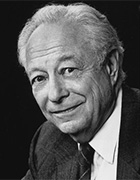
Irving Kristol, an influential political writer who was the intellectual father of U.S. neoconservatism, died in September 2009 at the age of 89. Although less active in his final years, Kristol’s lasting influence on the direction of U.S. political discourse is widely acknowledged. Awarded the Medal of Freedom in 2002 by President George W. Bush, Kristol’s impact was felt “across generations,” opined a New York Times obituary, “from William F. Buckley to the columnist David Brooks, through a variety of positions he held over a long career: executive vice president of Basic Books, contributor to The Wall Street Journal, professor of social thought at New York University, senior fellow at the American Enterprise Institute. He was commonly known as the godfather of neoconservatism, even by those who were not entirely sure what the term meant. In probably his most widely quoted comment—his equivalent of Andy Warhol’s 15 minutes of fame—Mr. Kristol defined a neoconservative as a liberal who had been ‘mugged by reality.’” [1]
Kristol’s legacy also includes a number of family members who have been influential shapers of contemporary conservatism in their own right. Kristol was married to Gertrude Himmelfarb, a historian whose writings on Victorian morality reportedly helped inspire the idea of “compassionate conservatism.” [2] Kristol’s son, William, founded the Weekly Standard, the preeminent mouthpiece of contemporary neoconservatism, as well as several foreign policy pressure groups, including the Project for the New American Century and the Foreign Policy Initiative.
The former John M. Olin Distinguished Fellow at the American Enterprise Institute (AEI), Kristol helped forge what he called the neoconservative “current of thought” through the numerous publications he founded and/or edited dating back to the 1950s. Among the most important journals he helped lead are Commentary magazine, where he was managing editor from 1947 to 1952; the National Interest, a magazine he founded in 1985 to explore issues related to U.S. interests in international affairs; and the Public Interest, which he cofounded with Daniel Bell in 1965 and which, before closing down in 2005, served as a platform for neoconservative writings on social and domestic policy.
Together with the likes of Norman Podhoretz, a later Commentary editor who shaped it into a neoconservative organ, and Richard John Neuhaus, editor of First Things, Kristol was instrumental in nurturing writers whose views on foreign and domestic policies shared the same anti-liberal establishment ethos that Kristol forged in his own writings. Angered by what they viewed as liberals’ tendency to be soft on communism, by the rise of the counterculture and antiwar movement in the 1960s, and by the “appeasement” politics of the Democratic Party in the early 1970s, Kristol and his cohorts blazed a wide political trail leading from left to right. They were, as Kristol famously put it, “liberals mugged by reality.”
Kristol also played an important role in shaping the neoconservative connection to the think tank and pressure group world. Most importantly in this regard was the relationship Kristol developed in the 1970s with Bill Baroody Sr., then head of the AEI. Regarded at the time as a mainstream conservative think tank mainly concerned with economic policy, AEI would become by the 1980s the unofficial headquarters of neoconservatism. After taking Kristol on board as a fellow, Baroody began hiring a number of influential neoconservative scholars, including Michael Novak, Jeane Kirkpatrick, and Ben Wattenberg. AEI serves to this day as the star institution of the neoconservative firmament. [3]
While neoconservatism first emerged as a coherent political ideology in the 1970s, Kristol’s path from anti-Stalinist socialist, to liberal, to neoconservative Republican, began much earlier, in the early 1950s, when he was editor of Commentary. Among his favorite targets for criticism at that time were “progressives,” who according to Kristol and other like-minded “liberal anti-communists” were abetting Communist influence in the United States.
An exemplary dispute that foreshadowed the emergence of neoconservatism erupted in the early 1950s over the Red Scare’s widespread repression of Communist Party members and those thought to be associating with them . While neocons-to-be like Kristol regarded these activists as enemies of liberalism, they likewise attacked progressives who defended those targeted by the Red Scare. In a 1952 Commentary article, “‘Civil Liberties’—A Study in Confusion,” Kristol criticized the likes of Alan Barth, Henry Steele Commager, and William O. Douglas for defending the civil liberties of Communists. Arguing that granting civil liberties to U.S. Communists was like a businessman paying “a handsome salary to someone pledged to his liquidation,” Kristol maintained that communism is “an Idea, and it is of the essence of this Idea that it is also a conspiracy to subvert every social and political order it does not dominate.” [4]
Although a fierce anti-Communist during the Cold War, Kristol’s views on U.S. foreign affairs seemed to soften with the collapse of the Soviet Union. While the political faction he helped create was intimately associated with the Iraq War and the George W. Bush administration’s war on terror, Kristol himself remained largely on the sidelines, while his son William, editor of the Weekly Standard, and William’s comrades in organizations like the Project for the New American Century led the effort to push the country into war.
An irony of the neoconservative campaign in support of invading Iraq was that one of its justifications was that the United States could impose a democratic project on the Middle East that would ensure greater peace and security. But this idea ran directly counter to arguments developed by Irving Kristol. During the early stages of the Vietnam War, Kristol wrote that the “plain truth is that South Vietnam, like South Korea, is barely capable of decent self-government under the best of conditions. It lacks the political traditions, the educated classes, the civic spirit that makes self-government workable. … No amount of American aid, no amount of exhortation, no amount of good advice can change this basic condition. … The most we can hope for in South Vietnam is what we have achieved in South Korea; that is, to remove this little, backward nation from the front line of the Cold War so that it can stew quietly in its own political juice.” [5]
This contrary tone was again on display in the late 1980s, when Kristol split with other neoconservative writers over the best course for U.S. policy in the wake of the fall of the Soviet Union. People like Charles Krauthammer and Joshua Muravchik began championing a new crusade for the United States, one aimed at capitalizing on the country’s position as the lone superpower to aggressively promote democracy and American values as a replacement for militant anti-Communism. [6] In his seminal 1990 Foreign Affairs article “The Unipolar Moment,” Krauthammer wrote that if “America wants stability, it will have to create it.” The alternative to “such a robust and difficult interventionism,” he argued, “is chaos.” [7] For his part, Muravchik argued that if “communism soon completes its demise, U.S. foreign policy still should make the promotion of democracy its main objective.” [8]
For Kristol, these ideas were overly idealistic. Instead, he advocated what he saw as a new “realism” based on the prevailing circumstances in the international system. Arguing that there was no longer any “balance of power for us to worry about,” efforts at “monitoring and maintaining a balance of power among other nations, large and small, in Europe, the Middle East, Asia, and elsewhere … would make the United States the world’s policeman. … We are simply not going to be that kind of imperial power,” he concluded. [9] While he opposed these new trends in neoconservative discourse, Kristol recognized that they would appeal “not only to liberals but to many conservatives who are ideologically adrift in the post-Cold War era.” [10] Likewise, Robert Tucker, an editor of the Kristol-founded National Interest, warned against undertaking a new mission to impose freedom, promoting instead “a framework of stability and moderation within which democratic institutions may take root and grow.” [11]
For neoconservative hardliners, writers like Kristol and Tucker had ceased being neoconservatives. In Muravchik’s view, they had become conservative neorealists or right isolationists. Around the ideas promoted by Muravchik and Krauthammer a new era of neoconservatism began to emerge, one spearheaded by a so-called Young Turk faction, which would grow to include many of the earliest neoconservatives’ offspring, including William Kristol, Robert Kagan (son of Donald), John Podhoretz (son of Norman), and Daniel Pipes (son of Richard). This faction would be at the center of efforts after the 9/11 attacks to push for an interventionist war on terror aimed at reshaping the Middle East. [12]
On perhaps the most important neoconservative-championed cause during his last years—the 2003 U.S. invasion of Iraq—Kristol was conspicuously silent. But in a mournful defense of the United States’ uniquely powerful military role in the world, Kristol wrote in an August 20, 2003 AEI article, titled “The Neoconservative Persuasion,” that “A larger nation has more extensive interests. And large nations, whose identity is ideological, like the Soviet Union of yesteryear and the United States of today, inevitably have ideological interests in addition to more material concerns. Barring extraordinary events, the United States will always feel obliged to defend, if possible, a democratic nation under attack from nondemocratic forces, external or internal. That is why it was in our national interest to come to the defense of France and Britain in World War II. That is why we feel it necessary to defend Israel today, when its survival is threatened. No complicated geopolitical calculations of national interest are necessary. Behind all this is a fact: the incredible military superiority of the United States vis-à-vis the nations of the rest of the world, in any imaginable combination. This superiority was planned by no one, and even today there are many Americans who are in denial. … The older, traditional elements in the Republican Party have difficulty coming to terms with this new reality in foreign affairs … But by one of those accidents historians ponder, our current president and his administration turn out to be quite at home in this new political environment, although it is clear they did not anticipate this role any more than their party as a whole did. As a result, neoconservatism began enjoying a second life, at a time when its obituaries were still being published.” [13]