
Fred Iklé (1924-2011)
last updated: September 24, 2012
Please note: The Militarist Monitor neither represents nor endorses any of the individuals or groups profiled on this site.
Affiliations
- Center for Security Policy: Former Member, National Security Advisory Panel
- U.S. Committee for Human Rights in North Korea: Former Chairman
- Center for Strategic & International Studies: Former Distinguished Scholar
- Smith Richardson Foundation: Former Member, Board of Governors
- Project for a New American Century: Signatory
- Committee on the Present Danger: Former Member
- Massachusetts Institute of Technology: Former Professor of Political Science
- RAND Corp.: Former Head of the Social Sciences Department
- National Institute of Public Policy: Study Participant, 2001
- Republican National Committee: Member,Advisory Council on International Security (1977-1978)=
Government
- Defense Department: Defense Policy Board, Former Member (2001-2005); Undersecretary of Defense for Policy (1981-1988)
- National Endowment for Democracy: Former Director
- Commission on Integrated Long-Term Strategy: Former Co-Chairman, 1988
- U.S. Arms Control and Disarmament Agency: Director (1973-1977)
Business
- CMC Energy Services: Chair
- Telos Corp.: Former Chair
- Zurich-American Insurance Companies: Former Director
Education
- University of Chicago: M.A. (1948), Ph.D. (1950)
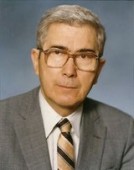
Fred Iklé, who passed away in November 2011, was a well known foreign policy analyst and government official who supported a host of militarist foreign policies dating back to the 1970s—including rolling back détente with the Soviet Union and the 2003 U.S.-led invasion of Iraq. Iklé served in a number of Republican administrations, including as director of the U.S. Arms Control and Disarmament Agency under Presidents Nixon and Ford, as President Reagan’s undersecretary of defense for policy, and as a member of the Defense Policy Board during Donald Rumsfeld’s tenure as defense secretary in the first George W. Bush administration.[1]
Despite his support for various neoconservative-led advocacy campaigns, Iklé ultimately soured on the Bush administration’s “war on terror,” arguing in a 2006 book that an excessive focus on Islamic terrorists could make the United States more vulnerable to other potential threats.[2] The book, Annihilation from Within: The Ultimate Threat to Nations, argued that the “global war on terrorism” was a misleading notion that served to rally America’s enemies. Iklé lambasted the George W. Bush administration for failing to adequately pursue domestic protections against terrorism, and he rejected calls by neoconservatives and other foreign policy militarists for a preemptive attack against Iran, saying that it would be a “catastrophic failure.”[3]
Parting with his neoconservative associates, many of whom have painted “Islamic extremism” as an existential threat to the United States and the West, Iklé wrote in Annihilation from Within that attacks from Islamic terrorists are incapable of “defeating established democracies or indeed any nation that is not already a failed state.” He added, “The fact is that contemporary Islamic terrorism does not have a strategy for victory. It is swayed by impulses animated by a fervidness for revenge and religious utopias.… While these murderous assaults hurt us, they also spur us to increase our military power and to strengthen the defense of the homeland. What does not kill us makes us stronger.”[4]
Iklé also expressed regret over the decision to invade Iraq. When the Financial Times asked him whether he had been opposed to the 2003 decision to invade, Iklé said, “I wish I could say I was. Enormous and incredible mistakes in Iraq may end up driving us out, but if we handle the exit correctly it will not make the U.S. more vulnerable, and can be made worse for our jihadist adversaries who are killing each other.” He added, “Pulling out of Iraq will lead to feelings of guilt, with some justification. In some ways we have made things worse than under Saddam Hussein.”[5]
Iklé was active in a number of non-governmental policy and advocacy organizations, many of which have been closely associated with neoconservatism, including the Frank Gaffney-led Center for Security Policy and the 1970s incarnation of the Committee on the Present Danger. Among his last posts was as a distinguished scholar at the Washington, D.C.-based Center for Strategic and International Studies (CSIS). In a statement released upon his death, CSIS board chairman Sam Nunn said: “Fred Iklé will be remembered as a giant in foreign policy and national security. He helped steer the Department of Defense through the final critical years of the Cold War and always imagined a more hopeful future based on the principles of democracy.”[6]
Iklé served as a member of the Pentagon’s Defense Policy Board (DPB) from 2001 to 2005, during Richard Perle’s tenure as chair. Serving alongside Iklé were a number of other hardline policy advocates, such as Newt Gingrich, Ken Adelman, James Woolsey, Eliot Cohen, Richard Allen, and Martin Anderson. Many of these men had risen to prominence in the Reagan administration after joining forces in the late 1970s in the Committee on the Present Danger (CPD), an anticommunist pressure group. The 1970s CPD—which would be revived after 9/11 to promote aggressive U.S. foreign policies in the “war on terror”—was a neoconservative-led outfit whose anti-détente policies were criticized by some observers for helping reignite the Cold War.[7]
Track Record
In the early 1970s, after working for several years as a political science professor at the Massachusetts Institute of Technology, Iklé joined the administration of Richard Nixon, serving as director of the U.S. Arms Control and Disarmament Agency from 1973 to 1977. He later served as an adviser to then-California Gov. Ronald Reagan and was the chairman of the Republican National Committee’s Advisory Council on International Security in 1977-1978.[8]
His close connections to Reagan and other prominent conservatives made him a prime candidate for an administration post when Reagan was first elected president. Recounts the scholar Philip Burch, "With the rise to power of rightwing interests following Reagan's election, Iklé was appointed Under Secretary of Defense for Policy largely because of the conservative ties he had established…. [H]e had served on the [American Enterprise Institute's] advisory council on foreign policy and the advisory board of Georgetown's [Center for Strategic and International Studies], and had been associated with both the influential Committee on the Present Danger and the Hudson Institute…. [T]wo conservative writers claim that the intercession of North Carolina's Sen. Jesse Helms weighed heavily … in the decision to appoint Iklé.”[9]
After the Cold War ended, Iklé continued to support militarist policy initiatives. In 1997, he signed the founding statement of principles of the neoconservative Project for the New American Century, a pressure group that later played an instrumental role in pushing for the U.S. invasion of Iraq. He also participated in a study that produced the National Institute for Public Policy's 2001 report, “Rationale and Requirements for U.S. Nuclear Forces and Arms Control,” which was meant to serve as a blueprint for the Bush administration's nuclear weapons policies.[10]
Along with Christopher DeMuth, James Woolsey, and others, Iklé served on the board of governors of the Smith Richardson Foundation, an important funder of a several influential rightist think tanks. He was also on the board of the U.S. Committee for Human Rights in North Korea, along with Richard Allen, Nicholas Eberstadt, and Carl Gershman, among others.
According to Federal Election Commission records, Iklé donated to the political campaigns of several conservative politicians over the years, including those of Fred Thompson, John McCain, Jon Kyl, Chris Cox, and Raymond Tanter.
Iklé’s books include How Nations Negotiate (1964) and Every War Must End (1970).