
Richard Pipes
last updated: July 10, 2013
Please note: The Militarist Monitor neither represents nor endorses any of the individuals or groups profiled on this site.
Affiliations
- Harvard University: Frank B. Baird Jr. Professor of History Emeritus (1997-current); Baird Professor of History (1958-1996); Instructor and Lecturer in History and Literature (1950-1958)
- Committee on the Present Danger:Former Member (1970s)
- Heritage Foundation: Speaker
- Hudson Institute: Letter Signatory
- Harvard University Russian Research Center: Director (1968-1973)
- Council on Foreign Relations: Member
- Freedom House's American Committee for Peace in the Caucasus: Member
- Benador Associates: Member of Public Relations, Media, and International Speakers Bureau
- Victims of Communism Memorial Foundation: National Advisory Council Member
Government
- National Security Council: Director of East European and Soviet Affairs (1981-1982)
- Department of State: Member of Reagan Transition Team (1980)
- Team B Strategic Objectives Panel: Chair (1976)
- U.S. Air Force: Former Officer
Education
- Muskingum College: Degree Not Specified
- Cornell University: Degree Not Specified
- Harvard University: Ph.D. in History
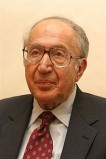
Richard Pipes, a Polish-American historian of Russia and Communism at Harvard University, was a key anti-Soviet crusader in the 1970s and 1980s. He served as a consultant to Washington State Democratic Sen. Henry "Scoop" Jackson (an important early figure in the neoconservative pantheon) in the 1970s, was a member of the 1970s version of the Committee on the Present Danger, and chaired the Team B Strategic Objectives Panel, a controversial effort in the mid-1970s to reinterpret CIA intelligence on the Soviet threat. He is the father of Daniel Pipes, a controversial neoconservative writer who heads the hawkish Middle East Forum.
In recent years, Pipes has continued to provide commentary on Russian politics and culture, in part through his affiliations with a number of rightist policy institutes, including Freedom House(for which he serves as a member of its American Committee for Peace in the Caucasus), the Hudson Institute, and the Heritage Foundation. In June 2007 he took part in issuing a joint statement with the Hudson Institute that accused Russia of "reverting to patterns of behavior characteristic of the Soviet Union."[1] And in a 2007 interview with the Milan-based Corriere della Sera, Pipes warned that a "new Cold War" could be emerging as Russia resists missile defense plans in Eastern Europe and expands its influence in the former Soviet bloc.[2]
Compared to more contemporary neoconservatives, however, Pipes has taken a comparatively circumspect view toward Washington's present relations with Moscow, arguing in a 2011 interview with the Wall Street Journal that while modern Russia does "pose a threat to [its] ex-republics," it poses no comparable threat to the United States.[3]
In a 2009 Journal op-ed, Pipes outlined his long-standing belief that modern Russia's antidemocratic politics derive largely from "the fact that during their 1,000-year old history of statehood, the Russians have virtually never been given the opportunity to elect their government or to influence its actions. As a result of this experience, they have become thoroughly depoliticized." Accordingly, he wrote, "it is incumbent on the Western powers patiently to convince Russians that they belong to the West and should adopt Western institutions and values: democracy, multi-party system, rule of law, freedom of speech and press, respect for private property."[4]
According to Pipes, such an approach must include taking Russia's "sensitivities" into consideration, particularly its anxieties about the growth of NATO along its borders. "The Russian government and the majority of its citizens regard NATO as a hostile alliance," he wrote in 2009. "One should, therefore, be exceedingly careful in avoiding any measures that would convey the impression that we are trying militarily to 'encircle' the Russian Federation."[5] In 2011 Pipes went one step further, telling the Wall Street Journal, "NATO was created specifically against the Russian threat. The Russian threat does not exist. … So I think the time has come to consider dissolving it." But, Pipes added, the United States "should not acquiesce in Russia treating the countries of her 'near abroad' as satellites" nor "allow Moscow a veto over the projected installation of [U.S.] anti-rocket defenses" on Russia's periphery.[6]
Also unlike many of his fellow former Cold Warriors, Pipes offered tentative praise in 2011 for the Obama administration's attempted "reset" of U.S. relations with Russia, musing that "There are no conflicts right now," although "how much this is a result of Obama's policy and how much is a result of [Moscow's] fear of China and the desire to move closer to Europe and the U.S., I don't know." On the other hand, Pipes has written: "If you liked, as I did, Reagan's foreign policy, then you can't like Obama's."[7] In 2008, Pipes suggested that Obama may be a "socialist" and characterized voting for Republican presidential nominee John McCain as a "patriotic duty."[8]
Like many neoconservatives—including his son Daniel—Pipes has identified "radical Islam" as a contemporary threat rivaling, if not equaling, twentieth century communist movements. "It's not as bad as the communist danger was because they don't [control] the arsenals of power, of military power," Pipes has said of radical Islamic movements. But, echoing a common right-wing trope, he added, "they are fanatical, and they are irrational. We have to stand up to them and not be frightened of them. But we may be in for decades of the Muslim threat."[9]
Cold War and Bush Administration
At the height of the Cold War, Pipes consistently aligned himself with the most ideological and alarmist anti-Soviet figures in Washington.
In her book Killing Détente: The Right Attacks the CIA (1998), Anne Cahn writes: "The man finally selected to serve as chairman of the Team B Strategic Objectives Panel was Richard Pipes, a Polish immigrant and professor of Russian history at Harvard University. Pipes had consistently labeled the Soviets an aggressive imperialistic power bent on world domination. He had been 'discovered' by Richard Perle, who convinced his boss, Senator Henry Jackson, to hire Pipes as a consultant." Pipes also played an instrumental role in selecting other Team B participants, including Paul Wolfowitz. In an interview with Cahn, Pipes said: "I picked Paul Wolfowitz [who at the time was working as special assistant for the Strategic Arms Limitation Talks, or SALT] because Richard Perle recommended him so highly."[10]
As part of the Team B exercise, Pipes and his team of outside experts—which also included William Van Cleaveand counted on the support of John S. Fosterand Donald Rumsfeldin opposition to realpolitikers like Henry Kissinger, who saw the exercise as being hazardous to U.S.-Russian relations—were charged by then-CIA head George H.W. Bush with assessing National Intelligence Estimates regarding Soviet strategic capabilities and intentions.[11] Although the purported aim of the exercise was to come up with an unbiased analysis of the Soviet threat, according to Cahn, "The Team B experiment was concocted by conservative cold warriors determined to bury détente and the SALT [arms control] process. Panel members were all hard-liners. The experiment was leaked to the press in an unsuccessful attempt at an 'October surprise.' But most important, the Team B reports became the intellectual foundation of 'the window of vulnerability' and of the massive arms buildup that began toward the end of the Carter administration and accelerated under President Reagan."[12]
One of the more curious claims made by the Team B experts, as recounted in Adam Curtis' BBC documentary The Power of Nightmares, was that the Soviets had developed a non-acoustic submarine detection device that was so sophisticated it couldn't be detected by outside intelligence agencies. The very fact that Team B was unable to find evidence of the Soviet project, according to Pipes, who was interviewed for the documentary, was used as proof that such a device existed. Said Pipes: "That's important, yes. If something is not there, that's significant. … If you believe that [the Soviets] share your view of strategic weapons, and they don't talk about it, then there's something missing. Something is wrong. And the CIA wasn't aware of that."[13]
Commented Anne Cahn in the documentary: "They couldn't say that the Soviets had acoustic means of picking up American submarines, because they couldn't find it. So they said, well maybe they have a non-acoustic means of making our submarine fleet vulnerable. But there was no evidence that they had a non-acoustic system. They're saying, 'We can't find evidence that they're doing it the way that everyone thinks they're doing it, so they must be doing it a different way. We don't know what that different way is, but they must be doing it.'"
On June 12, 2007, Pipes participated in a Heritage Foundation roundtable discussion on "The Victims and Crimes of Communism from 1917 to the Present." The discussion followed a dedication ceremony of a Washington, DC memorial commemorating "the 100 million people who have been killed by communist totalitarian regimes worldwide," held by the Victims of Communism Memorial Foundation (VCMF), on whose National Advisory Council Pipes serves. Other members of VCMF's National Advisory Council have included Edwin Feulner, Carl Gershman, George Weigel, and the late Jack Kemp. Pipes had previously been a speaker at a December 2006 Heritage Foundation discussion on "Poland on the Eve of Martial Law: 25 Years On."[14]
Pipes has also joined other Cold War hawks in supporting the Chechen independence movement, sometimes playing down the movement's strong Islamist components. Following the Beslan school hostage crisis in 2004, Pipes took to the New York Times to lament the fact that Russian President Vladimir Putin "seems determined not to yield an inch [in Chechnya]. 'We showed weakness, and the weak are trampled upon,' he said on Saturday [following the massacre]. This may seem like a truism to Russians, but in this case it is wrong. Russia, the largest country on earth, can surely afford to let go of a tiny colonial dependency, and ought to do so without delay."[15]
In the same article, Pipes endeavored to distinguish between the Chechen rebels and the terrorists who perpetrated the 9/11 attacks in the United States. He wrote: "In his post-Beslan speech, Mr. Putin all but linked the attack to global Islam: 'We have to admit that we have failed to recognize the complexity and dangerous nature of the processes taking place in our own country and the world in general.' Reports that some of the terrorists were Arabs reinforce that line of thinking. But the fact is, the Chechen cause and that of al-Qaida are quite different, and demand very different approaches in combating them."
Because of his views on the Cold War, Pipes was occasionally looked to as a sort of "Ur-theorist of [the Bush administration's] bold foreign policy initiatives." But Pipes also voiced criticism of the Iraq War. In an interview with the Boston Globe, he said, " I think the war was correct—destroying this invasive evil. But beyond this I think they're too ambitious." Democracy-building efforts in Iraq, according to Pipes, are "impossible, a fantasy." Echoing the likes of other early neoconservatives like the late Irving Kristol, who was equivocal on issues like democracy promotion as a grounds for military intervention, Pipes argued: "Democracy requires, among other things, individualism—the breakdown of old clannish, tribal organizations, the individual standing face-to-face with the state. You don't have that in the Middle East. Iraq is tribally run." Pipes attributed the administration's lack of foresight on a lack of hindsight: "Paul [Wolfowitz] didn't have much education in history. … It's not his field. He was educated as a military specialist, a nuclear weapons specialist. Like most scientists, he doesn't have a particular understanding of other cultures."[16]
Although no longer a key neoconservative player, Pipes' son is. In 2003, when George W. Bush chose Daniel Pipes to serve on the board of the U.S. Institute of Peace, the ensuing barrage of criticism prompted the president to bypass Congress and make Pipes a recess appointment to the institute. The younger Pipes has remained an influential and controversial commentator, particularly popular among anti-Islamic activists like Pamela Geller and Robert Spencer.
Pipes is the author of numerous books, including The Russian Revolution, Russia Under the Bolshevik Regime, and Property and Freedom. In 1992, Pipes served as an expert witness in the Russian Constitutional Court's trial against the Communist Party.