
Richard John Neuhaus (1936-2009)
last updated: January 19, 2009
Please note: The Militarist Monitor neither represents nor endorses any of the individuals or groups profiled on this site.
Affiliations
- Institute on Religion and Public Life: Former President
- American Enterprise Institute: Former Adjunct Scholar
- Institute on Religion and Democracy: Former Member, Board of Directors
- The Foundation for Community and Faith-Centered Enterprise: Former Member, Board of Visitors (2002)
- First Things: Former Editor-in-Chief
- Archdiocese of New York: Priest (1991)
- National Review: Former Religion Editor
- Becket Fund Advisory Board: Former Member
- U.S. Institute of Peace: Former Member, Board of Directors
Government Service
- Presidential Appointments: Carter, Reagan, and George H.W. Bush Administrations
Education
- Concordia Theological Seminary
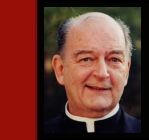
"Father Richard," as he was called by President George W. Bush and others, was a Catholic priest and the president of the neoconservative-aligned Institute on Religion and Public Life (IRPL). Neuhaus, who passed away on January 8, 2009, was for decades a leading figure in what some observers have called a culture war waged by conservative Catholics against progressive and mainstream Protestant churches.1 Described in a New York Times obituary as “a Roman Catholic beacon of the neoconservative movement of today,”2 Neuhaus was also a close, though unofficial, adviser to the George W. Bush administration. An administration official in 2005 said Neuhaus had "a fair amount of under-the-radar influence" on policies ranging from stem cell research to cloning, and Neuhaus apparently had a significant impact on Bush, who once said that the priest "helps me articulate these [religious] things."3
Together with fellow so-called theocons Michael Novak of the American Enterprise Institute (AEI), sociologist Peter Berger, and George Weigel of the Ethics and Public Policy Center (EPPC), Neuhaus helped lead the effort to roll back the influence of liberalism and secularism in public affairs. Upon his death, various bloggers began a debate over the significance of Neuhaus’s ideas on liberalism. In a fawning obituary about Neuhaus, Ross Douthat wrote in his Atlantic blog, “The Bush years produced many spasms of hysteria: Among the silliest was the notion that Neuhaus and his intellectual circle represented some sort of grave and reactionary threat to liberal democracy. In reality, Neuhaus as [sic] an archetypal post-Vatican II figure, whose deepest intellectual interests lay in finding compatibilities and building bridges—between Jews and Christians, Protestants and Catholics, faith and the free market, and above all between Christianity and liberalism.”4
Contesting this idea, Damon Linker of the New Republic argued that it is inaccurate to say that Neuhaus wanted to build bridges between Christianity and liberalism. Rather, Neuhaus preferred a brand of so-called liberalism “that traces American democratic ideas not to the Enlightenment but to medieval Christendom. The liberalism that believes (in Neuhaus' words, written in 1984) that ‘only a transcendent, a religious, vision can turn this society from a disaster and toward the fulfillment of its destiny’ as a ‘sacred enterprise.’ The liberalism that holds (in Neuhaus' words, written in 1997) that the American experiment ‘may well be ending . . . under the iron rule of the 'separation of church and state.’”5
Neuhaus, in addition to founding the IRPL, also served as editor-in-chief of the institute’s journal First Things, was an adjunct scholar at AEI, and served on the boards of several neoconservative-aligned organizations, including the EPPC and the Institute on Religion and Democracy. Neuhaus, who became a Roman Catholic priest in 1991 after having previously been a Lutheran minister, was also a director of the rightist World Youth Alliance, which promotes a "culture of life" at the United Nations, among other activities.
In his columns for the First Things magazine and website, Neuhaus regularly discussed issues ranging from theological disputes between Protestants and Catholics and the impact of progressive ideologies on youths, to the application of just-war concepts in foreign policy and the politics of abortion and "freedom to die" proponents. In a September 2006 column, for example, Neuhaus warned against those who seek to "moderate" Islam, pointing to what he called the tremendous influence of violent jihad over many of the faith's adherents. He wrote, "To purify Islam by ridding it of the current rulers who are declared to be apostates and no better than infidels, to compel the submission of the Christian West (meaning mainly America), and to achieve eternal bliss by sacrificing one's life (if necessary, in suicide attacks)—these are the driving motivations behind Jihadism. Such is the appeal, not to the poor and disenfranchised of the 'Arab street' but to the brightest and best of the relatively well-educated and well-off of young Muslims, both at home and abroad, who are seething with resentment over centuries of what they view as humiliation by the West and are bent upon vengeance to the glory of God."6
Instead of trying to moderate radical Islamists, wrote Neuhaus, the United States must develop a new containment strategy, one modeled on that designed by George Kennan after the end of World War II. Neuhaus wrote, "After September 11, First Things worried editorially about the meaning of an open-ended conflict and the applicability of just-war doctrine when it may be impossible to specify the meaning of victory. That is a continuing worry. Perhaps it is forever, or at least as far as we can see into the future, and the best we can hope for is containment of the threat. To clear our minds of cant and prepare for the future, we need a new but very different 'Letter X' such as that written by George Kennan in 1947, preparing us for the long contest with the Soviet Union."7
Background in Church and Politics
In the 1960s, Neuhaus was an activist pastor at St. John the Evangelist Lutheran Church, whose parish extended into the largely black ghetto of Bedford-Stuyvesant in Brooklyn. From the pulpit, Neuhaus preached against the Vietnam War and for social justice. Neuhaus took his antiwar and other progressive beliefs—which he grounded in Christian theology—out of the church and into the streets. In the late 1960s, Neuhaus gained national prominence as the cofounder of Clergy and Laymen Concerned About Vietnam. Peter Berger, a sociology professor at Brooklyn College who, like Neuhaus, later became a neocon ideologue, joined Neuhaus on the national steering committee of the antiwar group. In 1970, Berger and Neuhaus published Movement and Revolution, a collection of essays on the progressive movement in which Neuhaus affirmed the “right to armed revolution” and discussed whether another American revolution might help bolster peace and justice in the country.8
But by the mid-1970s both Neuhaus and Berger had dropped revolution—and progressivism—for the reactionary politics of the ascendant neoconservative camp. Neuhaus, Berger, and Michael Novak (another former proponent of liberation theology) had all undergone personal revolutions, having sharply shifted their ideological fervor, academic endeavors, and political activism toward the right. All became leading advocates of "democratic capitalism," harsh critics of liberalism, and associated with the American Enterprise Institute.
AEI also underwent a political makeover in the 1970s, transforming from a conservative think tank associated with traditional conservatism and Main Street capitalist values to a neoconservative-aligned think tank that embraced corporate capitalism and Wall Street. Neuhaus and Berger in 1975 joined an ambitious AEI project to investigate the negative social impacts of the so-called New Class—the "megastructures" of government, the academy, trade unions, and corporations created by the liberal establishment—and to promote policies supporting the "mediating structures" of the family, the church, and communities.9
During the 1980s, Neuhaus ran the Center on Religion and Society, which was a project of the Rockford Institute that produced the quarterly journal This World. The “paleoconservative” Rockford Institute is firmly entrenched in the right's Old Guard, which from the mid-1970s through the 1980s was locked in an uneasy political alliance with the neoconservatives. In his account of the rise of neoconservatism, Mark Gerson (a director at the defunct Project for the New American Century) writes in The Neoconservative Vision that Neuhaus was "a great philo-Semite, having written since his days as a radical in the 1960s of his reverence for the Jewish people and for Judaism.”10 Gerson recounts how, after the Rockford Institute published articles that some neoconservatives including Weigel criticized as antisemitic, Neuhaus split with the institute.11 With funding from Bradley and other conservative foundations, Neuhaus established the Institute on Religion and Public Life, which he billed as "an interreligious, nonpartisan research and education institute whose purpose is to advance a religiously informed public philosophy for the ordering of society."
Neuhaus, an erstwhile antiwar activist who opposed the U.S. military intervention in Vietnam as unjust, has since the 1980s routinely provided theological backing for U.S. military ventures. Weeks after the September 11, 2001 attacks, Neuhaus published an op-ed in the conservative National Catholic Register that cast the war on terror as part of the "clash of civilizations." According to Neuhaus, "The West is now being compelled to recognize itself more clearly for what most Muslims perceive it to be—the Christian West, or Christendom." Neuhaus then asserted, "Just war, aimed at establishing just peace, is the mandatory course of charity."12
On March 10, 2003, just prior to the Iraq invasion, Neuhaus gave his blessings to a war. Invoking the teachings of St. Thomas Aquinas, Neuhaus said that the planned invasion would be a "just war" because "war is sometimes a moral duty in order to overturn injustice and protect the innocent." After elaborating the theological foundations that he said make preventive war "justified and necessary," Neuhaus also gave his imprimatur to the Bush administration's attacks on the credibility and value of the United Nations, while taking antiwar Catholics to task for backing the multilateral institution. "In view of the UN's frequent hostility to the Church on family policy, population, the sacredness of human life, and related matters," advised Neuhaus, "some Catholic leaders may come to regret their exaggerated and, I believe, ill-considered statements about the moral authority of the UN."13
Neuhaus concluded that the UN failure to support "the coalition of the willing" would discredit the institution. "But in its absence," he speculated, "I expect that new institutions more attuned to the nexus of power and responsibility would emerge in order to coordinate national interests in the service of peace, never forgetting that peace as 'tranquillitas ordinis' will always be sadly deficient short of Our Lord's return in glory."14
Despite his support for the invasion, Neuhaus nevertheless cautioned that the "Church cannot bless this military action as though it were a Christian crusade," explaining that the Catholic Church needed to maintain its position as a moral arbiter. "After the war, if there is to be a war, the Church, and the Holy Father in particular, will be indispensable as a dialogue partner in moving Islam away from the most ominously destructive possibilities of a 'clash of civilizations,'" predicted Neuhaus.15
Books by Neuhaus include Catholic Matters: Confusion, Controversy, and the Splendor of Truth (2006); The Naked Public Square: Religion and Democracy in America (1997); Appointment in Rome: The Church in America Awakening (1998), and Doing Well & Doing Good: The Challenge to the Christian Capitalist (1992).