
Michael Joyce (1942-2006)
last updated: August 10, 2018
Please note: The Militarist Monitor neither represents nor endorses any of the individuals or groups profiled on this site.
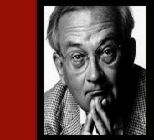
Affiliations
- Bradley Foundation: Former President and CEO
- Goldseker Foundation: Former CEO
- John M. Olin Foundation: Former Executive
- The Pinkertown Foundation: Former Board Member
- The Philanthropy Roundtable: Former Board Member
- Clare Booth Luce Fund: Former Board Member
- Foundation Francisco Marroquin: Former Trustee
- Project for the New American Century: Signed PNAC’s September 20, 2001 Letter on the War on Terrorism
- Project for the Republican Future: Cofounder
Government Service
- Reagan Presidential Transition Team
Private Sector
- Cobalt Corp.: Former Board Member
- Harp & Eagle, LTD: Former Board Member
Michael Joyce, who passed away in early 2006, was once described by neoconservative guru Irving Kristol as the “godfather of modern philanthropy.” Joyce was a key financial booster of the modern conservative movement as the head of a number of right-leaning foundations, including the Bradley, Olin, and Goldseker foundations. Joyce also engineered several right-wing policy campaigns and supported various neoconservative advocacy groups, including the Project for the New American Century (PNAC), founded in 1997 by neocon scions William Kristol and Robert Kagan.
During his 15-year tenure as head of the Bradley Foundation, Joyce turned the foundation into one of the most powerful conservative funders in the country. He supported two of William Kristol’s outfits, PNAC and the Project for the Republican Future, which helped spearhead the Republican takeover of Congress in 1994.
Before his early retirement from the Milwaukee-based Bradley Foundation in 2002, Joyce created Americans for Community and Faith-Centered Enterprise to build support for President George W. Bush’s controversial faith-based initiative. According to the Washington Post (June 25, 2001), “The administration has also been working behind the scenes to build support for the plan. Michael S. Joyce, a proponent of school choice who has been developing the intellectual framework for faith-based efforts for 12 years, said Bush asked him at a Rose Garden ceremony May 10, ‘Did Karl call you yet?’ Joyce said Karl Rove, Bush’s senior adviser, phoned later that day and asked Joyce ‘to undertake a private initiative to help get this legislation through.’ . On June 1, Joyce opened Americans for Community and Faith-Centered Enterprise with a stable of consultants and lobbyists and an office on Pennsylvania Avenue. . ‘For a lot of people, this conjures images of serpent-handlers and speaking in tongues,’ Joyce said. ‘We’re busy convincing centrist Democrats that allowing equal access to public resources is not establishing a religion.'” Other members of the now-defunct organization (including the affiliated Foundation for Community and Faith-Centered Enterprise, led by his wife Mary Jo) included Richard John Neuhaus, William Bennett, and William Kristol.
According to Milwaukee journalist Barbara Miner, Joyce, who grew up in a Democratic family from Cleveland, first got involved in national politics and philanthropy after he moved to New York City in 1978 and began working for the Institute for Educational Affairs, “a neoconservative organization started by right-wing trailblazer Irving Kristol and William Simon, secretary of the treasury for presidents Nixon and Ford. The following year Simon asked Joyce to head the Olin Foundation.” Fewer than 10 years later, in 1986, the Atlantic Monthly called Joyce one of the three most important individuals behind the success of the conservative movement (both quotes cited in Media Transparency profile of Michael Joyce).
During his time at Olin and Bradley, Joyce refined the strategy of waging what he called a “war of ideas” to change the course of U.S. policies. The strategy has been replicated by conservative foundations and think tanks across the country with enormous success. In a speech at Georgetown University shortly after he retired from Bradley, Joyce said: “At Olin and later at Bradley, our overarching purpose was to use philanthropy to support a war of ideas to defend and help recover the political imagination of the [nation’s] founders-the self-evident truth that rights and worth are a legacy of the creator-not the result of some endless revaluing of values” ( Newhouse News Service, September 18, 2003).
But according to some critics, what Joyce called a “war of ideas” was really “more about selling ideas than thinking them,” as Bruce Murphy wrote in an obituary on his Milwaukee Magazine blog Murphy’s Law (March 7, 2006). There was also a fair bit of disciplined and targeted funding priorities. While at Olin (from 1979 to 1985), Murphy wrote that Joyce “simply shipped the money to the usual suspects: conservative think tanks like the American Enterprise Institute, Heritage Foundation, Hoover Institution, and Hudson Institute.” Other conservative foundations quickly followed suit, helping increase the impact of the giving, according to Murphy. “Some 50% of the universities funded by Olin under Joyce were soon being funded by the Bradley Foundation. Typically, it was not just the same university but the same department, and in some cases, the same scholar. The net effect was a kind of intellectual cronyism, in which a select group of conservative individuals and groups get all of the money and do all of the thinking. Joyce argued that there was a liberal bias at many foundations, which might have been true, but it was not a systematic bias that carefully ruled out any scholar who didn’t fit a list of buzz words and concepts. In a war of ideas, you naturally funded the people who were on your side, and you made sure they were warriors who expressly aimed to influence government, the media, and public policy. But ideological soldiers are rarely the same as great scholars.”
In a National Review obituary, the magazine hailed Joyce as being “responsible for tens if not hundreds of millions of dollars of spending on conservative ideas and causes. His name will long be linked to the rise of school choice, welfare reform, and faith-based initiatives.” The obit quoted James Piereson, head of the defunct Olin Foundation, who said: “Mike was an inspirational leader. He basically invented the field of modern conservative philanthropy-it existed before him and he didn’t do it alone, but he made it far more successful than it had been.”