
Frank Gaffney
last updated: April 9, 2017
Please note: The Militarist Monitor neither represents nor endorses any of the individuals or groups profiled on this site.
Affiliations
- Center for Security Policy: Founder and President
- Committee on the Present Danger: Member
- Foundation for the Defense of Democracies: Former Distinguished Adviser
- Americans for Victory over Terrorism: Former Senior Adviser
- Set America Free Coalition: Member
- Project for the New American Century: Founding member
- Middle East Forum: Study Participant, May 2000
- Coalition for Liberty, Security, and the Law: Signatory
- Washington Times: Columnist
- Defense News: Monthly Contributor
- Investor’s Business Daily: Monthly Contributor
- Benador Associates: Former Speaker
- Ariel Center for Policy Research: Contributing Expert
- National Review Online: Contributing Editor
Government Service
- Department of Defense: Assistant Secretary of Defense for International Security Policy, Nominated in 1987; Representative in U.S.-Soviet Negotiations and Ministerial Meetings; Deputy Assistant Secretary of Defense for Nuclear Forces and Arms Control Policy under Assistant Secretary Richard Perle, August 1983-November 1987
- NATO: High-Level Group Chairman for the Organization’s Senior Politico-Military Committee, 1987
- Senate Armed Services Committee: Professional Staff Member on the Committee, February 1981-August 1983
- Office of Sen. Henry M. “Scoop” Jackson: Aide, Defense and Foreign Policy, 1970s
Education
- Georgetown University School of Foreign Service: B.Sc. (1975)
- Johns Hopkins University School of Advanced International Studies: M.A., International Studies (1978)
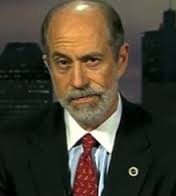
Frank Gaffney, director of a controversial advocacy group called the Center for Security Policy (CSP), is a leading anti-Islamic commentator in the United States who pushes costly weapons programs, a hardline “pro-Israel” agenda on the Middle East, and an expansive “war on terror” targeting “Islamofascists.” Gaffney has been an advocate of militarist U.S. foreign policies since the 1970s, getting his start working on the staff of Sen. Henry “Scoop” Jackson (D-WA) before joining the Ronald Reagan Pentagon in the early 1980s working under Richard Perle .
The 2016 presidential campaign and the election of Donald Trump have repetedaly led to critical public awareness of Gaffney’s work. For instance, during the campaign, Gaffney and CSP received widespread coverage when Trump referred to a debunked CSP poll in demanding “a total and complete shutdown of Muslims entering the United States.” The CSP poll purported to show that a large portion of the U.S. Muslim population holds “great hatred towards Americans.” A CNN journalist who interviewed Trump told the candidate that CNN “wouldn’t even put that poll on the air. It’s a hack organization with a guy who was dismissed from the conservative circles for conspiracy theories. You know that.”[1]

After Trump’s executive orders in early 2017 banning immigration from several Muslim-majority countries, many observers drew the connection between Gaffney/CSP and these policies. According to one reporter, “In 2015, Gaffney commissioned [Trump aide Kellyanne] Conway’s firm to produce” the poll that Trump cited on the campaign trail, despite its severe flaws. “Conway’s own firm later admitted the data was not ‘statistically representative of the entire U.S. Muslim population.'”
Gaffney initially supported the 2016 campaign of Sen. Ted Cruz (R-TX). In March 2016, many commentators noted that Cruz’s list of foreign policy advisers to his presidential campaign included a number of CSP staff member, including Gaffney, Fred Fleitz, and Clare Lopez. However, Gaffney quickly became a vociferous supporter of Trump after he won the GOP primary, claiming that the real estate magnate was “Reaganesque” in his foreign policy vision. After Trump’s widely noted mid-August 2016 foreign policy speech in Youngstown, Ohio, Gaffney told Breitbart News: “Having had the privilege of serving with President Reagan, I know it when I see it. What Donald Trump did, in this piece, was lay out both an understanding of the existential threat we’re facing—and this, of course, is something Reagan described as every generation’s task, is to confront existential threats to freedom. And Donald Trump said ours is radical Islam.”
In July 2015 Gaffney also received pubic attention stemming from his connections to Republican presidential candidates when several of the candidates attended a Gaffney-organized conference on national security. Attendees included former Louisiana governor Bobby Jindal, former New York governor George Pataki, and Sen. Ted Cruz (R-TX). Also present at the event was hawkish former U.S. ambassador to the United Nations John Bolton.[2] One observer remarked that the conference was hosted by “an anti-Islam activist with a penchant for government conspiracy theories.”[3]
On Iran and Syria
Gaffney has long advocated military action against Iran and criticized U.S. efforts at rapprochement with Tehran, including negotiations over its nuclear program. A case in point was CSP’s response to the 2013 election of moderate Iranian President Hassan Rouhani. “By simply meeting with Mr. Rouhani, let alone by making other, more tangible concessions to Iran’s president, Mr. Obama would confer a legitimacy on the self-professed Iranian con man that is unwarranted,” wrote Gaffney in September 2013. Arguing that only the threat of military force would be effective, Gaffney concluded that Obama “should be open to congressional enactment of an authorization for the use of military force in Iran,” even if such a resolution would wreck nuclear negotiations.[4]
Gaffney frequently accused the Obama administration of weakening the United States by engaging Iran diplomatically, claiming that the “results will, predictably, be disappointing and probably quite dangerous.”[5] After the successful conclusion of the nuclear negotiations between Iran and the P5+1 world powers, Gaffney called the agreement “a fraud” and an “unmitigated disaster.” He also used the opportunity to promote a conspiracy theory about Secretary of State John Kerry, wildly claiming that he was not a “credible” negotiator because he “is involved through the marriage of his daughter with Iranians, some of whom live in this country but some of whom have family in Iran.” Gaffney then called for Kerry to be impeached for the “conduct that he has engaged in this deal” and his alleged “pattern of betrayal.”[6]
On Syria, however, Gaffney split with some of his neoconservative allies, opposing a U.S. strike on the country based on the argument that it would only empower the country’s Islamist rebels and would put Israel at risk of retaliation from Iran. Addressing those who argued that an attack on Syria was necessary to “send a message” to Iran, Gaffney concluded, “For those who think the United States must defeat the Iranian regime before it obtains nuclear weapons, there are other, more direct and certainly more effective means of doing so than by … attacking Syria.” Instead, Gaffney argued, “We should help the people of Iran free themselves from their Islamist oppressors. Our success there would do more than any single other thing to assist the Syrian people.”[7]
Conspiracies and Anti-Islam Rhetoric
In mid-2012, Gaffney stoked controversy when he argued that the Muslim Brotherhood had infiltrated a variety of institutions, including various agencies of the U.S. government and organizations linked to the conservative movement. That summer, Republican Rep. Michele Bachmann and four Republican House colleagues wrote a letter to the inspectors general of several federal agencies calling for an investigation into the alleged Islamist “penetration” of the U.S. government. The letter singled out Huma Abedin, an aide to Secretary of State Hillary Clinton who happened to be Muslim, charging that the young aide had family members “connected to Muslim Brotherhood operatives and/or organizations.” In making the claim, the authors cited “The Muslim Brotherhood in America,” a 10-part “online course” published by Gaffney in which the CSP director unloads a litany of conspiracy theories about the Islamist group.[8]
These claims were roundly denounced on the left as well as the right. Sen. John McCain (R-AZ) took to the Senate floor to decry what he called “an unwarranted and unfounded attack on an honorable woman, a dedicated American, and a loyal public servant.”[9] House Speaker John Boehner (R-OH) warned that “accusations like this being thrown around are pretty dangerous.”[10] The Democratic and Republican leaders of the House Intelligence Committee also denounced the accusations as baseless.[11]
Gaffney has also accused Muslim-American Congressman Andre Carson (D-IN) of being “personally associated with individuals and organizations tied to the Muslim Brotherhood.” He has denounced Carson’s appointment to the House Intelligence Community, stating: “That this obvious security problem has so far gone unremarked and uncorrected underscores official Washington’s dangerous failure to address appropriately the Muslim Brotherhood threat.”[12]
In September 2015, Gaffney expressed support for GOP presidential candidate Ben Carson’s remarks that Muslim Americans should not be allowed to run for president, arguing, “I think that the guy’s or gal’s Sharia adherence would preclude that person from being President of the United States.”[13]
Gaffney has also focused his invective and conspiracy-mongering on fellow conservatives. During a speech at a Nashville mega-church in late 2011, Gaffney reportedly “told the crowd that they were naive if they thought the Muslim Brotherhood threat could be expunged merely by voting Obama out of office.” Commented journalist Jonathan Kay, “In fact, Gaffney believes the Brotherhood has penetrated the full range of Washington’s political spectrum—including the Conservative Political Action Conference, the American Conservative Union, and even the Republican Party itself. To illustrate his point, Gaffney put up a long, rapid-fire sequence of slides showing photos of George W. Bush and anti-tax crusader Grover Norquist posing with American Muslims, whom Gaffney invariably identified as ‘Muslim Brotherhood operatives.’”[14]
Although other conspiratorial-minded members of the neoconservative firmament like David Horowitz and Andrew McCarthy embraced Gaffney’s claims, they nonetheless resulted in his exile from the conservative mainstream. In May 2012, Slate blogger Dave Weigel reported that Gaffney had been banned both from the American Conservative Union’s Conservative Political Action Conference and from Grover Norquist’s weekly policy lunches.[15]
During the lead up to the November 2012 election, Gaffney was one of several right-wing pundits promoting the idea that President Obama lied about what happened during the attack on the U.S. embassy in Benghazi, Libya, which resulted in the death of four embassy employees, including the U.S. ambassador. Gaffney claimed the event may have exposed an effort by the Obama administration to aid “America’s enemies.” In an op-ed for the conservative TownHall.com, Gaffney claimed: “Amb. Stevens was there [in Benghazi]—on a particularly risky day, with no security to speak of and despite now-copiously-documented concerns about his own safety and that of his subordinates—for another priority mission: sending arms recovered from the former regime’s stocks to the ‘opposition’ in Syria.” He added, “What cries out for further investigation…is whether this shipment was part of a larger covert Obama effort to transfer weapons to our enemies that could make the Iran-Contra scandal, to say nothing of Operation Fast and Furious, pale by comparison?”[16]
“Sharia Nonsense”
In August 2011, the Center for American Progress (CAP) identified Gaffney and CSP as being part of “a small, tightly networked group of misinformation experts” who have been instrumental in the “rise of Islamophobia” in the United States.[17] Others have included David Yerushalmi of the Society of Americans for National Existence; Daniel Pipes of the Middle East Forum; Robert Spencer of Jihad Watch and Stop Islamization of America; and Steven Emerson of the Investigative Project on Terrorism. The report, titled “Fear Inc.: The Roots of the Islamophobia Network in America” and based on an exhaustive research of tax documents revealing the funding networks supporting Islamophobia campaigns, also identified a small number of foundations that appear to have been the key funders of this network, including the Bradley and Scaife foundations, as well as the Donor’s Forum.[18]
As an example of Gaffney’s “Sharia nonsense,” the report cites Gaffney’s claims regarding the Barack Obama administration’s logo for the Missile Defense Agency, which features a crescent-type shape, which Gaffney worried was a sign that the president might “submit” to Islam.[19] In a February 2010 article, Gaffney claimed, “Team Obama’s anti-anti-missile initiatives are not simply acts of unilateral disarmament of the sort to be expected from an Alinsky acolyte. They seem to fit an increasingly obvious and worrying pattern of official U.S. submission to Islam and the theo-political-legal program the latter’s authorities call Shariah.”[20]
In 2014, in response to the military successes of the “Islamic State” in Iraq and Syria, Gaffney led calls for a “war on Shariah.” Writing for the conservative Breitbart in August 2014, Gaffney called on Congress to pass a authorization for the use of military force, arguing: “It is past time to recognize that we are at war not with one group of ‘terrorists’ or another. Rather, adherents to a doctrine or ideology they call shariah are at war with us. By identifying the political-military-legal ideology of shariah as the defining ideology of those with whom we are at war—much as we did in the past against Nazism, Fascism, Japanese imperialism, and communism—we have a chance of prevailing. And that chance will be greatly enhanced if we bring to bear now, as in the past, not only military but all other instruments of national power.”[21]
In 2010, Gaffney’s CSP published a report titled “Shariah: The Threat to America,” which contends that U.S. Muslims are waging a “stealth jihad” aimed at imposing Islamic law on the United States and proposes prosecuting those who practice Sharia.[22] Citing the report, which was penned by David Yerushalmi, Gaffney wildly claimed that it “is now public knowledge that nearly every major Muslim organization in the United States is actually controlled by the MB [Muslim Brotherhood] or a derivative organization. Consequently, most of the Muslim-American groups of any prominence in America are now known to be, as a matter of fact, hostile to the United States and its Constitution.” Commenting on this view, Nathan Brown, director of the Institute for Middle East Studies at George Washington University, said that “Gaffney is a self-parody. I have better things to do with my time than investigating the veracity of his raving.”[23]
In September 2015, Gaffney also spurred controversy for hosting Jared Taylor, an avowed white supremacist, on his “Secure Freedom” radio show. During the program Gaffney called Taylor’s website, which is inundated with racist and xenophobic messages, “wonderful.” He also said that he “appreciated tremendously” the work that Taylor has done.[24]
Nevertheless, despite—or perhaps because of—his bizarre views, Gaffney has “considerable influence on mainstream political discourse,” according to CAP. He is frequently cited in the press as an “expert” on U.S. foreign policy, appearing on the BBC and other radio and TV broadcasts. He is also a prolific writer, having published in most major media outlets and opinion journals, including the Wall Street Journal, USA Today, The New Republic, Washington Post, New York Times, Christian Science Monitor, Los Angeles Times, National Review, Newsday, and Commentary magazine.[25]
Trajectory
Gaffney has supported a long line of rightist and neoconservative advocacy groups and research institutes. He was a founding member of the Project for the New American Century , a neocon-led letterhead group formed in 1997 by William Kristol and Robert Kagan to champion a “Reaganite” foreign policy based on military strength and an interventionist overseas agenda. Gaffney is also a contributing expert for the Israel-based Ariel Center , which maintains a number of close links to rightist pro-Israel groups in the United States, and is a member of the Committee on the Present Danger (CPD), the hawkish anti-communist Cold War-era group that was revived after the 9/11 terrorist attacks to champion the war on terror. He is an adviser for the Foundation for Defense of Democracies , created after 9/11 with the purported mission of “promoting pluralism, defending democratic values, and fighting the ideologies that drive terrorism,” and was an adviser to the now defunct Americans for Victory over Terrorism , created in 2002 by a William Bennett -led group of hardliners and neoconservatives.
Gaffney’s views on U.S. foreign policy were shaped during the formative years of the neoconservative political faction in the early 1970s, when some disaffected liberals rallied around Sen. “Scoop” Jackson, a hardline Democrat known for his combative support of Israel and sharp anti-communism. When Jackson failed to garner support for his presidential election campaign in the mid-1970s, many of his disaffected liberal followers (who were derisively tagged as “neoconservatives” by left-leaning political figures) joined the Republican Party.
After the presidential victory of Ronald Reagan, Gaffney joined the Pentagon, where he served as an aide to then-Assistant Secretary of Defense Richard Perle. Because of his pugnacity, especially toward State Department officials, Gaffney earned the moniker “Perle’s Bulldog.” After Perle resigned in 1987, Gaffney was nudged out of the Pentagon by Perle’s replacement Frank Carlucci. Gaffney subsequently created the Center for Security Policy, which counts among its advisers an impressive list of retired military brass and elite public policy figures.
Like other promoters of the “peace through strength” credo espoused by CSP, Gaffney criticized Reagan for slipping toward the liberal frameworks of détente and arms control during his second term. Frustrated former Pentagon officials, including Perle, gathered for a brainstorming session after Gaffney’s ouster. “What we need is the Domino’s Pizza of the policy business,” said Perle. “If you don’t get your policy analysis in 30 minutes, you get your money back.” Soon thereafter, with a start-up grant from the Olin Foundation , Gaffney founded the CSP.[26]
According to Gaffney, the CSP “prides itself on being loosely modeled on the Committee on the Present Danger,” which was also cited as the model for PNAC by its founders. Included on the CSP advisory council and board have been at least a dozen former CPD members. In a CSP annual report, Gaffney says CSP is “an organization for our time … [whose] lean, agile organizational structure enables the Center to bring to today’s debate what we call ‘precision-guided ideas.'”
CSP garnered attention in 2014 when it was revealed that it receives funding in part from major aerospace and defense contractors, including Boeing, General Dynamics, Lockheed Martin, Northrup Grumman, Raytheon, and General Electric.[27]
Salon’s Eli Clifton, who revealed these donors, wrote of the revelations: “The aerospace industry’s decision to support Gaffney’s highly controversial work is unusual due to his reputation as a member of the fringe, anti-Muslim far-right.”[28]
Before becoming undersecretary of defense for policy, Douglas Feith was the CSP’s chairman and legal counsel as well as a financial contributor. Donald Rumsfeld and Richard Cheney have also long been close associates of CSP, which has been described as the “Star Warriors Hall of Fame.” Rumsfeld, in addition to being a CSP “Keeper of the Flame” award winner in 1998, has been a CSP financial backer, and Cheney was formerly a CSP board member.[29]
In 1990 Gaffney scoffed at those who believed that Mikhail Gorbachev intended to allow the peaceful disintegration of the Soviet Union. The CSP’s mission was “to promote world peace through American strength,” Gaffney asserted. Holding firm, he continued warning of the imperial designs of the then-collapsing Soviet Union. Gaffney discounted evidence that the country was rapidly disintegrating and dismissed the sincerity of Gorbachev’s overtures of cooperation with the United States. “Now is the time for a new Team B ,” urged Gaffney, “and a clear-eyed assessment of the abiding Soviet (and other) challenges that dictate a continued, robust defense posture.”[30]
The Soviet Union imploded before Gaffney could mobilize right-wing congressional members to establish an independent threat assessments commission. However, the Center for Security Policy nonetheless became one of the most influential policy institutes in the right’s counter-establishment during the 1990s. Working with the congressional members of its advisory board, Gaffney’s center was instrumental in establishing two independent commissions—chaired by Donald Rumsfeld—that challenged the Clinton administration’s reluctance to authorize a space weapons program and a multi-tiered missile defense system.
In an article in the Nation, journalist Jason Vest wrote: “Beyond compiling an A-list of influential conservative hawks, Gaffney has been prolific over the past 15 years, churning out a constant stream of reports (as well as regular columns for the Washington Times) making the case that the gravest threats to U.S. national security are China, Iraq, still-undeveloped ballistic missiles launched by rogue states, and the passage of or adherence to virtually any form of arms control treaty. Gaffney and CSP’s prescriptions for national security have been fairly simple: Gut all arms control treaties, push ahead with weapons systems virtually everyone agrees should be killed (such as the V-22 Osprey), give no quarter to the Palestinians and, most important, go full-steam ahead on just about every national missile defense program. (CSP was heavily represented on the late-1990s Commission to Assess the Ballistic Missile Threat to the United States , which was instrumental in keeping the program alive during the Clinton years).”[31]
Terrorism, Islamofascism, and National Security
It was not until after 9/11, however, that Gaffney began zeroing in on what he saw as burgeoning international terrorist networks threatening the United States. As Jim Lobe of Inter Press Service wrote, “Precisely whom the war is being waged against depends on the week. But since the Center’s founding in 1988, the enemy has included the Soviet Union and its real or suspected allies; China; the Oslo peace process; Arabs (especially Palestinians); the United Nations and the Law of the Sea, in particular; anyone opposed to ever-bigger defense budgets and expensive, if unworkable, missile-defense programs; and, most recently, ‘Islamofascists’ (from al-Qaida to Saudi Arabia and the UAE to Iran).”[32]
Gaffney says that post-9/11 the main threat to peace and security is “Islamofascism,” which is a terms he says “makes clear that the war is about much more than Iraq and Afghanistan” and includes those countries—namely, Saudi Arabia, Iran, Syria, Pakistan, North Korea, China, Cuba, Venezuela, and South Africa—which provide direct or indirect support for the Islamofascists “in their death struggle with us.”[33]
A typical example of his discourse on this topic was a March 2006 article for the Jewish World Review titled “Islamofascist ‘Coup’ in Turkey,” in which Gaffney claimed that “Islamofascists” were poised to create a “Muslim caliphate,” in this case by trying to overturn Ataturk’s secular legacy in Turkey. Wrote Gaffney: “Ending Ataturk’s experiment and restoring the Muslim caliphate it supplanted has long been a goal of Islamofascists, adherents to a dangerous political movement whose global reach and terrorist methods have largely been enabled by decades of investment by the world’s repressive Islamist regimes, led by Saudi Arabia. The rise of Islamofascism has prompted some in the West to hope that Turkey would continue to serve as a model for the Muslim world even after an avowed Islamist named Recep Tayyip Erdogan in 2002 parlayed a minority of votes into a monopoly of power. This delusion contributed to the European Union allowing its negotiations for Turkish accession to the EU to be skillfully used by Erdogan to checkmate Turkey’s military.” He concluded: “It behooves the European Union to reinforce the political impact of such sentiment by making clear that Islamofascist behavior will be what precludes Turkey from being eligible for membership, not efforts by the Turkish military to counter the Islamists’ takeover. And the United States and other freedom-loving nations must make clear that they view an Islamist Turkey as no model for the Muslim world and a threat to that nation’s standing as a valued member of the free one.”[34]
Two months prior to the U.S. invasion of Iraq, Gaffney predicted during an interview for “Four Corners,” an investigative TV news program of Australian Broadcasting Network, “I believe that when you find, as you will I hope shortly, that the Iraqi people welcome the end of this horrible regime, even if it comes at some further expense to themselves, knowing as they do that the alternative is more of the horror that they’ve lived under for the past two or three decades. Ah you’ll see I think an outpouring of appreciation for their liberation that will make what we saw in Afghanistan recently pale by comparison. You’ll see, moreover, evidence in the files and the bunkers that become available to our military, evidence not only of Saddam’s weapons of mass destruction programs and his future ambitions for their use perhaps and for aggression against his neighbors, but also, I would be willing to bet, evidence of his past complicity with acts of terror against the West, perhaps more generally but certainly against the United States which in turn I think will further vindicate the course of action that this president is courageously embarked upon.”[35]
Gaffney has frequently invoked the notorious Team B exercise of the mid-1970s—during which a team of outside analysts reinterpreted CIA intelligence regarding the Soviet threat to the United States—as a model for future threat assessment efforts. Ignoring the fact that most experts agree that Team B misrepresented the Soviet threat, Gaffney has repeatedly called for establishing a new Team B, most famously in 1990 after the Soviet threat had all but vanished.
He repeated this assertion again during his interview on Four Corners, saying: “Well I think one simply has to look at what the Soviets actually did and what they had, what they were building, what they were planning, to see that in fact the Team B assessment was vastly more accurate in its depiction of all of that, than was an assessment that they had a huge economy, they were not devoting much of it to military activities, the activities were not terribly threatening, they did not anticipate or desire to meet, let alone exceed, our military capabilities and the like, which was the sort of standard fare of the time in the intelligence community as I recall.”[36]
Although largely devoted to U.S. security and defense policies, CSP also spends a lot of energy championing hardline Israeli security issues. In May 2006, for example, the institute launched an advertising campaign in the United States protesting a plan by the Israel government that CSP said was “giving territory to terrorists.” When unveiling the 30-second spot, Gaffney said: “[Prime Minister Ehud] Olmert needs to know that Americans will not support, let alone finance, such an action that would threaten the future survival of both Israel and the Hashemite Kingdom of Jordan, endanger the effort to consolidate the liberation of Iraq, and create a new safe-haven from which Islamofascist terrorists will be able to plot and launch attacks against the United States.”
Gaffney was the lead author of War Footing: Ten Steps America Must Take to Survive and Prevail in the War for the Free World. Among the other authors included in this 2005 book published by the Naval Institute Press are James Woolsey , General Tom McInerney, General Paul Vallely, Alex Alexiev, Andrew McCarthy, Claudia Rosett, Michael Rubin , Daniel Gouré , and two CSP scholars, Caroline Glick and Michael Waller.
At a 2006 CPD presentation, Gaffney warned that Iran “is working toward a capability that could destroy America as we know it.” According to Gaffney, Iran’s missile program appears designed to detonate a nuclear weapon “in space high above the United States, unleashing an immensely powerful electro-magnetic pulse (EMP)” that would destroy the U.S. electrical grid. The result could reduce the United States “to a pre-industrial society in the blink of an eye.”[37] When this claim was echoed years later by Newt Gingrich, physicists described it as “far-fetched.”[38]
Affiliations
Gaffney is also one of the principals of the Set America Free Coalition. The coalition—which includes military contractors, neocons, and greens—shares staff and principals with the Institute for the Analysis of Global Security. It believes that national security is closely connected with energy security, especially from Middle East oil. Its slogan is “Cut Dependence on Foreign Oil. Secure America.”[39]
The largely neocon group includes Rep. Eliot Engel (D-NY); Clifford May , president of the Foundation for Defense of Democracies; Robert McFarlane; Thomas Neumann of the Jewish Institute for National Security Affairs , Daniel Pipes of Middle East Forum , James Woolsey, and Meyrav Wurmser of the Hudson Institute . Other notables include Gary Bauer of American Values, former Sen. Lincoln Chaffee (R-RI), David Harris of the American Jewish Committee, and Milton Copulos of the National Defense Council Foundation.
CSP’s board and advisory council have included many figures with strong ties to defense industries. To name just a few: Stanley Ebner is a chief Boeing lobbyist; Charles Kupperman is vice president, Strategic Integration & Operations, Missile Defense Systems, Boeing Company; Douglas Graham is Lockheed’s director of defense systems; and Amoretta Hoeber is a former TRW executive. Other CSP advisory council members have include former Rep. Curt Weldon (R-PA), Robert Joseph , Phyllis Kaminsky , and Fred Ikle .
[1] Philip Bump, “Meet Frank Gaffney, the anti-Muslim gadfly who produced Donald Trump’s anti-Muslim poll,” Washington Post, December 8, 2015, https://www.washingtonpost.com/news/the-fix/wp/2015/12/08/meet-frank-gaffney-the-anti-muslim-gadfly-who-produced-donald-trumps-anti-muslim-poll/.
[2] Breitbart, “**LIVE** Ted Cruz, Bobby Jindal, George Pataki at National Security Action Summit in NH,” July 25, 2015, http://www.breitbart.com/video/2015/07/25/live-ted-cruz-bobby-jindal-george-pataki-at-national-security-action-summit-in-nh/.
[3] Catherine Thompson, “Get To Know The Anti-Islam Conspiracy Theorist 2016 GOPers Just Can’t Resist,” Talking Points Memo, July 24, 2015, http://talkingpointsmemo.com/muckraker/frank-gaffney-gop-nat-sec-forum.
[4] Frank Gaffney, “Allowing Iran to Fool Us Again.” Washington Times, September 24, 2013, http://www.washingtontimes.com/news/2013/sep/24/gaffney-allowing-iran-to-fool-us-again.
[5] Frank Gaffney, “Obama’s Disarmed Diplomacy,” Washington Times, September 30, 2013, http://www.washingtontimes.com/news/2013/sep/30/gaffney-obamas-disarmed-diplomacy/#ixzz2iHzqPNha.
[6] Miranda Blue, “Frank Gaffney Calls For Impeaching John Kerry, Attacks His Iranian-American Son-In-Law,” Right Wing Watch, July 31, 2015, http://www.rightwingwatch.org/content/frank-gaffney-calls-impeaching-john-kerry-attacks-his-iranian-american-son-law.
[7] Frank Gaffney, “Obama’s ‘Goldilocks’ strike on Syria,” Washington Times, September 3, 2013, http://www.washingtontimes.com/news/2013/sep/3/gaffney-obamas-goldilocks-strike-on-syria/.
[8] Jonathan Kay, “Bachmann, Gaffney, and the GOP’s Anti-Muslim Culture of Conspiracy,” Daily Beast, July 23, 2012, http://www.thedailybeast.com/articles/2012/07/23/bachmann-gaffney-and-the-gop-s-anti-muslim-culture-of-conspiracy.html.
[9] Jonathan Kay, “Bachmann, Gaffney, and the GOP’s Anti-Muslim Culture of Conspiracy,” Daily Beast, July 23, 2012, http://www.thedailybeast.com/articles/2012/07/23/bachmann-gaffney-and-the-gop-s-anti-muslim-culture-of-conspiracy.html.
[10] Lauren Fox, “The Man Behind Michele Bachmann’s Muslim Brotherhood Search,” U.S. News & World Report, July 19, 2012, http://www.usnews.com/news/articles/2012/07/19/the-man-behind-michele-bachmanns-muslim-brotherhood-search_print.html.
[11] Justin Sink, “House Intel committee leaders repudiate Bachmann over letter,” The Hill, July 21, 2012, http://thehill.com/blogs/blog-briefing-room/news/239319-ranking-house-intelligence-committee-members-repudiate-bachmann-letter.
[12] Frank Gaffney, “The Muslim Brotherhood’s friend in Congress,” Washington Times, February 25, 2015, http://www.washingtontimes.com/news/2015/feb/25/frank-gaffney-muslim-brotherhoods-friend-congress/.
[13] Crooks and Liars, “Crazy Frank Gaffney Defends Ben Carson’s Islamophobia,” September 22, 2015, http://crooksandliars.com/2015/09/frank-gaffney-defends-ben-carsons.
[14] Jonathan Kay, “Bachmann, Gaffney, and the GOP’s Anti-Muslim Culture of Conspiracy,” Daily Beast, July 23, 2012, http://www.thedailybeast.com/articles/2012/07/23/bachmann-gaffney-and-the-gop-s-anti-muslim-culture-of-conspiracy.html.
[15] David Weigel, “Frank Gaffney Banned from (Another) Conservative D.C. Meeting,” Slate.com, May 17, 2012, http://www.slate.com/blogs/weigel/2012/05/17/frank_gaffney_banned_from_another_conservative_d_c_meeting.html.
[16] Frank Gaffney, “The Real Reason Behind Benghazigate?” TownHall.com, October 25, 2012, http://townhall.com/columnists/frankgaffney/2012/10/25/the_real_reason_behind_benghazigate/page/full/.
[17] Wajahat Ali, Eli Clifton, Matthew Duss, Lee Fang, Scott Keyes, and Faiz Shakir, “Fear Inc.: The Roots of the Islamophobia Network in America,” Center for American Progress, Augsuts 2011, www.americanprogress.org/issues/2011/08/pdf/islamophobia.pdf.
[18] Wajahat Ali, Eli Clifton, Matthew Duss, Lee Fang, Scott Keyes, and Faiz Shakir, “Fear Inc.: The Roots of the Islamophobia Network in America,” Center for American Progress, Augsuts 2011, www.americanprogress.org/issues/2011/08/pdf/islamophobia.pdf.
[19] Frank Gaffney, “Can This Possibly Be True? New Obama Missile Defense Logo Includes A Crescent,” Big Government, February 24, 2010, http://biggovernment.com/fgaffney/2010/02/24/can-this-possibly-be-true-new-obama-missile-defense-logo-includes-a-crescent/
[20] Frank Gaffney, “Can This Possibly Be True? New Obama Missile Defense Logo Includes A Crescent,” Big Government, February 24, 2010, available at http://biggovernment.com/fgaffney/2010/02/24/can-this-possibly-be-true-new-obama-missile-defense-logoincludes-a-crescent/.
[21] Frank Gaffney, “Declare War On Shariah,” Breitbart, August 24, 2014, http://www.breitbart.com/Big-Peace/2014/08/24/DECLARE-WAR-ON-SHARIAH.
[22] Daniel Luban, “Forget ‘Ground Zero Mosque’, It’s the Great Sharia Conspiracy,” Inter Press Service, September 16, 2010, http://ipsnews.net/news.asp?idnews=52863.
[23] Wajahat Ali, Eli Clifton, Matthew Duss, Lee Fang, Scott Keyes, and Faiz Shakir, “Fear Inc.: The Roots of the Islamophobia Network in America,” Center for American Progress, Augsuts 2011, www.americanprogress.org/issues/2011/08/pdf/islamophobia.pdf.
[24] Southern Poverty Law Center, “Anti-Muslim Activist Frank Gaffney Interviews White Nationalist Jared Taylor on His Radio Show,” September 30, 2015, https://www.splcenter.org/hatewatch/2015/09/30/anti-muslim-activist-frank-gaffney-interviews-white-nationalist-jared-taylor-his-radio-show.
[25] Wajahat Ali, Eli Clifton, Matthew Duss, Lee Fang, Scott Keyes, and Faiz Shakir, “Fear Inc.: The Roots of the Islamophobia Network in America,” Center for American Progress, Augsuts 2011, www.americanprogress.org/issues/2011/08/pdf/islamophobia.pdf.
[26] William D. Hartung, About Face: The Role of the Arms Lobby In the Bush Administration’s Radical Reversal of Two Decades of U.S. Nuclear Policy, Arms Trade Resource Center, May 2002.
[27] Frank Gaffney, “Far-right birther’s secret funders: Look who’s backing Islamophobe Frank Gaffney,” Salon, October 1, 2014, http://www.salon.com/2014/10/01/far_right_birthers_secret_funders_look_whos_backing_islamophobe_frank_gaffney/.
[28] Frank Gaffney, “Far-right birther’s secret funders: Look who’s backing Islamophobe Frank Gaffney,” Salon, October 1, 2014, http://www.salon.com/2014/10/01/far_right_birthers_secret_funders_look_whos_backing_islamophobe_frank_gaffney/.
[29] Michelle Ciarrocca and William D. Hartung, Axis of Influence: Behind Bush Administration’s Missile Defense Revival, 2002.
[30] Frank Gaffney, “Second Opinion on Defense,” Washington Times, May 9, 1990.
[31] Jason Vest, “The Men from Jinsa and CSP,” Nation, September 2, 2002.
[32] Jim Lobe, “Neo-Con Superhawk Earns His Wings on Port Flap,” February 26, 2006.
[33] Jim Lobe, “Neo-Con Superhawk Earns His Wings on Port Flap,” February 26, 2006.
[34] Frank Gaffney, “Islamofascist ‘Coup’ in Turkey,” Jewish World Review, March 14, 2006.
25 “Interview with Frank Gaffney,” Four Corners, February 20, 2003, http://www.abc.net.au/4corners/content/2003/20030310_american_dreamers/int_gaffney.htm .
[36] “Interview with Frank Gaffney,” Four Corners, February 20, 2003, http://www.abc.net.au/4corners/content/2003/20030310_american_dreamers/int_gaffney.htm.
[37] Jim Lobe, “Neo-Con Superhawk Earns His Wings on Port Flap,” February 26, 2006.
[38] Fabius Maximus, “Renowned Physicists Cast Doubt on Gingrich’s Far-Fetched EMP Scenario,” December 14, 2011, http://fabiusmaximus.com/2011/12/14/32077/.
[39] Set America Free, http://www.setamericafree.org/.