
Leslie Lenkowsky
last updated: October 30, 2016
Please note: The Militarist Monitor neither represents nor endorses any of the individuals or groups profiled on this site.
Institutional Affiliations
- Indiana University: Professor Emeritus in Public Affairs and Philanthropy
- Hudson Institute: President (1990-1997)
- Institute for Educational Affairs: President (1985-1990)
- American Enterprise Institute: Former research fellow
- Smith Richardson Foundation: Former director of research
- Philanthropy Roundtable: Former president
- Georgetown University: Former adjunct faculty member
Government Service
- Corporation for National and Community Service: Former CEO (2001-2003)
- U.S. Information Agency: Acting Deputy Director (1983-1984)
Education
- Harvard University: PhD
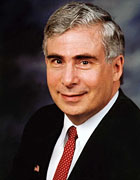
Professor Emeritus in Public Affairs and Philanthropy at Indiana University’s Center on Philanthropy, Leslie Lenkowsky served as the George W. Bush administration’s first head of the AmeriCorps program. Lenkowsky is a small-government conservative who has a track record of working for hawkish right-wing organizations. His resume includes stints as a researcher at the American Enterprise Institute, president of the Hudson Institute, and president of the Philanthropy Roundtable. Lenkowksy also served as deputy director of the U.S. Information Agency under President Ronald Reagan. His writings, which appear regularly in the Chronicle of Philanthropy, focus largely on the politics and impact of public philanthropy.
Although close to Indiana Governor Mike Pence, whom he describes as “a champion of a very culturally conservative set of values that represent small-town Middle America,” Lenkowsky has raised questions about Pence’s running mate Donald Trump, in particular the real estate magnate’s philanthropy. Commenting on the Trump Foundation’s record of giving away money that was not donated by Donald Trump himself, Lenkowksy told NPR, “When a person gets money from a foundation, they think often that the money is actually that of the person after whom the foundation is named. That certainly isn’t true for the Trump Foundation.” Although he was skeptical over whether this was a legal problem, he noted that it may be an image problem since Trump has frequently made misleading claims about giving his own money to charity.
During the Barack Obama presidency, Lenkowsky has criticized the administration for pushing big-government programs, which he argues could threaten philanthropic giving. He wrote: “The unveiling of President Obama’s first budget has prompted a mixed reaction in the philanthropic world. On the one hand, the proposal marks a clear shift toward increased spending of the kind that nonprofit groups have long favored, especially in education and health. On the other hand, it would reduce the incentive for the very rich to give by curtailing the value of their tax deductions. As a result, leaders in the nonprofit world are confronted with a tough choice: Do they favor greater government spending? Or increased charitable giving? If they cannot have both, a recent statement that many of them signed suggests they would prefer a more active government. That would be a mistake.” [1]
Lester Salamon, director of the Center for Civil Society Studies at Johns Hopkins University, criticized Lenkowksy’s argument, writing in a letter to the editor of the Chronicle of Philanthropy, “The simple fact is … that private charitable support has not been able to come close to keeping pace with societal needs. Indeed, it has lost ground as a source of nonprofit support, falling to 12 or 13 percent of nonprofit revenues in recent years. What is more, despite the most massive transfer of wealth from the less-well-off to the super rich in our country’s recent history, the share of this newfound wealth that found its way into charitable support barely budged, even after taking account of the extraordinary generosity of Bill Gates and Warren Buffett. To the contrary, the share actually declined.” [2]
Lenkowsky’s own philanthropic work dates back to the 1970s, when he became director of research at the conservative Smith Richardson Foundation. He help nurture the work of a number of influential neoconservative thinkers and organizations. In a 1981 interview about the foundation’s work, Lenkowsky said, “We don’t create ideas, we nurture them, a bit like fertilizer. … If the sprout is there, we make it grow into a mighty oak.” Lenkowsky highlighted the ideas of neoconservative trail-blazers Norman Podhoretz and Irving Kristol, predicting they would have “a long-term impact” on how people thought about public affairs. [3]
Building on the support he received from Lenkowsky and the Smith Richardson Foundation, Kristol helped convince the foundation to back Jude Wanniski’s research on supply side economics. Wanniski’s influential book on the subject later became the inspiration for Reaganomics. It was Kristol who recommended the book to Jack Kemp and Kemp who brought it to Reagan. [4]
Lenkowsky also oversaw Smith Richardson’s efforts to fund college newspapers, including The Dartmouth Review, where a young Dinesh D’Souza got his start. As editor-in-chief, D’Souza used the newspaper to out homosexual students by investigating subscribers, and even some of their parents. In addition, he published documents allegedly stolen from the university’s Gay Student Alliance, some of which contained “names and parts of letters written by lonely students.” D’Souza went on to be a key crusader against the so-called liberal bias in universities, beginning with the publication of his book Illiberal Democracy. [5]
Also under Lenkowsky’s watch, the Smith Richardson foundation supported rightist efforts to co-opt democracy promotion, funding groups like Freedom House and the Institute on Religion and Democracy. Key members of these organizations have included Richard John Neuhaus, Michael Novak, and Ed Robb. [6]
In November of 1983, Reagan nominated Lenkowsky to be deputy director of the U.S. Information Agency (USIA). But the Senate Foreign Relations Committee rejected his nomination because of allegations that he had blacklisted liberals from speaking on behalf of the agency while serving as its acting deputy. Lenkowsky denied knowing about the practice, but W. Scott Thompson, the agency’s associate director at the time, claimed that this process began after Lenkowsky came on board as acting deputy. Those blacklisted included Walter Cronkite, Coretta Scott King, and New York congressman Thomas J. Downey. [7]
Reported the Washington Post at the time: “‘The list only showed up in reaction to Lenkowsky’s pressure,’ said Thompson, who has feuded with Lenkowsky in the past. ‘He made clear that no one would go out who wasn’t an advocate of this administration … . He reeled off a long list of neoconservatives who should be selected.’ Thompson said Lenkowsky told him that liberal speakers ‘should be vetoed’ at lower levels so Lenkowsky would not have to do it.” [8]
Thompson, himself a staunch conservative, resigned his post in January 1984. He later became president of the hardline anti-communist American Security Council, which was a key domestic supporter of the Nicaraguan Contras. [9]
Heritage Foundation President Edwin Feulner, who at the time chaired USIA’s Advisory Commission on Public Diplomacy, “personally cleared every appointment” to the agency, according to Sidney Blumenthal. Feulner reportedly tried to resolve the issues between Thompson and Lenkowsky, but to no avail. Thompson eventually testified against Lenkowsky, who later “retreated to the American Enterprise Institute, where he raised funds … to support his new staff position.” [10]
Over a decade later, in 2001, Lenkowsky became the chief executive officer of George W. Bush’s Corporation for National and Community Service, where he oversaw—and, some observers say, ran into the ground—the AmeriCorps program, the national volunteer program originally established during the Clinton administration. Shortly after Lenkowsky assumed his post, AmeriCorps became embroiled in a crisis over its management and finances, leading to two separate government investigations. [11]
In a speech on the floor of the Senate in June 2003, Sen. Barbara Mikulski (D-MD) criticized the corporation for bungling the AmeriCorps program and called for Lenkowsky’s resignation. She said: “What a mess we have at the Corporation for National and Community Service. … The corporation has overenrolled 20,000 volunteers. When you make a mistake of 20,000, it’s not a mistake. It’s mismanagement. Two thousand would have been a mistake. Twenty thousand is mismanagement. The corporation has violated the law, mismanaged taxpayer dollars, and created uncertainty for our volunteers and our communities. … Instead of fixing the problem … [Lenkowsky] blamed Congress. … Dr. Lenkowsky has failed to respond to the situation, failed to respond to the Subcommittee request, failed volunteers, failed communities. In the schools I went to, when you get that many Fs, you flunk out. Today I’m asking Dr. Lenkowsky to resign.” [12]
According to James Bovard of The American Conservative, “Shortly after 9/11, AmeriCorps chief Leslie Lenkowsky told members, ‘the daily duties that you perform will also be helping to thwart terrorism itself.’ He assured AmeriCorps recruits that their efforts were ‘as important to our nation’s security and well-being’ as the actions of American troops at that moment fighting the Taliban in Afghanistan. By 2003, Lenkowsky changed his tune, describing AmeriCorps as just ‘another cumbersome, unpredictable government bureaucracy.’” [13]