
Joe Lieberman
last updated: May 18, 2017
Please note: The Militarist Monitor neither represents nor endorses any of the individuals or groups profiled on this site.
AFFILIATIONS
United Against Nuclear Iran: Chairman (2015 – )
Citizens for a Nuclear Free Iran: Member, Board of Advisors
Jewish Institute for National Security Affairs: Member, Board of Advisors
Hudson Institute: Project Co-Chair (2013 – )
Center for a New National Security: Member, Board of Directors
American Enterprise Institute: Project Co-Chair (2013 – )
Washington Institute for Near East Policy: Board of Advisers (2014- )
Committee on the Present Danger: Honorary Co-chair
Foundation for the Defense of Democracies: Distinguished Adviser
American Council of Trustees and Alumni: Cofounder
Committee for the Liberation of Iraq: Former Co-chair
Democratic Leadership Council: Former Chairman
Yeshiva University: Joseph Lieberman Chair in Public Policy and Public Service
GOVERNMENT
U.S. Senator (D-CT): 1989-2013
Connecticut Attorney General: 1983-1988
Connecticut State Senate: 1970-1979
BUSINESS
Victory Park Capital: Executive Board Chair
Kasowitz Benson Torres & Friedman: Senior Counsel
EDUCATION
Yale University: BA (1964)
Yale Law School: Law degree (1967)
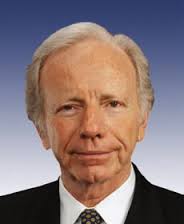
Former Sen. Joseph Lieberman, regarded as the “Republicans’ favorite Democrat” because of his neoconservative foreign affairs agenda, represented Connecticut initially as a Democrat and later as an “Independent Democrat.” First elected to the Senate in 1988, Lieberman retired at the end of his term in 2013.
In the Senate, Lieberman regularly teamed up with like-minded Republican colleagues—notably Sens. John McCain, Lindsey Graham, and Jon Kyl—to promote militarist security policies. He earned a reputation as a foreign policy hawk for his outspoken support for the war in Iraq and for his consistent collaboration with neoconservative-led advocacy groups pushing for interventionist policies in the Middle East.
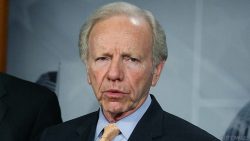
Since leaving office, Lieberman has continued his foreign policy advocacy, joining numerous neoconservative groups, in particular the American Enterprise Institute (AEI), where he co-chaired with former Senator Kyl its American Internationalism Project, a purportedly cross-party initiative meant “to rebuild and reshape a bipartisan consensus around American global leadership and engagement.”[1] His tenure at AEI, wrote one commentator, allowed Lieberman “to pontificate to a sympathetic audience about why he regards even mild opposition to his intransigent bellicosity as benighted obstructionism.”[2]
Lieberman has also worked with the Washington Institute for Near East Policy, a spinoff of the American Israel Public Affairs Committee (AIPAC), where he became a member of its board of advisors in January 2013[3]; the Jewish Institute for National Security Affairs, where he become a member of the advisory board; and the Hudson Institute, where he co-chaired the “Blue Ribbon Study Panel on Biodefense.” In November 2013, Lieberman joined the Center for a New National Security (CNAS) as a member of its board of directors.[4]
In 2015, Lieberman joined the advisory board of an AIPAC-backed lobbying organization, Citizens for a Nuclear Free Iran (CNFI). Lieberman’s affiliation with the group elicited criticism in part because of his support for the Mojahedin-e Khalq (MEK), a controversial Iranian opposition group which until 2012 was on the State Department’s list of terrorist organizations.[5] Citizens for a Nuclear Iran subsequently removed references to Mojahedin-e Khalq from its website.[6]
Lieberman is currently chairman of the Sheldon Adelson-backed United Against Nuclear Iran (UANI). He replaced Gary Samore after the latter stepped down in 2015 and announced his support for the nuclear deal with Iran. Said Lieberman at the time: “UANI has led the effort to economically isolate the Iranian regime, and its bipartisan and international expertise makes it a highly respected voice on the merits of the Iran agreement. I am honored to assume this new leadership role at this important time.”[7]
Since the 2016 election of Donald Trump, Lieberman has been both critical and supportive of the administration. While he ridiculed Trump’s call to force Mexico to pay for the construction of a border wall, Lieberman has lauded his “sea change” on Iran policy. In a February 2017 media interview, Lieberman urged Trump not to “tear up” the agreement but to closely monitor Iran to see if they are not complying and “and if they don’t comply, then we can break out of the agreement.” After Trump’s controversial firing of FBI Director James Comey in May 2017, Lieberman was briefly considered a leading candidate for the post.
Lieberman—who promised during his Senate career that he would never become a lobbyist[8]—has worked as a lobbyist since retiring fro the Senate. Lieberman’s lobbying efforts form part of his work as senior counsel for Kasowitz Benson Torres & Friedman, a national law firm Lieberman joined in June 2013 and whose lobbying operation is headed by Lieberman’s former chief of staff.[9] As of 2017, Lieberman was listed as being “senior counsel” at the law firm.
Opposition to Iran Diplomacy
Lieberman actively advocated against the nuclear negotiations between Iran and six world powers, which led to the historic July 2015 agreement between Tehran and the P5+1 group of nations. He argued that “no deal” with Iran would have been a better option for the United States than a “bad deal.” He wrote in a July 2014 op-ed: “Rather than being a defeat for the United States, a refusal to accept a bad deal in Vienna could strengthen the Obama administration at home and abroad. It would help rebuild its bruised credibility and influence in the Middle East and hopefully increase the odds that the administration can ultimately achieve the goal of peacefully, verifiably bolting the door on Iran’s illicit nuclear ambitions.”[10]
Lieberman also strongly defended Israeli Prime Minister Benjamin Netanyahu’s controversial March 2015 speech to Congress criticizing the Obama administration’s negotiations with Iran. Leading up to the speech, Lieberman urged Democratic members of Congress to not skip Netanyahu’s address, saying: “Go because you know that Israel is one of our closest and most steadfast allies and you feel a responsibility to listen to its leader speak about developments that he believes could threaten the safety, independence and even existence of his country.”[11]
In a March 2015 interview shortly before Netanyahu’s speech, Lieberman argued that Netanyahu wished to address Congress because he saw “echoes” of British Prime Minister Neville Chamberlain in President Obama’s approach to Iran. “I think there are echoes of this that I think Netanyahu hears and we ought to all hear so that we don’t repeat the worst experiences of history,” Lieberman opined.[12]
After the comprehensive nuclear deal was reached with Iran in July 2015, Lieberman claimed that the United States had “conceded and conceded and conceded” to Iran and urged members of Congress to revoke the agreement. “I can’t think of a vote that I cast, apart from the ones deploying American troops into combat, that was as important as this agreement is to the future security of the United States,” Lieberman declared.[13]
Shortly after the deal was announced, Lieberman joined the advisory board of a new AIPAC-backed lobbying organization, Citizens for a Nuclear Free Iran (CNFI). CNFI launched a multi-million dollar ad campaign against the Iran deal that was primarily aimed at Democratic constituencies in an effort to get Democratic votes in Congress to reject the deal. CNFI’s board of advisors has included several former Democratic members of Congress, including former Sens. Evan Bayh (IN), Mark Begich (AK), Mary Landrieu (LA), and former Rep. Shelley Berkley (NV).[14] CNFI’s TV ads released after the July 2015 accords were described by prominent nuclear experts as “very misleading.”[15]
After he became chairman of UANI in August 2015, Lieberman was appointed the chairman of the Sheldon Adelson-backed United Against Nuclear Iran (UANI), a UANI press release said the t“Senator Lieberman will play a key leadership role throughout UANI’s efforts to educate and inform the American public regarding the serious shortcomings of the Iran nuclear deal.”[16] Commented one writer: “For those who are noting the overlap between Iraq war promoters and Iran deal saboteurs, Lieberman is your man.”[17]
Senate Hawk on Syria and Iran
During his final term in the Senate, Lieberman was a vocal advocate for U.S. intervention in Syria’s civil war. In an August 2012 Washington Post op-ed coauthored with McCain and fellow hawk Sen. Lindsey Graham (R-SC), Lieberman called for the United States to arm select Syrian opposition groups and to provide air support for so-called “humanitarian safe zones” on Syria’s borders, despite arguments from many analysts that Syria’s conflict increasingly resembled a sectarian civil war and may have been infiltrated by foreign jihadists.[18]
“The U.S. reluctance to intervene in Syria is, first of all, allowing this conflict to be longer and bloodier, a radicalizing dynamic,” they wrote. “Contrary to critics who argue that a greater U.S. role in Syria could empower al-Qaeda, it is the lack of strong U.S. assistance to responsible fighters inside the country that is ceding the field to extremists there.”[19]
Earlier that year, McCain and Lieberman made a surprise visit to Free Syrian Army fighters on the Turkish border, where they declared that the conflict could only be resolved militarily. “Diplomacy with Assad has failed,” they said in a statement, “and it will continue to fail so long as Assad thinks he can defeat the opposition in Syria militarily.”[20]
Lieberman was also among Congress’s most strident hardliners regarding Iran, pushing through new sanctions measures and advocating for an aggressive U.S. posture. In comments made at the neoconservative Foreign Policy Initiative shortly after the 2010 midterm elections, Lieberman asserted that Congress would pressure the Obama administration for more sanctions against Tehran and possibly military action. Arguing that he was skeptical that economic sanctions could prevent Iran from developing a nuclear weapon, Lieberman contended there was “broad bipartisan base of support” for taking military action against Iran.[21]
In April 2006, Lieberman became the first prominent Democrat to announce his support for preemptive attacks against Iran to stop it from developing nuclear weapons. In an April 2006 interview with the Jerusalem Post, Lieberman said the aim of air strikes would be “to delay [the nuclear program] to deter it hoping that you set the program off course so that by the time they catch up back to where they were there’s been a change in government. That’s the limited objective that I would see.”[22]
By mid-2007, Lieberman had expanded his agenda to include attacking sites in Iran near the border with Iraq. He argued the sites were being used to arm and train insurgents. Frustrated with the lack of political will in Washington to support U.S. strikes without sufficient proof of complicity of Iranian support for attacks in Iraq, Lieberman called on June 11, 2007, for a “strike over the border into Iran, where we have good evidence that they have a base at which they are training these people coming back into Iraq to kill our soldiers.”[23]
In September 2007, Lieberman and Kyl cosponsored an amendment calling on the State Department to officially label the Iranian Revolutionary Guard Corps as a “foreign terrorist organization.” According to the Agence France Presse, the non-binding amendment, which passed 76-22, “says that senators agree it is in the critical national interest of the United States to prevent Iran turning Shia extremists in Iraq into a ‘Hezbollah type force.’”[24]
Independent Democrat or Neoconservative?
Lieberman’s support for the Bush administration’s “war on terror” made him a target of antiwar Democrats, and he was eventually defeated during a 2006 Senate primary contest against Ned Lamont. However, Lieberman handily won the general election as an Independent.[25] Some observers attributed the primary defeat to Lieberman’s Senate vote on June 22, 2006, in which he was one of only six Democratic senators to vote against two resolutions aimed at limiting U.S. involvement in the Iraq War.[26]
Lieberman critics also frequently highlighted the senator’s cozy relationship with Republicans, who often lavished praise on the senator. In December 2005, for example, after Lieberman chastised Democrats for pushing for withdrawal from Iraq, both Vice President Dick Cheney and then-Secretary of Defense Donald Rumsfeld publicly extoled him. Said Cheney: “On this, both Republicans and Democrats should be able to agree. The only way the terrorists can win is if we lose our nerve and abandon our mission.”[27]
In the run up to his 2006 primary election defeat, Lieberman announced that he would run as a “petitioning Democrat” during the main election, sparking widespread criticism from Democrats. Responding to the announcement, Markos Moulitsas, the founder of the Daily Kos blog, told the New York Times: “An interesting kind of ‘Democrat,’ Lieberman thinks he is. One who doesn’t respect the wishes of his state’s Democratic voters, one who will split his state’s vote on the left and potentially hand the election to a Republican.”[28]
The election sparked a spirited debate over Lieberman and what his fate might mean for the Democratic Party. Some, like Marshall Wittmann, a fellow at the (now defunct) right-leaning Democratic Leadership Council (DLC) and the Progressive Policy Institute, contended that Kos and other “McGovernites with modems” are playing a dangerous game in attacking Lieberman, a game that ultimately plays into Republicans’ hands.[29]
Harold Meyerson, editor-at-large of the left-leaning American Prospect, saw the issue a bit differently, writing in an op-ed for the Washington Post: “Lieberman’s ultimate problem isn’t fanatical bloggers, any more than Lyndon Johnson’s was crazy, antiwar Democrats. His problem is that Bush, and the war that both he and Bush have championed, is speeding the ongoing realignment of the Northeast. His problem, dear colleagues, is Connecticut.”[30]
In one of his first moves after winning the 2006 midterm, Lieberman announced that his new spokesman would be Wittmann, whom the New York Times characterized “one of the great ideological contortionists.”[31]
An idiosyncratic ideologue associated with a bewildering array of political factions—including the Trotskyites, the neoconservatives, the Christian Coalition, and various Republican politicians—Wittmann promoted efforts to push hardline policies in the Democratic Party as a senior fellow of the Progressive Policy Institute and the DLC. In a press release regarding Wittmann’s appointment, Lieberman said: “There is no better person to take the helm during this new time in my Senate career than Marshall. Marshall has been a trusted outside adviser to me for some time now and I’m glad he will be bring his experience and wisdom to my staff. Those qualities, along with his independence and diverse background, make him the ideal captain of my new Senate Communications team.”[32]
History of Neoconservative Advocacy
Throughout the 1990s, Lieberman supported Republican-led initiatives to ramp up efforts to build a missile defense system, becoming one of only a handful of Democrats to vote in 1995 against cutting spending for space-based missile defense programs.[33] In 1998, he cosponsored with McCain the Iraq Liberation Act, which made the overthrow of Saddam Hussein an official goal of U.S. policy.[34]
In 2002, Lieberman became an honorary co-chair, along with George Shultz and Sen. John McCain (R-AZ), of the Committee for the Liberation of Iraq, an advocacy outfit spearheaded by a number of neoconservative stalwarts, including Jeane Kirkpatrick, William Kristol, Robert Kagan, Richard Perle, James Woolsey, and Eliot A. Cohen. According to the group’s mission statement, “The Committee for the Liberation of Iraq was formed to promote regional peace, political freedom, and international security by replacing the Saddam Hussein regime with a democratic government that respects the rights of the Iraqi people and ceases to threaten the community of nations.”
Lieberman serves as a distinguished advisor to the Foundation for Defense of Democracies, a purportedly nonpartisan think tank, which according to its website was formed shortly after 9/11 by “a group of visionary philanthropists and policymakers to engage in the worldwide war of ideas and to support the defense of democratic societies under assault by terrorism and militant Islamism.” Though the foundation at one time boasted some Democratic advisers, its leadership has been dominated by neoconservatives and other right-wing hawks, including Gary Bauer, Newt Gingrich, and Steve Forbes.[35]
In 2004, Lieberman helped revive the Cold War-era anti-communist group, the Committee on the Present Danger (CPD), which Lieberman then co-chaired with Woolsey, Sen. Jon Kyl (R-AZ), and George Shultz. Among the familiar names on the CPD’s list of members were Frank Gaffney, Jack Kemp, Forbes, Gingrich, and Kirkpatrick. Reflecting the trend of similar neoconservative-aligned initiatives, the CPD also enlisted a number of well-known liberal figures, including Vaclav Havel and Elie Wiesel, giving the CPD a patina of nonpartisanship. At the June 2004 press conference announcing the rebirth of the CPD, Lieberman claimed the aim of the group was “to form a bipartisan citizens’ army, which is ready to fight a war of ideas against our Islamist terrorist enemies, and to send a clear signal that their strategy to deceive, demoralize, and divide America will not succeed.”[36]
Lieberman also teamed up with Lynne Cheney , spouse of Vice President Dick Cheney, in 1995 to set up the private American Council of Trustees and Alumni (ACTA), which in 2000 gave $3.4 million to colleges and universities. While its various boards and advisory committees include elites from a diverse array of backgrounds, it has also had a number of neoconservatives, like Irving Kristol , Martin Peretz, Philip Merrill , William Bennett , Donald Kagan , Gertrude Himmelfarb , Hillel Fradkin , and Leon Kass.
In October 2001, ACTA issued a report assailing the response of U.S. universities to the 9/11 attacks, attacking dozens of college professors and students for their supposedly less-than-patriotic reactions to the terrorist attacks. Several months later in February 2002, ACTA issued a “revised and expanded” edition, which included “a sampler of the many responses” to the original report. The revised edition, authored by ACTA staff, claims in its “Acknowledgements” that “no public official—including Lynne Cheney and Sen. Joe Lieberman—has endorsed or been asked to endorse this report.”
The revised report was a compendium of some 100 statements recorded by ACTA that reveal what it purported to be “moral equivocation” and outright hostility toward the United States among academic elites. Such statements included: “Just because a grotesque act was committed against this country, does not mean any response is justified; it does not grant this country special license to use the sword;” “[Americans should] bring ourselves and our country to justice, not just the perpetrators;” and, “War created people like Osama bin Laden, and more war will create more people like him.” While the original version cited the names of particular professors, leading to charges that the report resembled a blacklist, the revised edition suppressed the names “to focus discussion on the content of the views expressed, rather than the individuals who expressed them.” Also excised in the new edition were a number of scathing judgments from the original that were cited in press reports, such as the charge that “colleges and university faculty have been the weak link in America’s response” to the attacks, and “when a nation’s intellectuals are unwilling to defend its civilization, they give comfort to its adversaries.”[37]