
Michael Ledeen
last updated: May 24, 2017
Please note: The Militarist Monitor neither represents nor endorses any of the individuals or groups profiled on this site.
Affiliations
- Foundation for Defense of Democracies: Freedom Scholar
- Pajamas Media: Columnist
- American Enterprise Institute: Former Freedom Scholar
- Jewish Institute for National Security Affairs: Former Member, Board of Advisors
- Coalition for Democracy in Iran: Cofounder
- Wall Street Journal: Contributor
- National Review Online: Contributing Editor
- The New Republic: Rome Correspondent (1975-1977)
- Washington Quarterly: Founding Editor
- U.S. Committee for a Free Lebanon: Golden Circle Supporter
- Benador Associates: Listed Speaker
- Center for Strategic and International Studies: Senior Fellow (1982-1986); Senior Staff Member (1977-1981)
- University of Rome, Italy: Visiting Professor of History (1975-1977)
- Washington University: Instructor and Assistant Professor of History (1967-1974)
- American Committee for Peace in the Caucasus: Member
Government
- U.S.-China Commission: Commissioner, Vice Chair (2001-2004)
- Department of State: Consultant, Under Secretary of Political Affairs (1982-1986); Special Adviser to the Secretary (1981-1982)
- Department of Defense: Consultant, Office of the Secretary (1982-1986)
- White House: Consultant, National Security Advisor to the President (1982-1986)
Education
- University of Wisconsin: Ph.D., History and Philosophy; M.A., History and Philosophy
- Pomona College: B.A.
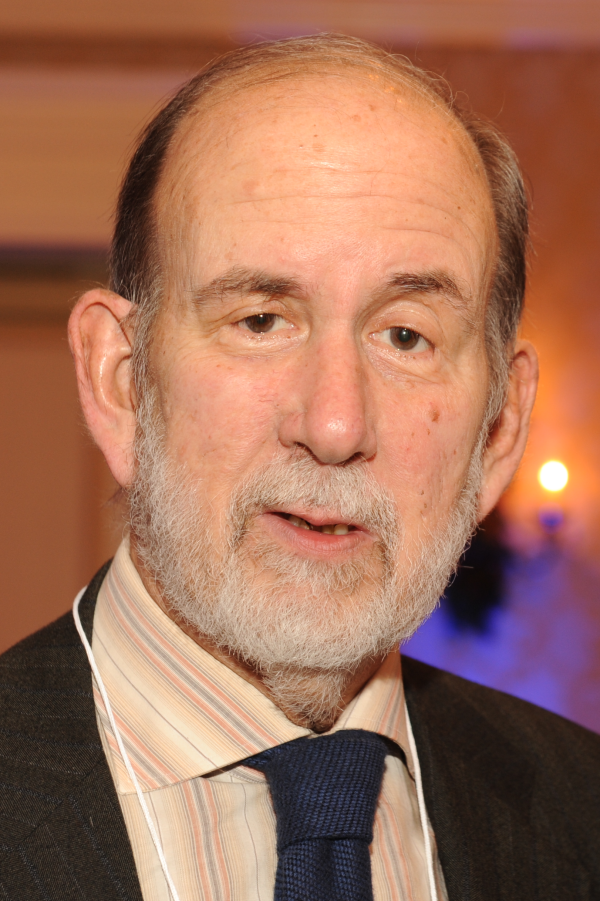
Michael Ledeen is a neoconservative writer at the Foundation for Defense of Democracies (FDD) known for his extravagant claims about Middle East affairs and pushing U.S. overseas military intervention.[1] He has called for waging a global war against “Islamofascists,” argues that jihadists and former communists are in an alliance against the United States, and once claimed that while in office President Barack Obama supported America’s enemies. Ledeen, who styles himself a “democratic revolutionary,”[2] champions policies that are in line with the Israeli right-wing and is perhaps best known for his hawkish views on Iran.[3]
Ledeen, a member of Sen. Ted Cruz‘s (R-TX) 2016 presidential campaign foreign policy team, has also been closely associated with Donald Trump’s advisers, in particular retired Lt. Gen. Michael Flynn, the controversial former National Security Advisor (NSA) who was fired shortly after Trump took office for allegedly lying about his ties to Russia.[ 4] According to Ledeen, Flynn was reluctant to serve as NSA because of ongoing investigations into his work. “He didn’t want to be in the government. He wanted to go back to private life,” Ledeen said in a May 2017 interview with the Daily Beast. “But Trump insisted on it. He likes him, he trusted him, he was comfortable with him.”
In mid-2016, Ledeen published with Flynn a book called The Field of Fight: How We Can Win the Global War against Radical Islam and Its Allies. The book argues that the United States must engage in a multi-generational war against a “formidable” alliance of jihadists and former Cold War foes that may require sending in troops to fight battles across the globe and synchronizing all resources to “similar to the effort during World War II or the Cold War.”
The book is vintage Ledeen. For decades, he has pointed to shadowy alliances of terrorists, fascists, and enemy states that are poised to destroy America, penning fear-mongering op-eds and books about “Global Wars” being waged against the United States. In one typical piece he wrote that “Killing Americans serves several purposes in the war being waged against us (we have yet to seriously engage against our known enemies): first, it’s what the war is all about. They want us dead or dominated. Second, it helps recruitment, which had dropped after the defeat of Iran, Syria, and al-Qaeda in Iraq.”[6]
Ledeen was a vocal critic of the Obama administration, frequently accusing President Obama of being anti-American and supporting terrorists. He once told a conservative radio pundit that Obama “doesn’t like America and he doesn’t like us.” He added: “He is a member of the generation that came out of an American school system that teaches our kids that America is the big problem in the world and that we are responsible for most of the world’s ills.”[7] “We have a war to fight and this president isn’t going to fight that war. This president is, if anything, on the other side.”[8]
Iran
Iran has long been Ledeen’s bête noir, arguing that .the country has been heavily involved in supporting attacks against U.S. forces in hotspots across the globe.[9] “No matter how well we do, no matter how many high-level targets we eliminate, no matter how many cities, towns, and villages we secure, unless we defeat Iran we will always be designing yet another counterinsurgency strategy in yet another place. We are in a big war, and Iran is at the heart of the enemy army.”[10]
In a review of Ledeen’s book The Iranian Time Bomb: The Mullah Zealots’ Quest for Destruction, Peter Beinart wrote: “Ledeen’s effort to lay virtually every attack by Muslims against Americans at Tehran’s feet takes him into rather bizarre territory. He says the 1998 bombings of the United States Embassies in Kenya and Tanzania ‘were in large part Iranian operations,’ which would come as news to the 9/11 Commission, which attributed them solely to Al Qaeda. He says Shiite Iran was largely behind Abu Musab al-Zarqawi, a man famous for his genocidal hatred of Shiites. He claims that ‘most’ Iraqi insurgents are ‘under Iranian guidance and/or control,’ not just Shiite warlords like Moktada al-Sadr, but Sunni militants as well—the very people who say they are fighting to prevent Iranian domination.”[11]
Ledeen has also sought to link the Islamic State (or ISIS) with Iran. In an August 2014 piece written for Pajamas Media, Ledeen claimed: “It seems that Iran gave ISIS support, in keeping with its well-documented practice of supporting all sides in other countries’ internal conflicts.” He went on to describe Iran as being in “cahoots with ISIS,” whom he described as “perfect clients” for the Iranians.[12]
Ledeen staunchly opposed the Obama administration’s nuclear negotiations with Iran. Writing for the Israel Project’s Tower Magazine after an interim nuclear deal between Iran and the P5+1 was finalized in 2013, Ledeen argued that regime change was the only way to stop the country’s nuclear activities. Iranian opposition groups are “willing to fight” and “we should help them.”[13] Commented Chris Rossini of the Ron Paul Institute: “It never ends with the neocons. They’re going to try and get away with their discredited tactics for as long as they can.”[14] When a final nuclear deal was reached, Ledeen wildly wrote: “In a single phrase: the war is already ON, and we’re paying the Iranians to kill us. You want to pay them even more? Apparently that’s what Obama wants.”[15]
Break Up with AEI
In August 2008, Ledeen surprised many observers by leaving AEI, where he had worked for nearly 20 years, to take a fellowship at the similarly neoconservative-aligned Foundation for Defense of Democracies (FDD), an advocacy group founded shortly after 9/11 to promote an aggressive “war on terror.” In an entry on his personal blog, Ledeen wrote: “I moved my office from AEI after twenty happy years, to Cliff May’s rising Foundation for the Defense of Democracies. It seems a good fit, it puts me in the same sandbox as Andy McCarthy and other terrific people, and I love the email address: michael@defenddemocracy.org. I mean, that’s what I’m all about.”[16]
Ledeen’s move spurred speculation about what caused it. Jim Lobe, a veteran observer of the neoconservatives, wrote: “[H]is reference to a ‘rising’ FDD suggests his association there might be more lucrative, particularly as FDD, which earlier this year suffered major Democratic defections, is competing strongly for Sheldon Adelson’s largess. (And I have no doubt at all that Ledeen’s obsession with Iran would definitely appeal to the multi-billionaire casino magnate, who reportedly shares that obsession). One possible explanation is that the AEI’s incoming president [Arthur Brooks] is hoping that AEI’s public image on foreign policy—dominated as it has been for so long by hard-line neo-cons like [Richard] Perle—might be softened somewhat.”[17]
On Iraq and Iran
A longtime Washington insider, Ledeen has held positions (often simultaneously) in media, government, academia, and think tanks since the late 1960s. In March 2003 the Washington Post highlighted his influence within the George W. Bush administration, citing him as one of several elites consulted by powerful White House advisor Karl Rove. The Post reported that, “The two met after Bush’s election. He said, ‘Anytime you have a good idea, tell me,’ Ledeen said. Every month or six weeks, Ledeen will offer Rove ‘something you should be thinking about.’ More than once, Ledeen has seen his ideas, faxed to Rove, become official policy or rhetoric.”[18]
In May 2003, Brown University professor William Beeman drew attention to Ledeen’s clout, writing: “Most Americans have never heard of Michael Ledeen, but if the United States ends up in an extended shooting war throughout the Middle East, it will be largely due to his inspiration. … Ledeen’s ideas are quoted daily by such figures as Dick Cheney, Donald Rumsfeld and Paul Wolfowitz. His views virtually define the stark departure from American foreign policy philosophy that has characterized United States actions since Sept. 11, 2001. He basically believes that violence in the service of the spread of democracy is America’s manifest destiny. Consequently, he has become the philosophical legitimator of the American occupation of Iraq.”[19]
Shortly after the U.S. invasion of Iraq, Ledeen addressed a policy forum hosted by the Likud-aligned Jewish Institute for National Security Affairs (JINSA) in Washington, D.C. Though it was just six weeks since the United States had moved on Iraq, the title of his speech was “Time to Focus on Iran—The Mother of Modern Terrorism.” Ledeen said that the U.S. invasion had been the correct move—”Democracy is the only way the Iraqi people will be able to get back on their feet”—and told his audience, “I have never seen a country more ready for democracy than Iran.” He concluded his talk by reiterating the idea of democracy as a cure-all, saying that, “the time for diplomacy is at the end; it is time for a free Iran, free Syria and free Lebanon.”[20]
Ledeen has frequently attacked officials who have attempted to push forward a diplomatic track in Mideast policy. Commenting on Secretary of State Condoleezza Rice‘s efforts in early 2007 to arrange meetings with Iranian officials, Ledeen opined: “The delusion that one can settle our little disagreements with the Islamic Republic, if only the right people sit around the right conference table, has seized every administration since Jimmy Carter. Every president has sent emissaries to talk, and every administration has made demarches to Tehran. To date, the net result is hundreds of dead Americans. And yet the delusion persists. Each time it fails, the deep thinkers at Foggy Bottom manage to convince the Secretary of State of the moment that we are just one small concession away from success, and by and large the secretary goes for it, just as Secretary Rice has.”[21]
In March 2006, Ledeen testified before the House Committee on International Relations, recommending a policy of regime change and revolution in Iran. He argued that the U.S. government has “yet to fight back” against the so-called terror masters there, who he argued “have waged unholy war against us” since 1979. “They created Hezbollah and Islamic Jihad, and they support most all the others, from Hamas and al Qaeda to the Popular Front for the Liberation of Palestine General Command. Iran’s proxies range from Shiites to Sunnis to Marxists, all cannon fodder for the overriding objective to dominate or destroy us. … I am opposed to sanctions; I am generally opposed to military strikes, and I fully endorse support for revolution.” He added: “The first step in crafting a suitable policy toward Iran is to abandon the pretense that we can arrive at a negotiated settlement.”[22]
In The Iranian Time Bomb, Ledeen expounded on what he views as the three-decades-plus “Iranian jihad” against America.[23] “The illusion that ‘diplomacy’ can accomplish anything worthwhile with the Islamic Republic of Iran will only intensify the mullah’s conviction that killing Americans is divinely sanctioned and a winning strategy,” Ledeen wrote. “This dangerous mind-set has seized the minds of American diplomats from the first days of the Iranian Revolution.”[24] As Andrew McCarthy summarized in his review of the book: “If the United States is to win the war on terror, regime change in Iran is a must. How it is to be done can be debated. That it must be done cannot be doubted. Michael Ledeen performs an invaluable service by making that crystal clear.”[25]
In an October 2015 PJ Media article Ledeen included Iran as part of a new “Axis of Evil” along with North Korea, post-U.S. invasion Iraq and “Russia, China, Cuba, Venezuela, Bolivia and other countries, and terrorist groups including al Qaeda, Hezbollah, and the Islamic State.” He said that war with this axis is inevitable. “There is no escape from this war, whatever Western leaders might wish. We will either win it or lose it, and right now we are losing,” he opined, adding that the “Axis hates us because American freedom threatens their own regimes; they hate us for what we are, not what we have done or are doing.”[26]
The Ledeen Doctrine
Ledeen’s militaristic approach to U.S. foreign policy spurred conservative writer Jonah Goldberg of the National Review to coin the phrase the “Ledeen Doctrine.” Describing the doctrine, Goldberg wrote: “I’m not sure my friend Michael Ledeen will thank me for ascribing authorship to him and he may have only been semi-serious when he crafted it, but here is the bedrock tenet of the Ledeen Doctrine in more or less his own words: ‘Every ten years or so, the United States needs to pick up some small crappy little country and throw it against the wall, just to show the world we mean business.’ That’s at least how I remember Michael phrasing it at a speech at the American Enterprise Institute about a decade ago.”[27]
Since Goldberg coined it, the so-called doctrine has been adapted by writers to describe the actions of other countries. For example, in commenting on the Georgia-Russia conflict in August 2008, Alex Harrowell of the pan-European blog A Fistful of Euros opined: “Russia has Ledeenised the situation—they picked up some crappy little country and threw it against the wall to show they meant business.”[28]
Ledeen has made a career of popularizing alarmist and sometimes erroneous charges about terrorism threats dating back to the late 1970s, when he served as a consultant to Italian military intelligence. He later became a consultant and special advisor to the U.S. State Department and the National Security Council shortly after the election of Ronald Reagan. From this perch, Ledeen championed the idea, initially promoted in Claire Sterling’s 1981 best-selling book The Terror Network, that Moscow was behind worldwide terrorism acts, including the discredited allegation that the KGB helped orchestrate the 1981 assassination attempt of Pope John Paul II.[29] Ledeen’s views at the time conflicted with those of the CIA, which contended that Moscow had little or nothing to do with the global “terror network.”
After 9/11, Ledeen began arguing that “Islamofascists” in countries like Iran are heading a new terror network. In his 2002 book The War Against the Terror Masters, Ledeen wrote: “The main part of the [war on terror]—the campaign against terror masters who rule countries hostile to us—is a very old kind of war. It is a revolutionary war, right out of the 18th century, the very kind of war that gave our national identity. While we will have to act against secret terrorist organizations and kamikaze fighters, our ultimate targets are tyrannical regimes. We will require different strategies in each case. We will need one method and set of tools to bring down Saddam Hussein, another strategy to break the Assad family dictatorship in Syria, a very different approach to end the religious tyranny in Iran, and yet another to deal with Saudi Arabia’s active support for fundamentalist Islam and the terror network. But the mission is the same in each case: Bring down the terror masters.”[30]
Ledeen has supported a passel of letterhead groups that emerged after 9/11 to promote regime change in the Middle East. Together with Morris Amitay, a former lobbyist for the American Israel Public Affairs Committee, in 2003 Ledeen created the Coalition for Democracy in Iran (CDI), which until it disbanded in 2005 supported regime-change efforts in Iran and pushed a number of legislative proposals aimed at isolating the country. Among CDI’s influential members and supporters were Frank Gaffney, head of the hardline Center for Security Policy; Joshua Muravchik, an AEI scholar who has helped shape the neoconservative agenda; and former CIA director James Woolsey. Ledeen also supported the now-inactive U.S. Committee for a Free Lebanon, an organization created by U.S.-based Lebanese banker Ziad Abdelnour that pushed a hardline stance on Syria.
For Ledeen, those who oppose his take on Mideast issues are “appeasers,” a frequent neoconservative refrain that gained cachet during the late 1960s when Norman Podhoretz, a neocon trailblazer who served as editor of Commentary magazine for several decades, began using the World War II-inspired label to criticize antiwar protestors. Writing in November 2003, Ledeen said that the so-called appeasers in Congress and the State Department “don’t want to know about Iran, because if they did, they would be driven to take actions that they do not want to take. They would have to support democratic revolution in Iran, and they prefer to schmooze with the mullahs.” He concluded: “I guess some top official will have to die at the hands of (obviously) Iranian-supported terrorists before the Pentagon is permitted to work on the subject.”[31]
Similarly, Ledeen abhors what he sees as weakness in foreign affairs policy-makingandmakes frequent use of Machiavellian ideas to promote his martial vision.In a March 2003 BBC interview, for example, Ledeen claimed: “As soon as we land in Iraq, we’re going to face the whole terrorist network. Iran, Iraq, Syria, and Saudi Arabia are the big four, and then there’s Libya. …You can’t solve all problems, I grant that. I mean, I wrote a book about Machiavelli, and I know the struggle against evil is going to go on forever.”[32] Ledeen was referring to his 1999 book on “why Machiavelli’s iron rules are as timely and important today as five centuries ago,” in which he argued that war “provides a real test of character” and “creates a pool of leaders for the nation.”[33]
Despite his frequent congressional appearances and influence within policy circles, Ledeen’s critics have denounced his ideas and qualifications. For example, Brown University Professor William Beeman once said: “Michael Ledeen has never been to Iran; he speaks no Persian. He has minimal credibility in assessing the Iranian elections, or evaluating the political situation there.”[34]
Go-Betweens
Ledeen has on several occasions become directly involved in efforts to shape the policies of both the United States and other countries, which has led him to make some peculiar affiliations. In the late 1970s, while Ledeen was serving as a consultant on terrorism to the Italian military intelligence agency SISMI, he became associated with a Francesco Pazienza, an Italian agent who was also a member of theItalian P2 Masonic Lodge, a violent right-wing group involved in terrorist attacks in Italy in the 1970s and 80s.[35] In a report about the P2’s involvement in bombings in Italy, as well as its connections to corrupt government officials, the Toronto Star reported on Pazienza’s claims that Ledeen served as a go-between for the Ronald Reagan administration and Italian officials. According to the Star, Pazienza was eventually convicted in absentia of “abusing his status as secret agent by using extortion to obtain information on contacts between former president Jimmy Carter’s brother Billy and Libyan leader Moammar Gadhafi and then passing this ‘Billygate’ material to Michael Ledeen.”[36]
As a consultant to the National Security Council in the 1980s, in the early stages of the Iran-Contra affair Ledeen acted as a go-between for the Reagan administration and the Israeli spy David Kimche to gain the release of U.S. hostages in Beirut through an Iranian arms dealer, Manucher Ghorbanifar.[37] According to official investigations into the Iran-contra scandal, Ledeen helped initiate the effort to use Israeli contacts to pursue an arms for hostages deal with Iran.[38]
After the 9/11 attacks, the names of many of these associates resurfaced in press reports about Ledeen’s efforts to push regime change in Iran. The Sydney Morning Herald reported that Ledeen worked with Pentagon staffers to redevelop the channel to arms dealer Ghorbanifar in an effort to assist resistance groups in Iran. Reported the Herald: “[Harold] Rhode recently acted as a liaison between [Douglas] Feith‘s office … and Ahmed Chalabi, a former Iraqi exile groomed for leadership by the Pentagon. Mr. Rhode is a protégé of Michael Ledeen, who was a National Security Council consultant in the mid-1980s when he introduced Mr. Ghorbanifar to Oliver North, a NSC aide, and others in the opening stages of the Iran-Contra affair. It is understood Mr. Ledeen reopened the Ghorbanifar channel with Mr. Feith’s staff.”[39]
In an account of the various meetings between Iranians and Feith’s Department of Defense staff that Ledeen helped set up after 9/11, the Washington Monthly reported that “the DoD-Ghorbanifar meetings suggest the possibility that a rogue faction at the Pentagon was trying to work outside normal US foreign policy channels to advance a ‘regime change’ agenda not approved by the president’s foreign policy principals or even the president himself.”[40] Among those at the meetings, according to the Monthly, was “a former senior member of the Iranian Revolutionary Guard who claimed to have information about dissident ranks within the Iranian security services. The Washington Monthly has also learned from U.S. government sources that Nicolo Pollari, the head of Italy’s military intelligence agency, SISMI, attended the meetings, as did the Italian Minister of Defense Antonio Martino, who is well-known in neoconservative circles in Washington.”[41]
Then-U.S. Ambassador to Italy Melvin Sembler learned about Ledeen’s activity when, on December 12, 2001, he “sat down for a private dinner with Ledeen, an old friend of his from Republican Party politics, and [Antonio] Martino, the Italian defense minister. The conversation quickly turned to the meeting. The problem was that this was the first that Amb. Sembler had heard about it,” the Monthly reported. The meeting was a major source of concern for Sembler and the CIA in part because the agency “believes Ghorbanifar is a serial ‘fabricator’ and forbids its officers from having anything to do with him. Moreover, why were mid-level Pentagon officials organizing meetings with a foreign intelligence agency behind the back of the CIA—a clear breach of U.S. government protocol? There was also a matter of personal chagrin for Sembler: At State Department direction, he had just been cautioning the Italians to restrain their contacts with bad-acting states like Iran (with which Italy has extensive trade ties).”[42]
Publications
In addition to his personal blog, Ledeen also contributes to the National Review Online and infrequently to the Wall Street Journal’s opinion page. His books include The Iranian Time Bomb: The Mullah Zealots’ Quest for Destruction (2007); The War Against the Terror Masters (2002); Tocqueville on American Character (2000); Freedom Betrayed: How America Led a Global Democratic Revolution, Won the Cold War, and Walked Away (1996); and Perilous Statecraft: An Insider’s Account of the Iran-Contra Affair (1988).