
Robert Joseph
last updated: December 17, 2019
Please note: The Militarist Monitor neither represents nor endorses any of the individuals or groups profiled on this site.
Affiliations
- Missouri State University: Professor
- National Council of Resistance of Iran: Lobbyist
- National Institute for Public Policy: Senior Scholar
- National Defense University: Former Professor of National Security Studies; Former Director of Center for Counterproliferation Research
- Center for Security Policy: Former Member, National Security Advisory Council
- Carleton College: Former Assistant Professor
- Tufts University Fletcher School of Law and Diplomacy: Former Assistant Professor
- Tulane University: Former Assistant Professor
- Institute for Foreign Policy Analysis: Former Research Consultant
Government
- State Department: Undersecretary for Arms Control and International Security (2005-2007)
- National Security Council: Special Assistant to the President; Senior Director for Proliferation Strategy, Counterproliferation, and Homeland Defense (2001-2005)
- U.S.-Russian Consultative Commission on Nuclear Testing: Ambassador for George H.W. Bush
- Standing Consultative Commission (ABM Treaty): U.S. Commissioner for George H.W. Bush
- U.S. Mission to NATO: Director of Theater Nuclear Forces Policy (1985-1987)
- Department of Defense: Principal Deputy Assistant for International Security Policy (George H.W. Bush); Deputy Assistant Secretary for Nuclear Forces and Arms Control Policy (1987-1989); Acting Principal Deputy Assistant Secretary for International Security Policy (1987); Chief of Nuclear Policy/Plans Section (1982-1984)
- Office of the Undersecretary of Defense: Assistant for Nuclear Policy (1980-1981); Assistant for General Purpose Forces (1979)
- Office of the Assistant Secretary of Defense for International Security Affairs: Assistant for Negotiations (1978)
- The WMD Challenge on the Korean Peninsula: Participant, Exploring a Joint U.S.-ROK Alliance Response Workshop
Education
- Columbia University: PhD, 1978
- University of Chicago: M.A., 1973
- St. Louis University: B.A., 1971
- U.S. Naval Academy: 1967-1969
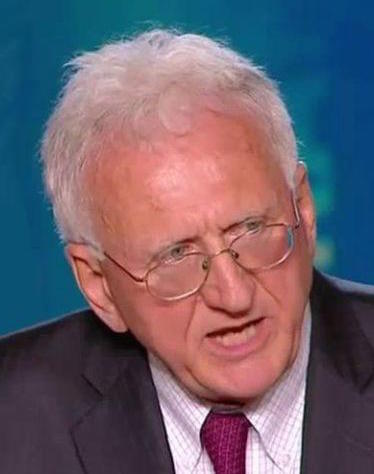
Robert Joseph is a former government official who worked on arms control policy in both the State Department and the National Security Council during the George W. Bush presidency. In February 2019, reports indicated that the National Council of Resistance of Iran (NCRI) had retained Joseph as a lobbyist.[1] NCRI is an operational arm of the Mojahedin-e Khalq-e Iran (MEK), an Iranian opposition group that enjoys very little support in Iran, but is embraced by many neoconservatives in the United States and Europe.
Joseph, a longtime advocate of developing strategies to use nuclear weapons, coauthored with Rebecca Heinrichs of the neoconservative Hudson Institute “Countering Nuclear Threats,” a chapter in the 2015 book, Choosing to Lead published by the John Hay Initiative and edited by leading neoconservative ideologues Eliot Cohen, Elliott Abrams, and Michael Hayden. They argue that since the end of the Cold War, successive U.S. administrations have neglected or diminished the U.S.’ nuclear deterrent. They criticized the Obama administration for negotiating the 2010 New START treaty that further rolled back Russian and U.S. nuclear arsenals, and for his endorsement of the “global zero” movement, which sought the eventual elimination of all nuclear weapons. They recommended enhancing the United States’ nuclear arsenal and missile systems and reviving the Ronald Reagan era Strategic Defense Initiative (SDI), jokingly called “Star Wars” at the time, which would deploy orbiting missile defense systems.[2]
Three years later, President Donald Trump acted on all these recommendations, although it remained unclear whether he would be able to secure the substantial funding necessary to implement his idea for an entirely new branch of the military devoted to space. Joseph expressed great satisfaction with the Trump administration’s 2018 nuclear posture review (NPR). “The NPR presents a realistic analysis of today’s security environment and a convincing set of policy principles and recommended actions necessary to respond to gaps in our deterrent posture created by the aggressive expansion of the nuclear capabilities of potential adversaries and by years of neglect at the technical, operational, and policy levels in the United States,” opined Joseph in February 2018.[3]
In Joseph’s view, the stronger the U.S. military posture, the greater its deterrent capability would be and, concomitantly, the less likely a nuclear confrontation would be. He was pleased with Trump’s support for this view, a far cry from March 2016 when Joseph had been one of the 250 Republican security expert signees of the famed letter denouncing Trump’s candidacy for the Republican nomination.[4]
It was not the first time Joseph had expressed support for Trump’s approach. In April 2017, writing in fellow neoconservative Bill Kristol’s Weekly Standard, Joseph urged Trump to abandon the Iran nuclear deal and to embark on a policy of containment and regime change “from within.” Although Joseph urged Trump to “bring back containment,” he did not describe how this might be done, as the method of containment that had existed in the past—the dual containment policy that depended on Iraq to place limits on Iran’s regional reach—had been destroyed by the U.S. invasion of Iraq in 2003, an invasion that Joseph had passionately supported and even facilitated.[5]
George W. Bush Administration
Joseph’s first post in the George W. Bush administration was in the National Security Council, working on weapons proliferation and homeland defense. In 2005, Bush named him undersecretary for arms control and international security in the State Department. This appointment demonstrated the continued influence of a faction in the Bush administration intent on pursuing a unilateralist, get-tough approach to global affairs. Joseph had long championed this approach, heavily promoted by neoconservatives in and outside the administration.
Among the initiatives Joseph helped spearhead while in the administration were the Proliferation Security Initiative, a multilateral initiative aimed at disrupting shipments of weapons of mass destruction and related materials; and the U.S. National Strategy to Combat Weapons of Mass Destruction, which sought to “deter, detect, defend against, and defeat WMD in the hands of our enemies.” In March 2006 testimony before the Senate Armed Services Emerging Threats and Capabilities Subcommittee, Joseph pointed to “four cross-cutting enabling functions that are critical to combating WMD: intelligence collection and analysis; research and development; bilateral and multilateral cooperation; and targeted strategies against hostile states and terrorists.”[6]
He added: “Because deterrence may not always succeed, our military forces must be able to detect and destroy an adversary’s WMD before they are used, and to prevent [a] WMD attack from succeeding through robust active and passive defenses and mitigation measures.”[7]
Joseph also championed the deployment of an ambitious national missile defense system, defending his ideas by referencing the 1998 Donald Rumsfeld-chaired Commission to Assess the Ballistic Missile Threat to the United States, whose findings were widely disputed. He once argued: “The unanimous findings of the bipartisan Rumsfeld Commission and the most recent assessments of the intelligence community leave little reasonable doubt about the growing challenges to the security of the American homeland from missile attack. A comprehensive long-term strategy is required to counter this threat. … These efforts are essential but, as evident from the threat, insufficient. As a consequence, we must also pursue the deployment of effective missile defenses.”[8]
Responding to Joseph’s argument, Melvin Goodman, a noted expert on proliferation issues at the National War College, said: “Should the system work or, more likely, should the international community perceive that the United States can make it work, a series of national security problems will ensue. Ties between Russia and China will improve; the angry reaction of our European allies will weaken our leadership of NATO; we will weaken our counterproliferation and disarmament policies; and we will lose our limited leverage on the nuclear policies of India and Pakistan. Thus, any U.S. decision to pursue [national missile defense] will have negative consequences for most aspects of U.S. national security.”[9]
Joseph was a key player in the scandal over the famous “16 words” in President Bush’s 2003 State of the Union Address regarding Iraq’s alleged nuclear weapons development and efforts to secure uranium from Africa. The address, which laid out the administration’s case for a preemptive invasion of Iraq, used unconfirmed intelligence reports about Iraq’s WMD programs. Press reports and congressional testimony by CIA officials later revealed that the CIA had vigorously protested the inclusion of any assertion that Iraq was developing nuclear weapons since their intelligence would not support such a conclusion. In congressional testimony, intelligence officials connected Joseph to the language, saying that he had repeatedly pressed the CIA to back the inclusion in Bush’s speech of a statement about Iraq’s attempts to buy uranium from Niger. Joseph later argued that he did not recall the CIA raising concerns about the credibility of the information to be included in the speech.[10]
Frank Gaffney, head of the Center for Security Policy, defended Joseph’s role in the incident, arguing in a National Review op-ed: “It should come as no surprise that bureaucracies that are hostile to President Bush have taken a dim view of Joseph and others who have proven so effective in helping him to articulate and advance his Reaganesque philosophy of international peace through American strength. Neither should anyone be surprised that the NSC counterproliferation chief’s foes would try to take him out, or at least diminish his authority, by making him a scapegoat for the present controversy.”[11]
Joseph resigned from the Bush administration in early 2007, just as signs of a negotiated solution to North Korea’s nuclear weapons program seemed to be gaining traction, prompting speculation that the resignation was tied to his disapproval of the impending deal.[12] His resignation also followed closely on the heels of resignations of other administration hardliners, including former UN representative John Bolton, who was Joseph’s predecessor as undersecretary of state.
Asked during a January 25 press briefing about the reasons for Joseph’s resignation, a State Department spokesman said: “Secretary [Condoleezza] Rice has the greatest respect for Bob personally as well as professionally. He has been an important voice in the administration’s policymaking on nonproliferation as well as other matters. He is … the godfather of the Proliferation Security Initiative. He really was the driving intellectual force behind that and we—certainly, we in the administration wish Bob all the best.”[13]
Post-Bush Years
After leaving the administration, Joseph became a senior fellow at the National Institute for Public Policy (NIPP), a hawkish think tank that has supported the controversial security policies of various Republican administrations, focusing mainly on missile defense and nuclear weapons warfighting strategy. Joseph has also served as an adviser to the neoconservative Center for Security Policy (CSP) and been a professor at various universities.[14]
In 2011, Joseph was named an adviser to the Mitt Romney presidential campaign, joining a number of former Bush administration figures and neoconservatives as members of the campaign’s foreign and defense policy team.[15] In March 2012, Joseph contributed his name to a Romney campaign open letter addressed to President Barack Obama that lambasted the president’s record on foreign policy and claimed his administration had been marked by “weakness and inconstancy”—this despite Obama’s record of having ordered the killings of numerous Al Qaeda figures, including Osama bin Laden, and expanded aerial bombardments of militants in many countries. Signatories claimed to be concerned that the president was weakening the United States by cutting back on missile defense, going easy on Russia, pressuring “the Israelis to grant one-sided concessions to the Palestinians,” and cutting defense budgets. Additional signatories to the letter included John Bolton, Eliot Cohen, Eric Edelman, Robert Kagan, Dan Senor, and Walid Phares.[16]
Joseph has been an outspoken critic of the Obama administration’s efforts to reform U.S. strategic policies. In September 2009, for example, Joseph criticized the administration’s decision to shift the focus of missile defense from continental “Star Wars”-type defenses—which many independent experts have argued is an expansive, unworkable project that would ultimately decrease U.S. security—to focusing on containing potential regional threats from Iran in the Middle East and Europe. Despite the limited range of Iran’s missiles, Joseph suggested that Iran could threaten the United States, telling the New York Times, “Iran has already demonstrated it has the capability to develop long-range missiles. They have both the capability and intention to move forward.”[17]
In May 2010, Joseph added his voice to a right-wing backlash against President Obama’s new START agreement with Russia, which builds on efforts to limit warheads and delivery devices. In an op-ed for the right-wing National Review that he cowrote with Eric Edelman, Joseph urged the Senate to be cautious about the new treaty, arguing that it could limit missile defense and diminish the ability of the United States to field other strategic weapons systems.[18] This claim, which was repeated by a number of conservative foreign policy pundits, has been vigorously rejected by many arms control specialists, who have pointed out that the new treaty places no limitations on missile defense (see, for instance, Pavel Podvig, “New START on Rail-Mobile ICBMs and Reloads”).
Trajectory
Joseph got his start in government during the Ronald Reagan presidency, during which he was associated with a militarist faction in the Pentagon that argued against détente and for an offensive or rollback strategy against the Soviet Union. Among the posts he held under Reagan were principal deputy assistant secretary of defense for international security policy and deputy assistant secretary of defense for nuclear forces and arms control policy.
Joseph now says that the Soviet Union was a competitor Washington could reason and forge deals with, unlike the leaders of rogue states and China. Such countries as North Korea “are much more prone to risk-taking than was the Soviet leadership,” Joseph has said, and there is no possibility for establishing security relationships based on “mutual understandings, effective communications, and symmetrical interest and risks.” Thus, argues Joseph, U.S. security strategy should “not include signing up for arms control for the sake of arms control. At best that would be a needless diversion of effort when the real threat requires all of our attention. At worst, as we discovered in the draft [Biological Weapons Convention] Protocol that we inherited, an arms control approach would actually harm our ability to deal with the WMD threat.”[19]
Before the 9/11 attacks, proponents of national missile defense and a more “flexible” nuclear defense strategy focused almost exclusively on the WMD threat from “competitor” states such as Russia and especially China, as well as from “rogue” states such as Iran, Iraq, Libya, Syria, and North Korea. Joseph and other hardline strategists advocated large increases in military spending to counter these threats while paying little or no attention to the warnings that the most likely attack on the United States and its armed forces abroad would come from non-state terrorist networks.
Instead of advocating improved intelligence on such terrorist networks as al-Qaeda, which had an established record of attacking the United States, militarist policy institutes such as the NIPP and the CSP focused narrowly on proposals for high-tech, high-priced items such as space weapons, missile defense, and nuclear weapons development. After 9/11, Joseph and other administration militarists quickly placed the terrorist threat at the center of their assessments, without changing their recommendations for U.S. security strategy.
Although not typically identified as a neoconservative, Joseph moves in the same circles as other neocon military strategists such as Frank Gaffney of the CSP, Richard Perle, and Paul Wolfowitz. In a Washington Post article, “Who’s Pulling the Foreign Policy Strings,” Dana Milbank wrote: “The vice president sometimes stays neutral but his sympathies undoubtedly are with the Perle crowd. [Dick] Cheney deputies Lewis ‘Scooter’ Libby and Eric Edelman relay neoconservative views to Rice at the National Security Council. At the NSC, they have a sympathetic audience in Elliott Abrams, Robert Joseph, Wayne Downing, and Zalmay Khalilzad.”[20]
Joseph participated as a team member in crafting the influential 2001 NIPP report titled “Rationale and Requirements for U.S. Nuclear Forces and Arms Control.” The report recommended that the U.S. government develop a new generation of “usable” lower-yield nuclear arms. The NIPP study also recommended that the government expand the nuclear “hit list” to include countries without nuclear capacity themselves as well as expanding the array of scenarios that would justify U.S. nuclear strikes. The NIPP study seemed to serve as the blueprint for George W. Bush’s controversial Nuclear Posture Review.[21]
In addition to Joseph, other NIPP study team participants entered the Bush administration as officials or advisers, including Stephen Hadley and Stephen Cambone, both of whom oversaw the administration’s nuclear review process; and Kurt Guthe, Linton Brooks, James Woolsey, and Keith Payne, who served on the Deterrence Concepts Advisory Panel during Bush’s first term.
Earlier, in 1999, Joseph told the Senate Armed Services Committee that the country was unprepared to defend the homeland against new WMD threats. He recommended that the “United States acquire the capabilities to deny an enemy the benefits of these weapons. These capabilities—including passive and active defenses as well as improved counterforce means such as the ability to destroy mobile missiles—offer the best chance to strengthen deterrence, and provide the best hedge against deterrence failure.”[22]
In an October 2002 address at Fletcher, Joseph said: “Counterproliferation must also be an integral part of the basic doctrine, training, and equipping of our forces as well as those of our allies to insure that we can operate and prevail in any conflict with WMD-armed adversaries. Counterproliferation can no longer be a specialty or an afterthought. The threat to the homeland, to our friends and allies, and to our military forces abroad, will not allow this luxury.” For Joseph, diplomacy, deterrence, and international agreements are at best weak instruments of U.S. national security. He believes that the concept of defense has to be updated “in light of the new threats we face” from WMDs, particularly because “many of our adversaries will be targeting, not military forces alone, but also our civilian populations. … We simply can’t wait until that occurs before we protect ourselves.”[23]
Writing in the New York Times Magazine, Bill Keller compared the skepticism of counterproliferationists like Joseph about nuclear disarmament and arms control to the convictions of the National Rifle Association, resembling “the tautology of an N.R.A. bumper sticker: If nukes are outlawed, only outlaws will have nukes. The Bush policy is to worry about the outlaws rather than the nukes.”[24]
According to Keller, “The senior policymakers in the area of arms control—at the Pentagon, the State Department, and the White House—are pretty uniformly of the diplomacy-has-failed school. The principal players, like Under Secretary John Bolton at State, Under Secretary Douglas Feith and Assistant Secretary J.D. Crouch at Defense, and Robert Joseph, who runs the nuclear franchise at the National Security Council, have voluminous records as fierce critics of the arms-control gospel from their days on the outside.”[25]
SOURCES
[1] Foreign Agent Registration Act Registration Unit, Registration Statement, January 8, 2019, https://efile.fara.gov/docs/6626-Registration-Statement-20190108-1.pdf
[2] Robert Joseph and Rebecca Heinrichs, “Countering Nuclear Threats,” John Hay Initiative, September 2015.
[3] Robert Joseph, “Trump nuclear posture outlines reasoned steps to ensure deterrence after years of neglect,” February 6, 2018, https://thehill.com/opinion/national-security/372301-trump-nuclear-posture-sets-forth-reasoned-steps-to-ensure
[4] “Open Letter On Donald Trump From GOP National Security Leader,” War On The Rocks, March 2, 2016, https://warontherocks.com/2016/03/open-letter-on-donald-trump-from-gop-national-security-leaders/
[5] James Risen and David Singer, “After the War: CIA Uproar; New Details Emerge on Uranium Claim and Bush’s Speech,” New York Times, July 18, 2003; https://www.nytimes.com/2003/07/18/world/after-the-war-cia-uproar-new-details-emerge-on-uranium-claim-and-bush-s-speech.html
[6] David Francis, “Official Says Layered Defense Needed for WMD,” Global Security Newswire, March 31, 2006.
[7] David Francis, “Official Says Layered Defense Needed for WMD,” Global Security Newswire, March 31, 2006.
[8] Safe Foundation, “Pro and Con: ‘The Case For National Missile Defense’ and ‘The Case Against National Missile Defense,'” Safe Foundation, http://web.archive.org/web/20050425234749/http://www.safefoundation.org/discussion/pointforum.asp, Web Archive.
[9] Safe Foundation, “Pro and Con: ‘The Case For National Missile Defense’ and ‘The Case Against National Missile Defense,'” Safe Foundation, http://web.archive.org/web/20050425234749/http://www.safefoundation.org/discussion/pointforum.asp, Web Archive.
[10] James Risen and David Singer, “After the War: CIA Uproar; New Details Emerge on Uranium Claim and Bush’s Speech,” New York Times, July 18, 2003, https://www.nytimes.com/2003/07/18/world/after-the-war-cia-uproar-new-details-emerge-on-uranium-claim-and-bush-s-speech.html; and Julian Borger, “Democrats Step up Pressure on Uranium Claims,” Guardian, July 14, 2003.
[11] Frank J. Gaffney Jr., “Fall Guy?” National Review Online, July 22, 2003.
[12] Carol Giacomo, “Top U.S. Non-Proliferation Official Resigns,” Reuters, January 24, 2007.
[13] State Department Daily Press Briefing, Sean McCormack, Spokesman, January 25, 2007.
[14] NIPP, “Robert Joseph,” https://www.nipp.org/professional-staff/amb-robert-joseph/.
[15] Mitt Romney 2012 Presidential Campaign press release, “Mitt Romney Announces Foreign Policy And National Security Advisory Team,” October 6, 2011.
[16] Roberta Costa, “Romney Advisers Send an Open Letter to Obama, Demand ‘Candor’ on Foreign Policy, “National Review Online, March 27, 2012, http://www.nationalreview.com/corner/294509/romney-advisers-send-open-letter-obama-demand-candor-foreign-policy-robert-costa.
[17] David Sanger and William Broad, “New Missile Shield Strategy Scales Back Reagan’s Vision,” New York Times, September 19, 2009.
[18] Robert Joseph and Eric Edelman, “New START: Weakening Our Security,” National Review, May 10, 2010.
[19] Tom Barry, “Meet John Bolton’s Replacement,” CounterPunch, June 15, 2005.
[20] Dana Milbank, “Who’s Pulling the Foreign Policy Strings,” Washington Post, May 2, 2002.
[21] Michelle Ciarrocca and William Hartung, Axis of Influence: Behind the Bush Administration’s Missile Defense Revival, World Policy Institute, July 2002.
[22] Prepared Statement of Amb. Robert Joseph, Director, Counterproliferation Center, National Defense University, Senate Armed Services Committee, Subcommittee on Emerging Threats and Capabilities, March 23, 1999.
[23] The 33rd IFPA/Fletcher Conference on National Security Strategy and Policy, Robert Joseph Transcript, October 16, 2002, http://www.ifpafletcherconference.com/oldtranscripts/2002/Joseph.htm.
[24] Bill Keller, “The Thinkable,” New York Times, May 4, 2003.
[25] Bill Keller, “The Thinkable,” New York Times, May 4, 2003.