
Roger Noriega
last updated: January 7, 2015
Please note: The Militarist Monitor neither represents nor endorses any of the individuals or groups profiled on this site.
Affiliations
- American Enterprise Institute: Visiting Fellow
- Visión Américas: Founder and Managing Director
- Congressional Award Foundation: Vice Chairman of the Board
- Canadian American Border Trade Alliance: Senior Advisory Board
- The Americano: Advisory Board
- Hispanic Community for Policy: Former Board Member
- Cívica Americana/Hispanic American Civics Foundation: Advisory Board
- International Republican Institute: Former Election Observer
Government Service
- State Department: Assistant Secretary, Bureau of Western Hemisphere Affairs, 2003-June 2005; Program Officer for the Bureaus for Inter-American Affairs and Public Affairs, 1987-1990; Senior Writer/Editor for the Bureaus for Inter-American Affairs and Public Affairs,1986-1987
- Organization of American States: U.S. Permanent Representative, 2001-2003; Senior Adviser for Public Information, 1993-1994; Senior Policy Adviser and Alternate U.S. Representative at the U.S. Mission, 1990-1993
- Inter-American Foundation: Member of the Board of Directors, 2001-current
- U.S. Senate: Senior Staff Member for the Committee on Foreign Relations, 1997-2001
- U.S. House of Representatives: Senior Staff Member for the Committee on International Relations, 1994-1997; Press Secretary and Legislative Assistant for Rep. Bob Whittaker (R-KS), 1983-1986
- U.S. Agency for International Development: Program Manager of Non-Letha Aid to Central America, second Reagan administration
Private Sector
- Tew Cardenas, LLP: Associate
Education
- Washburn University: B.A., 1981
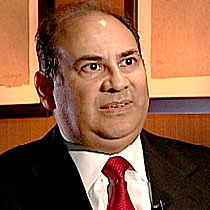
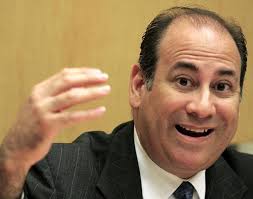
Roger Noriega, the former assistant secretary of state for western hemisphere affairs and longtime proponent of hawkish U.S. policies in Latin America, is a visiting fellow at the neoconservative American Enterprise Institute (AEI).[1] Noriega, who coordinates AEI's Americas program, has also been a vociferous proponent of free trade policies and immigration reform.
Noriega has helped spearhead fear-mongering discussions in the United States about the purported efforts of Venezuela to assist other countries—including Iran—to undermine the United States. In a January 2011 article for AEI titled “Latin America Action Agenda for the New Congress,” Noriega wrote: “Under Washington's nose, Chávez has made strides toward terminating U.S. access to Venezuelan oil by finding a new buyer in China, provided Iran's terrorist state with a strategic platform from which to operate near U.S. shores, and resuscitated Cuba's implacable dictatorship.”[2] He said that Republicans in Congress should press for “indictments against Chávez's circle of corrupt cronies” and push through sanctions against Venezuela's state-run oil company for “doing business with Iran.”[3]
In an October 2010 piece for Foreign Policy magazine, Noriega went so far as to claim that Venezuela was aiding Iran's nuclear program and even developing a clandestine nuclear weapons program.[4] However, as Right Web contributor Charles Davis remarked, “[T]hat show-stopping claim of nuclear proliferation on the U.S.'s ‘soft underbelly’ [wasn’t] mentioned in his more recent, 2,700 word policy guide for the new Congress.” Additionally, writes Davis, “According to leaked State Department cables released by the whistle-blowing website WikiLeaks, U.S. diplomats have privately mocked the notion that Venezuela is assisting Iran's nuclear program or developing atomic weapons—or even capable of developing a civilian nuclear power program.”[5]
More recently, in 2014, Noriega promoted the fear-mongering claim that Venezuela was helping Hezbollah establish a presence in the Americas. “As part of the late Hugo Chávez’s radical, anti-US agenda, the Venezuelan regime has promoted and even funded the presence and activities of Iran and Hezbollah in the Western Hemisphere,” Noriega wrote in February 2014. Noriega despaired that the State Department “continues to minimize this threat,” claiming that “Hezbollah operatives could be among those committing acts of terror and violence against Venezuelan demonstrators.”[6]
Also in 2014, Noriega sharply rebuked the Obama administration’s announcement that the United States would seek to normalize its relations with the Cuban government. “Obama has forfeited leverage that might be useful down the road in way that buys the Castro regime more time in power,” Noriega wrote in his AEI column.[7] He stated in a separate piece for AEI: “President Obama’s decision to move toward normalizing diplomatic relations with the Castro regime resuscitates a gasping dictatorship without even asking for anything in return.”[8]
Noriega has also been a leading proponent of the “war on drugs.” He has argued that Congress should ramp up “funds, hardware, and technical support” for Central America countries to combat drug cartels. He has characterized the high death toll in Mexico since the launching of a war against drug cartels in 2006—which had reached an estimated 34,000 by 2010—as “tangible evidence that [Mexican] President Felipe Calderón ended the unwritten policy of past Mexican political leaders who kept the peace with 'narcos' by turning a blind eye to their criminal activities.”[9]
He has tried to pressure conservatives in Congress by calling them out for not being tough enough on the war on drugs. He wrote in a March 2011 AEI blog post: “The least these conservatives in Congress can offer is sufficient, effective funding for our anti-drug aid. What will make a remarkable difference are explicit commitments to sustained political support for Mexico, recognizing that our neighbors have been carrying more than their share of the burden in this drug fight. This is more than an opportunity for bipartisan leadership. It is a problem that demands such a commitment.”[10]
Noriega has sought to argue that the United States it partly to blame for the rise of drug cartel networks in Latin America and growing immigration due to its lack of engagement in the region. “It is very clear that drug traffickers, criminal networks, and others who pose a threat to US security are filling the vacuum left by waning American leadership,” he wrote in July 2014. “That is why high-profile US engagement with Central America is essential to address the root causes of the dramatic humanitarian crisis on the US southern border.”[11]
Track Record
Noriega has been involved in Latin American policy since the 1980s, when he worked in the Ronald Reagan administration’s U.S. Agency for International Development (USAID). According to the Texas Observer, while at USAID Noriega oversaw "non-lethal aid" to the Contras, which led to uncomfortable questions about Noriega's work during investigations into the Iran-Contra scandal.[12]
Reported the Observer: "In subsequent investigations, unseemly associations surfaced. For example, a Miami-based money launderer with ties to the Medellin cartel testified to a Senate committee that he personally had cleaned up $230,000 by cycling it through a bank account used for non-lethal Contra aid. While at USAID, Roger [Noriega] also steered a $750,000 grant to the Thomas A. Dooley Foundation, headed by Verne Chaney, a close colleague of retired General John Singlaub, who, in turn, helped Oliver North run the illegal arms supply network to the Contras during the U.S. aid cutoff. For his part, Chaney did a survey of the Contras' medical needs in 1985 together with Rob Owen, who was subsequently nailed as Ollie North's bag man. When thisall blew up into televised hearings, special prosecutors, threatened indictments, and jail terms, Noriega found it convenient to lie low."[13]
Following his stint in the Reagan administration, Noriega served in a number of posts at the Organization of American States (OAS) and in Congress. According to his AEI biography: "On Capitol Hill, Noriega counseled powerful Congressional leaders on all aspects of U.S. interests in the Americas, drafted historic legislation, and oversaw U.S. aid programs, the Peace Corps, and international narcotics affairs. From July 1997 to August 2001, he was a member of the Senate Foreign Relations Committee staff of Chairman Jesse A. Helms (R-NC) and from July 1994 to July 1997, he served on the House International Relations Committee staff of Chairman Benjamin A. Gilman (R-NY). Other experiences include: senior adviser, OAS (July 1993 to July 1994); senior policy adviser, U.S. Mission to the OAS (August 1990 to January 1993); various program management and public affairs positions, U.S. Agency for International Development and U.S. Department of State (November 1986 to July 1990); press secretary and foreign policy adviser, U.S. Representative Robert Whittaker (R-KS) (May 1983 to October 1986); and research assistant, Kansas Secretary of State (December 1981 to April 1983)."[14]
Noriega last stint in government was as assistant secretary of state for Western Hemisphere Affairs in the George W. Bush administration, a post he held during 2003-2005 (he had previously served as the Bush administration's ambassador to the Organization of American States). During his tenure at the Bush State Department, Noriega, who succeeded Iran-contra veteran Otto Reich at the post, proved an outspoken critic of Latin American and Caribbean political forces and governments that were opposed to U.S. influence, particularly in Venezuela and Cuba. On Venezuela and late President Chávez, Noriega repeatedly spelled out a hard line, working to isolate the country from its neighbors.
He told the Senate Foreign Relations Committee in early 2005: "Should the United States and Venezuela's neighbors ignore President Chávez's questionable affinity for democratic principles we could soon wind up with a poorer, less free, and hopeless Venezuela that seeks to export its failed model to other countries in the region.”[15]
Also in 2005, Noriega told the Senate Foreign Relations Committee that the Bush administration was working to "increase awareness among Venezuela's neighbors of President Chávez's destabilizing acts with the expectation that they will join us in defending regional stability, security, and prosperity."[16]
Responding to the testimony, Rep. Donald Payne (D-NJ), said: "I think that we need to try to work with Venezuela. There are some changes going on that are going to help the quality of life of the poorest people.”[17]
On Cuba, Noriega worked to dissuade other Latin American countries from developing ties with the Castro regime and pushed efforts to support dissident groups. In March 2005 testimony before the House Subcommittee on the Western Hemisphere, Noriega argued that the transition to democracy was already "happening in the hearts and minds of more and more Cubans every day. … [Cuban dissidents] may not agree on everything—and that's okay. But they do agree on this: the Cuban people must claim their God-given right to decide for themselves about how to make a better future for their children." To help Castro's opponents "decide for themselves" their future, Noriega told the subcommittee that the United States was generously funding a number of regime-change efforts, including providing $14.4 million to support the development of Cuban civil society elements and the "empowerment of the Cuban people in their efforts to effect positive change.”[18]
During the Bush administration, Noriega targeted those Latin American leaders who supported the Castro regime—including former Haitian President Jean-Bertrand Aristide. Reported the Council on Hemispheric Affairs (COHA) in October 2005: "After assuming his post, Noriega fell in line with [his predecessor Otto] Reich's rabid stance regarding Castro, Chávez, and Haitian President Jean-Bertrand Aristide. Both Noriega and Reich saw Aristide's passionate rhetoric regarding social justice as little more than a born-again Castroism. Noriega's policy toward Haiti culminated with Aristide's forced 'resignation' in February of 2004, an act which most analysts and area journalists likely view as a U.S.-sponsored para-coup with Noriega as the playmaker. Noriega … would later cynically counsel the Senate Foreign Relations Committee that the Aristide resignation 'may eventually be considered his [Noriega's] finest hour.' Haiti proved to be just one instance of many in which Noriega directed U.S. government resources and personnel to undermine the national interests of a number of Latin American governments with which Noriega had previously crossed swords."[19]
Noriega resigned from the State Department shortly after his Cuba portfolio was transferred by Secretary of State Condoleezza Rice to a new Cuba Transition Coordinator within the department. Some observers linked Noriega's resignation to his loss of influence over Cuba policy. Opined COHA: "It is no mystery that, like Secretary of State Colin Powell before her, Condoleezza Rice was no great admirer of Noriega's. Once she took office his days were numbered, particularly after she transferred Noriega's all-important Cuba portfolio."[20]
Post-Bush Record
After leaving the Bush administration, Noriega promptly joined the American Enterprise Institute, where he continued to push hardline U.S. security polices and a free market agenda for Latin America, often striking an alarmist tone. In a 2006 AEI report, Noriega claimed that the world was witnessing "a battle for the heart and soul of the Americas"—between those on one side "who treat democracy as an inconvenience and see free markets as a threat" and those on the other side "who see democratic institutions and the rule of law as indispensable to prosperity and liberty."[21]
In a February 2006 AEI report entitled "Two Visions of Energy in the Americas," Noriega warned Latin American and Caribbean countries against going down the path of those who violate the laws of the free market, pointing to Venezuela and Bolivia. He argued that corporations and governments "can and should work together to foster genuine growth and development in the hemisphere that serves both the bottom line and the moral imperative of helping raise millions out of poverty through the sound stewardship of natural resources."[22]
In Noriega's view, Peru was at one time a paragon of virtue in the energy sector. In January 2006 Peru signed a deal for a 460-mile gas pipeline with Hunt Oil of Texas, an event that Noriega recounted in his AEI paper. He wrote: "U.S. energy companies have every reason to try to bolster the free market energy model taking hold in other countries in the Americas. Rather than have to accommodate roguish characters, they can have partners in the Americas who are democratic, accountable to the law, and respond to reason, run stable countries because they govern justly, and do not change the rules of the game for political purposes—in short, partners who respect the market." Noriega also encouraged "Western energy companies" to "use their capital and technical expertise as levers to encourage countries in Latin America and the Caribbean to adopt clear and fair policies that make investments safe and sound."[23]
A vociferous supporter of free trade treaties and U.S. trade preferences in the region, Noriega strongly supported Congress's mid-December 2006 extension of the Andean Trade Preferences to Ecuador, Bolivia, Colombia, and Peru. He called the Andean Trade Preferences and Drug Eradication Act an "opportunity to advance U.S. objectives in Latin America—sustaining anti-drug efforts and contrasting constructive U.S. policies with the divisive, anti-American agenda of Venezuela's President Hugo Chávez." According to Noriega, "The future of the Andean region is in play—thanks to the narcoterrorist threat and the populist flames fanned by Chávez and his followers.”[24]
With respect to Venezuela, Noreiga has urged the international community to not give credibility to what he has deemed the late Venezuelan President Hugo Chávez's "undemocratic project." In June 2006, Noriega called on the Organization of American States (OAS), the European Union, and others "to refuse to observe Venezuela's 2006 presidential elections until significant changes are made in the rules of the game." He advised: "No international observer should risk its credibility by being associated with another electoral whitewash in Venezuela."[25]
As for the Venezuelan people, Noriega wrote: "One would hope that a majority of Venezuelans would take a stand to secure their essential liberties, to begin to back a political alternative that appeals to their hopes and not their fears." As it turned out, in December 2006 Chávez won another six-year term with more than 62% of the vote in an election deemed transparent by some 700 international observers.[26]
In 2014, in the wake of sporadic demonstrations by opposition activists in Venezuela, Noriega joined calls for imposing U.S. sanctions on individuals associated with the government of President Nicolás Maduro, who came to power after the 2013 death of Chávez. Said Noriega: “The United States can be part of solution in Venezuela by applying sanctions on individuals in the regime. … In the Americas the US cannot lead from behind.”[27] In December 2014, a bill introduced by right-wing Rep. Ileana Ros-Lehtinen (R-FL) imposing this type of sanctions on Venezuela was passed by both houses of Congress and signed into law by President Obama.[28]
Noriega has opposed diplomatic relationship with the democratically elected government of Venezuelan President Nicolás Maduro. He decried as “disgraceful” the Obama administration’s acceptance of the appointment of Venezuela’s new ambassador to the United States in 2013.[29]
Following the 2005 Summit of the Americas in Mar del Plata, Argentina, Noriega spelled out in AEI's Latin American Outlook an alternative regional integration plan that would unite like-minded governments within an "Opportunity Partnership."[30] Noriega's concept of a community of free-market democracies echoes similar initiatives that have been supported and shaped by the AEI and other rightist Washington think tanks that aim to create regional and global groupings of governments aligned with U.S. policies. An Opportunity Partnership, according to Noriega, "would reward countries that open their economies and government democratically with substantial material and political support and access to the benefits of free trade and investment." He encouraged the U.S. government to "strengthen its friends against the anti-American onslaught fueled by the mischievous Chávez." According to Noriega, conditions for the new partnership would include a commitment "to fight poverty by adopting free market principles and trade liberalization." Countries would be included if they hold "free and fair elections" but excluded if they are "regimes that rig voting and mug their opponents."[31]
Other Activities
Noriega serves on the advisory board of Civica Americana/Hispanic-America American Foundation (HCF), along with other prominent Hispanic and non-Hispanic members of the business and broadcast industries. The domestic program of HCF promotes “Hispanic integration into American society by focusing on shared Hispanic and American values, as well as American heritage, culture and constitutional and free-market principles. HCF promotes patriotism and good citizenship via military, government and community service, and encourages economic success via education and entrepreneurship.” The international arm, which sponsored tours through Latin America on the eve of the 2008 elections to talk about the U.S. electoral process, promotes “America's civic values and constitutional democracy throughout the Hispanic world” and “will help promote and strengthen democratic, constitutional and free market principles throughout the Americas through exchanges and special programs designed to achieve these goals.”[32]
Noriega is also the founder and managing director of Visión Américas LLC, a lobbying firm which advises U.S. and foreign clients on international business issues. That website notes: “Twice appointed by President George W. Bush (and confirmed by the U.S. Senate) and with 10-year career on Capitol Hill, Ambassador Noriega's breadth of experience and contacts offer strategic vision and practical insight on U.S. foreign policy and aid programs.”[33]
In January 2011, Noreiga emphasized that strengthening the U.S. free trade policies in the Western Hemisphere is crucial for “the people of the United States” as an invited speaker at the Hispanic Leadership Network Conference’s panel on “Jobs and Trade: An Hispanic Decade to Come.” The conference, “designed to continue the work of strengthening the bond between the Hispanic community and the center-right movement,” was organized by the American Action Network and the American Action Forum.[34] Co-chaired by Governor Jeb Bush and Secretary Carlos Gutierrez, the conference beamed in messages from former President George W. Bush, Sen. John McCain (R-AZ), former Speaker of the House Newt Gingrich (R-GA), Majority Leader Eric Cantor (R-VA), and Sen. John Kyl (R-AZ). Other speakers included former Colombian President Alvaro Uribe, Puerto Rico Governor Luis Fortuño, Florida Governor Rick Scott, and Minnesota Governor Tim Pawlenty.