
William Kristol
last updated: December 20, 2018
Please note: The Militarist Monitor neither represents nor endorses any of the individuals or groups profiled on this site.
Affiliations
- Weekly Standard: Editor, Cofounder
- Emergency Committee for Israel: Board member
- Institute for the Study of War: Board member
- Keep America Safe: Board member
- Foreign Policy Initiative: Cofounder
- New York Times: Former columnist
- Project for the New American Century: Cofounder
- Foundation for Community and Faith Centered Enterprise: Former Member, Board of Trustees
- John M. Ashbrook Center for Public Affairs, Ashland University: Member, Board of Advisors
- American Enterprise Institute: International Advisory Board of the New Atlantic Initiative
- George Mason University: Former Member, Board of Visitors
- Foundation for the Defense of Democracies: Member, Board of Advisors
- Manhattan Institute: Member, Board of Trustees
- Shalem Foundation: Former Member, Board of Trustees
- Committee for the Liberation of Iraq: Former Member, Advisory Board
- Ethics and Public Policy Center: Member, Policy Advisory Board
- Lynde and Harry Bradley Foundation: Director of Project on the ’90s, 1993-1994
- Project for the Republican Future: Chairman and Founder, 1990-1993
- Madison Center for Educational Affairs (Formerly the Institute for Educational Affairs): Former Fellow
- Federalist Society: Contributor to the Harvard Journal of Law and Public Policy
- American Committee for Peace in Chechnya: Former Member
Government
- Office of the Vice President: Chief of Staff to Dan Quayle, 1989-1992
- Office of the Secretary of Education: Chief of Staff/Counselor for Education Secretary William Bennett, 1985-1988
Business
- Govolution (Government IT service): Co-Chair, Advisory Board (2000)
- Sanford C. Bernstein & Co., LLC: Former Member, Board of Directors
- National Affairs, Inc.: Former Vice President
- Harvard University: Adjunct Lecturer; Former Faculty, 1983-1985
- University of Pennsylvania: Former Faculty Member, 1979-1983
Education
- Harvard University: A.B. in Government
- Harvard University: Ph.D. in Political Science
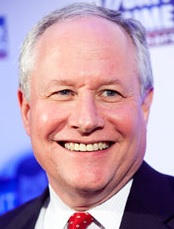
William Kristol is a leading figure in U.S. neoconservatism, appearing frequently as a political pundit on news networks, and formerly as editor at-large of the Weekly Standard,the flagship neoconservative print publication. He advises a host of pressure groups that work to promote a “pro-Israel” U.S. foreign policy. He is the son of the late Irving Kristol, considered to be one of the earliest neoconservatives, and Gertrude Himmelfarb, a conservative scholar known for her work on Victorian-era social mores. Kristol is a strong believer in the idea of “spreading democracy” and believes that U.S. foreign policy should aim—after making sure U.S. interests are secured—to reshape other governments through various means. In November 2018, Kristol stirred some controversy by stating that the United States should adopt regime change in China as a foreign policy goal. He clarified his statement on Twitter, writing, “The case for regime change shouldn’t really be controversial. The U.S. at its best has always stood for the proposition that all people everywhere deserve to be free. Now it goes without saying there are practical limits to what we can and should do to make this happen. Much of what we do is simply to serve as an example. We use diplomacy, public and private, to persuade other nations to move toward freedom. We help civil society abroad. We sometimes use political or economic pressure. We rarely use and should rarely use military force. And of course, we realize that in the real world prudence requires that we be allied with oppressive regimes, sometimes terrible regimes (the Soviet Union), and sometimes for a long time (Saudi Arabia). But surely our ultimate goal, after preserving and securing our and freedom, is to be a force for freedom in the world. And this means changing un-free regimes to free ones, or freer ones. This means regime change, sometimes gradual, sometimes, in the way the world works, sudden.”[1]
Kristol has helped shape the public conversation on a host of foreign and domestic issues by promoting hawkish political candidates, launching advertising blitzes, and prodding the Republican Party to embrace a militaristic foreign policy agenda. “For a generation, stretching back to the 1980s,” reported Politico in mid-2012, “Kristol has used his influence to goad Republicans to be bolder and more ambitious—and riskier, for themselves, the Republican Party, and the nation—in their decisions.”[2]
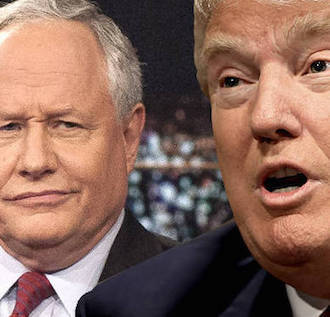
Kristol was an early opponent of Donald Trump and, unlike many other Republicans, has remained critical of Trump through his administration. Even after Trump pursued policies that Kristol approved of—like his decision to move the U.S. embassy in Israel from Tel Aviv to Jerusalem—Kristol maintained his disdain for Trump as president.In December 2018, the Weekly Standard folded. In keeping with his usual practice of expressing glee at the misfortune of his critics, Trump tweeted, “The pathetic and dishonest Weekly Standard, run by failed prognosticator Bill Kristol (who, like many others, never had a clue), is flat broke and out of business. Too bad. May it rest in peace!”[3]
Kristol’s audience had been split due to his outspoken opposition to Trump’s policies. Many of the Standard’s subscribers were enamored of Trump’s decisions on such matters as scrapping the Iran nuclear deal and moving the U.S. embassy in Israel from Tel Aviv to Jerusalem.
The New York Times wrote of the Standard’s demise, “The editors supported Mr. Trump’s Supreme Court picks and tax overhaul. But the magazine’s free marketeers did not cheer trade tariffs, and its foreign interventionists lamented the president’s retreat from a central role in global leadership. Criticism of a so-called deep state, a staple of Breitbart News and Fox News commentators like Sean Hannity, did not dominate its pages.”[4]
Alongside his voluminous collection of columns for the Weekly Standard, Kristol appears regularly on Fox News and frequently pens op-eds for major news outlets. He is also editor of several books and the co-author, with the New Republic ‘s Lawrence Kaplan, of the 2003 book The War over Iraq: Saddam’s Tyranny and America’s Mission.
“Never Trump”
Kristol was strongly opposed to Donald Trump’s candidacy from the earliest days of the 2016 presidential election campaign. He even went as far as floating the idea of gathering support for a third-party candidate in the wake of Trump securing the Republican Party presidential nomination. Kristol endured some ridicule for this idea as well as for his backing of unsuccessful candidates like Sen. Marco Rubio (R-FL). In May 2016, after news leaked that Kristol was considering promoting the previously unknown David French as a third-party candidate, MSNBC Morning Joe host Mika Brzezinski—herself a target of Trump’s often boorish comments—said that “Bill needs to take a vacation. Like a long one.”[5]
Before Trump’s nomination, Kristol repeatedly spoke favorably of the candidacy of Marco Rubio, predicting that the Florida senator—who had received the support of major rightwing “pro-Israel” donors Sheldon Adelson and Paul Singer—would eventually overcome Trump to win the nomination.[6]
At the time, Kristol said that if Trump won the candidacy, he would “support someone good on the ballot as a third-party candidate.” He said an “excellent independent ticket” could be former Vice President Dick Cheney and Rep. Tom Cotton (R-AR), who is a Kristol protégé.[7] Charles Johnson wrote, “This has to be some kind of a bizarre conservative’s idea of a joke, right?[8]
Kristol has frequently lambasted Trump, arguing that he would be disaster in foreign policy, though better than Hillary Clinton on domestic policy. “I think I’m probably closer to Hillary Clinton than to Donald Trump on foreign policy, and maybe trade,” he said in a July 2016 interview with Politco. “If it were a domestic policy election, I probably would swallow hard and vote for Trump. If it were a pure foreign policy election, I’d probably swallow hard and vote for Hillary Clinton.” Kristol’s main concern is that Trump is too “Rumsfeldian,” explaining to Poltico that “It’s sort of the worst of all worlds, you know. Be very aggressive but then don’t be serious about following up on being aggressive.”[9]
After Trump’s surprise visit to Mexico in late August 2016, Kristol appeared to soften his hardline on Trump’s foreign affairs creds, saying in a tweet that he had had a “good day in Mexico.”[10] He then plugged an article published in his Weekly Standard, in which writer Stephen Hayes argued, “If voters are concerned that Trump is incapable of behaving like a statesman—and many of them are—Trump showed them that at least on this day, he could. He was, ever briefly, the kind of Trump many Republican elected officials have long hoped publicly that he could become.”[11]
After Trump won the presidency, Kristol maintained his skepticism, even after Trump pursued policies of which he approved. One example of his applauding Trump was in April 2017, in the wake of Trump striking several Syrian targets in response to an alleged chemical weapons attack carried out by the Bashar al-Assad regime. Kristol warmly recommended an analysis by fellow neoconservative Elliott Abrams, in which Abrams praised Trump, saying, “The president has been chief executive since January 20, but this week he acted also as Commander in Chief. And more: he finally accepted the role of Leader of the Free World.”[12]
But Kristol kept up his criticism of Trump, and the general direction of the Republican party under his leadership, tweeting a few months later, “The GOP tax bill’s bringing out my inner socialist. The sex scandals are bringing out my inner feminist. Donald Trump and Roy Moore are bringing out my inner liberal.
WHAT IS HAPPENING?”[13]
Journalist Robert Wright was particularly dubious about Kristol’s motives in his anti-Trump stance. Speaking of Kristol’s opposition to the Trump tax-cut plan, he wrote, “This isn’t the first time Kristol has shown a malleability on domestic policy that wasn’t matched by malleability on foreign policy. (For example, he departed from Republican tax-cut orthodoxy in 2012.) A cynic might go so far—and some cynics have—as to suggest that a belligerent, militaristic foreign policy is the lodestar for Kristol and some other neoconservatives, and that they’re willing to support whatever constellation of domestic policies it takes to sustain a coalition for this militarism. In this view, the current moment is, for Kristol, an opportunity to win favor from fervent liberal anti-Trumpers, favor that can be used later to sell another war. Certainly Kristol has used a river of emotionally resonant anti-Trump tweets, produced with factory-like efficiency, to massively increase his Twitter following and win the hearts of swooning liberals.”[14]
Kristol has been intensely critical of Republicans and conservatives falling easily in line with Trump. He told one interviewer, “I am personally surprised by the amount of rationalizing and enabling of Trump. I think I underestimated the power of rationalization as a human psychological fact. They start with a very hardheaded look, [saying] he’s not good and the tweeting is horror, he’s a jerk, and the tweeting is distasteful, but you know, we’ll get this and this. He’ll be better than Hillary and we can live with it, but we’ll have to control him…Within six months, people I know personally, they started off with a very hardheaded, limited defense of Trump. And they’re now all in and saying that Robert Mueller is some partisan hack who wants to destroy Trump and no other Republican has ever fought for anything. It’s just kind of idiotic Trumpy talking points. That slippery slope is more slippery than I realized.”[15]
Yet Kristol has not been willing to examine any responsibility he and fellow neoconservatives might have had in Trump’s rise and the evolution of Trump’s policies. For example, Kristol said he considered the appointment of John Bolton as Trump’s national security adviser “a little nervous-making.” Kristol was particularly concerned that Bolton would make Trump more likely to withdraw unilaterally from the Iran nuclear deal, a move he and his fellow neoconservatives were uneasy about, fearing it would strain relations with U.S. allies, as it has. But, as journalist Jim Lobe pointed out, “Kristol is thus following the lead of the Foundation for Defense of Democracies (FDD), the most generously funded and active of the anti-Iran groups, which is worried that an abrupt, unilateral U.S. withdrawal—as opposed to its gradual, hollowing out—from the deal would backfire and isolate Washington from its European allies in particular. Kristol, along with his ideological confreres, campaigned hard against the JCPOA and has always taken an extremely hawkish line toward Tehran. That he is now worried about Bolton should send a strong message to both Democratic and Republican lawmakers in Congress who will not have the chance to vote on his appointment.”[16]
Influence on the Republican Party
Kristol’s advocacy has at times appeared to influence Republican Party political races. For example, Kristol enthusiastically encouraged Mitt Romney to tap Paul Ryan as his 2012 vice presidential running mate. In 2008, Kristol helped promote the previously little-known Sarah Palin, who subsequently was selected as John McCain’s running mate.[17]
In 2014, during the lead up to the U.S. midterm elections, Kristol vociferously supported Republican candidates and started charting what he saw as the best course a Republican-controlled Congress should take. At the top of his list was curtailing President Obama and pursuing a more aggressive U.S. foreign policy. “Republicans have to constrain the president, rebuild American defenses, do their best to stop a bad deal with Iran,” Kristol wrote in the Weekly Standard shortly before the November election.[18] In another piece published in October 2014, Kristol postulated that “to have even a chance for a semblance of a conservative future in the United States,” the United States needed to “restore” its “military strength and morale” and deal “urgently with serious threats abroad.”[19]
One of the more prominent candidates Kristol endorsed before the midterm elections was then Rep. Tom Cotton (R-AR), who ultimately won his race for the Senate. Cotton, a staunch hawk who spurred widespread ridicule for a letter he crafted on behalf of himself and 46 other Republican Senators to Iran’s leaders in March 2015, had been a disciple of Kristol’s going back to 2006, after a letter he wrote calling for the imprisonment of two New York Times journalists had caught Kristol’s attention.[20] According to The Atlantic, “Kristol saw a kindred spirit in Cotton’s aggressive national-security hawkishness, and the men developed what Kristol describes as ‘a bond beyond pure policy.'”[21] Kristol’s Emergency Committee for Israel also supported Cotton’s Senate run with a million-dollar contribution in the form of supportive political advertising.[22]
Kristol’s efforts to influence the course of Republican Party have been widely criticized for generally backfiring. Wrote Jacob Heilbrunn at the National Interest: “A good case could be made that the author, in many ways, of the GOP’s problems is William Kristol. Kristol saddled John McCain with Sarah Palin. He’s the biggest backer of Paul Ryan, a Washington creature, who is being talked up as a potential presidential candidate in 2016—when was the last time a Congressman won the presidency? And Kristol, of course, has dominated foreign policy debate in the GOP by ceaselessly purveying neocon malarkey about American militarism abroad, but Romney’s bluster about a new American century went nowhere. Had Romney shunned the neocon bluster and campaigned as a Massachusetts moderate, he would have posed a much greater threat to Obama than he did.”[23]
In the wake of the election, Kristol turned his sights on key Obama administration appointees. He and his allies, noted a January 2013 analysis in Politico, wasted no time in advancing “their hawkish neoconservative foreign policy by pushing the controversy that sank Susan Rice’s potential nomination for secretary of state.”[24] The episode served as a prelude to the right’s prolific use of the 2012 terrorist attacks on the U.S. consulate in Benghazi, Libya as a political cudgel.[25]
Shortly after the Susan Rice fight, Kristol helped lead neoconservative opposition to the nomination of former Sen. Chuck Hagel (R-NE)—a foreign policy realist Kristol characterized as “very weak on Iran” and “a bitter opponent of Israel”—to replace Leon Panetta at the helm of the Pentagon. As buzz about Hagel grew, Kristol’s Emergency Committee for Israel launched a “substantial” ad blitz against Hagel’s candidacy, accusing the Vietnam veteran of holding anti-Semitic views and being inadequately committed to regime change in Iran.[26] Slate political blogger Dave Weigel described the entire “anti-Hagelverse” as “a relatively small group of D.C. conservatives and hawks…connected to Bill Kristol.”[27]
Politico suggested that the Hagel fight portended a more ambitious effort by Kristol and his allies to influence the post-Romney Republican Party, including launching a potential foray into domestic issues. “Kristol and his allies,” wrote Kenneth Vogel, “have been talking about starting a ‘reformist’ organization to recraft Republican fiscal policies and champion a rising generation of Republicans, such as Kristol favorites Louisiana Gov. Bobby Jindal, Florida Sen. Marco Rubio and Wisconsin Rep. Paul Ryan. The hypothetical group, modeled on the defunct Democratic Leadership Council, would join an expanding network of media platforms and nimble nonprofits for Kristol and mark an ambitious expansion into domestic policy.”[28]
Advocacy of Military Intervention
Kristol is the co-author, with Robert Kagan, of a 1997 Foreign Affairs article titled “Toward a Neo-Reaganite Foreign Policy,” which became an important neoconservative rallying call. The piece, which proposed a U.S. foreign policy of “benevolent global hegemony,” argued that “American hegemony is the only reliable defense against a breakdown of peace and international order” and that “the main threat the United States faces now and in the future is its own weakness.”
The Foreign Affairs piece became an ideological blueprint for the Project for the New American Century (PNAC), a neoconservative letterhead group Kristol and Kagan co-founded that same year. Cementing Kristol’sinfluence well into the George W. Bush years, PNAC rallied neoconservatives and liberal hawks inside the Beltway in favor of the Iraq War and, later, an expansive “war on terror.”[29]
Kristol has worked to extend his influence during the Obama presidency, relentlessly pushing for U.S. military intervention across the globe, though with a clear emphasis on the Middle East. He has pushed for intervention in Iran and advocated for U.S. ground troops to be used in the fight against militants linked to the Islamic State of Iraq and Syria (ISIS).
Despite the blowback from other U.S. interventions in the region that Kristol and his neoconservative colleagues vociferously promoted, he has dismissed such concerns with respect to more recent U.S. interventions. “Intellectuals overthink things,” he said in August 2014. “We allied with Stalin in World War II and helped create the captivity of Eastern Europe, you could argue…We got involved in Afghanistan to bring down the Soviet Union and probably helped create, indirectly, some of what came about in Afghanistan and ideas that led to 9/11. That’s life. Maybe we could have been cleverer in all these cases, but often, when you mess around in the real world, you have unintended effects and some of them are bad.” Seeming to forget his previous point, Kristol concluded by wondering, “What’s the harm of bombing [ISIS] at least for a few weeks and seeing what happens? I don’t think there’s much in the way of unanticipated side effects that could be bad there. We could kill a lot of very bad guys.”[30]
Kristol endorsed a proposal by the neoconservative writer Max Boot to send 10,000 U.S. troops to Iraq to “annihilate ISIS”[31] and accused the Obama administration of doing “nothing” to counter the threat purportedly posed by the group—a remark, many critics observed, he made some two weeks after the White House had begun launching airstrikes on ISIS positions in northern Iraq.
“‘Nothing’ is a curious term for Kristol to use,” wrote Salon’s Simon Maloy, “since the administration has spent the past two weeks dropping explosives on ISIS and assisting Kurdish militias in halting and pushing back the terrorists’ advance. … You can criticize the extent of the action taken by the president, but it’s not ‘nothing.’”[32]
After the November 2015 ISIS terrorist attacks in Paris, Kristol called for U.S. ground troops to be sent to fight ISIS. “If it takes 50,000 troops going in there and cleaning out Raqqa, the capital of the Islamic State, do it,” he opined in an interview.[33]
Other key Kristol targets have been Iran and Syria, where he has promoted U.S.-led regime change.[34] He has criticized the Obama administration for deploying force “hesitantly, defensively, and haphazardly.”[35] Pointing to what he called “al Qaeda’s resurgence in Iraq, our withdrawal from Afghanistan, our fecklessness with respect to Syria, Libya, and elsewhere,” Kristol concluded in August 2013 that “Al Qaeda’s not on the run. We are.”[36]
Reprising a role he played in the run-up to the Iraq War, in August 2013 Kristol helped convene a number of prominent neoconservatives—including Elliott Abrams, Max Boot, Eliot Cohen, Thomas Donnelly, Reuel Marc Gerecht, Robert Kagan, Joe Lieberman, and Dan Senor, among others—and a handful of liberal hawks to sign an open letter calling for the Obama administration to intervene in Syria’s civil war. “At a minimum,” the letter read, “the United States, along with willing allies and partners, should use standoff weapons and airpower to target the Syrian dictatorship’s military units that were involved in the recent large-scale use of chemical weapons. It should also provide vetted moderate elements of Syria’s armed opposition with the military support required to identify and strike regime units armed with chemical weapons.”[37]
In his own writings, Kristol has claimed that the goal of any intervention in Syria should be not simply to punish President Bashar al-Assad for his alleged use of chemical weapons, but to topple him. “Whatever the president and the secretary of state may now say about the mission in Syria being ‘limited’ and ‘narrow,'” Kristol wrote, “one trusts they know the mission will only be a success if Assad goes. Regime change is not only Assad’s just reward. It’s also the best hope for a modicum of stability in and near Syria. And it’s the only message other WMD-loving dictators will understand.”[38]
Kristol has also maintained a steady drumbeat in favor of war with Iran, despite a favorable diplomatic climate following the election of Iranian President Hassan Rouhani, who campaigned on reaching a diplomatic accord with the West. Invoking the favored neoconservative comparison between Iran and Nazi Germany, Kristol wrote in September 2013 that “the accommodation of the Islamic Republic of Iran’s quest for nuclear weapons lies ahead as surely as the accommodation of Nazi Germany’s expansionist dreams.”[39]
Kristol concluded that in the absence of military action by the Obama administration, it fell to Israel to launch a war with Iran. Kristol even christened the hawkish Israeli Prime Minister Benjamin Netanyahu the “leader of the West” for his confrontational stance toward the Islamic Republic. “Ariel Sharon once famously said that Israel would not play the role of Czechoslovakia in the 1930s,” wrote Kristol, continuing the World War II analogy. “Nor will it play the role of Poland. Despite imprecations from the Obama administration, Israel will act. One prays it will not be too late. It is a strange course of events, heavy with historical irony, that has made the prime minister of Israel for now the leader of the West. But irony is better than tragedy.”[40]
In November 2015, Kristol introduced Israeli Prime Minister Benjamin Netanyahu as the “preeminent leader of the free world” at an American Enterprise Institute event presenting Netanyahu with its “Irving Kristol” award.[41]
Kristol was a strong supporter of Israeli Prime Minister Benjamin Netanyahu’s controversial March 2015 speech to Congress criticizing President Obama’s diplomatic efforts to peacefully resolve the Iranian nuclear dispute. Kristol wrote just prior to the speech: “The prime minister of Israel, speaking on behalf of not only his country and millions of Jews, but on behalf of the West itself, will command the world’s attention as he declares his refusal to appease the enemies of Israel and the West. Both Jabotinsky and Churchill, both Ben-Gurion and Truman, would appreciate the moment.”[42]
Kristol vociferously opposed the nuclear agreement reached between Iran and six major world powers in July 2015, calling it “a deal worse than we even imagined possible.” He declared at the time that the “deal cannot stand” and that Congress should overturn it.[43]
Kristol is also a vocal commentator on a variety of other Republican concerns. He has spoken out against comprehensive immigration reform,[44] called Obamacare worse than Watergate,[45] dismissed rising reports of sexual assault in the U.S. military as a “pseudo-crisis,”[46] and defended the broadly unpopular GOP shutdown of the federal government in the fall of 2013 by dismissively suggesting that “no one no one is going to starve” and that it’s “not the end of the world.”[47]
Pressure Groups
A key tool used by Kristol in advancing his agenda are the numerous advocacy groups he has created and supported during the last two decades, most of which have been dedicated to promoting militarist, “pro-Israel” U.S. foreign policies. Among the groups are the Project for the New American Century (PNAC), which Kristol cofounded with another neocon scion, Robert Kagan ; the Liz Cheney-led Keep America Safe; the PNAC successor Foreign Policy Initiative; the Institute for the Study of War; and the Committee for the Liberation of Iraq.
In the media realm, Kristol—aside from being a cofounder of the Weekly Standard—is a founding board member of the Center for American Freedom, which publishes the neoconservative Washington Free Beacon—a website described by one critic as a “down-market version” of the Standard.[48]
One recent initiative is the Emergency Committee for Israel, a Washington-based advocacy group established in mid-2010 that claims “to provide citizens with the facts they need to be sure that their public officials are supporting a strong U.S.-Israel relationship.” Alongside Kristol, ECI board members have included the late Rachel Abrams, the wife of Iran-Contra veteran Elliott Abrams, and Gary Bauer, a well-known Christian Zionist who serves on the executive board of Christian United For Israel and leads the lobby groups American Values and Keep Israel Safe.[49] The group has made a name for itself by running fear-mongering ad campaigns accusing President Obama of failing to stop Iran from acquiring nuclear weapons, despite the administration’s progress toward a nuclear accord with Tehran and the U.S. intelligence community’s longstanding assessment that Iran is not currently developing a bomb.
Perhaps Kristol’s signature endeavor was the Project for the New American Century (PNAC), established in the late 1990s by Kristol, Kagan, and a passel of other prominent national security hawks to promote a “Reaganitepolicy of military strength and moral clarity.” During the lead-up to the Iraq War, PNAC was one of several so-called letterhead groups led by neoconservatives that helped promote public and official acceptance of an aggressive “war on terror” aimed at reshaping the Middle East.
In early 2009, Kristol and Robert Kagan reconvened to cofound the Foreign Policy Initiative, which many observers regarded as a more anodyne-sounding successor to PNAC. Like PNAC, the group is devoted to maintaining a U.S. military engagement abroad. And also like PNAC, hardliners are well represented in the group. Staff members have included Ellen Bork, a former PNAC director who was tapped to serve as FPI’s democracy and human rights director, and Dan Senor, another cofounder of the group.
In late 2009, Kristol teamed up with Liz Cheney, the daughter of Vice President Dick Cheney, to create Keep America Safe, a now defunct pressure group that viciously attacked the Obama administration for attempting to close the U.S. detention facility at Guantanamo Bay and for suspending the use of torture in the interrogation of detainees. Initial board members and staff included Cheney, Kristol, Michael Goldfarb, and Debra Burlingame, the widow of one of the pilots who died on 9/11.
Kristol has also served on the board of the Institute for the Study of War (ISW), a Washington, D.C.-based think tank that advocates long-term U.S. military intervention abroad, particularly in Iraq and Afghanistan. Liz Cheney has also served on the board, as well as Jack Keane, a retired four-star general who coauthored “Choosing Victory”—a 2007 study that served as a blueprint for the so-called surge in Iraq. ISW’s founding president is Kimberly Kagan, a military historian who is married to Frederick Kagan.[50]
Political Trajectory
Kristol began his political activities early. At the age of 12, he served as an aide on the City Council election campaign of Daniel Patrick Moynihan, the future Democratic U.S. senator from New York whose writings on social issues were frequently published by William’s father Irving, but whose relationship to neoconservatism soured by the late 1980s. (In 1993, Moynihan wrote of the neocons: “They wished for a military posture approaching mobilization; they would create or invent whatever crises were required to bring this about.”)[51]
In 1968, while he was in high school, Kristol volunteered to work on the campaign of Hubert Humphrey. Four years later, in 1972, Kristol helped organize the Harvard-Radcliffe Students for Sen. Henry “Scoop” Jackson, the hawkish Democrat from Washington and fierce supporter of Israel around whom many neoconservatives organized in the early 1970s in a last-ditch effort to turn the Democratic Party away from the more dovish politics of the McGovernites. When Jackson’s presidential ambitions were spurned by Democrats, the neoconservative shift to the Republican Party began in earnest.[52]
During Ronald Reagan’s presidency, Kristol worked on the staff of then-Secretary of Education William Bennett , a firebrand social conservative who went on to found a number of rightist letterhead groups, including Empower America and Americans for Victory over Terrorism. Kristol also ran the unsuccessful 1988 Maryland Senate campaign of Alan Keyes, a conservative Republican and former graduate school roommate of Kristol who was part of a team of right wingers hired by Paul Wolfowitz to serve in the first Reagan administration’s State Department policy planning staff. During the administration of George H.W. Bush, Kristol was chief of staff to Vice President Dan Quayle , earning the moniker “Quayle’s Brain.”
By the 1990s, Kristol had become a staple in the Washington political scene. With support from Rupert Murdoch , he and John Podhoretz cofounded the Weekly Standard, which quickly became the core publication of so-called second-generation neoconservatives, displacing the role of the Norman Podhoretz -run Commentary. “Some not insignificant number of people always assume that the Weekly Standard isn’t really published in English, but in code,” Kristol has said of his magazine—“that its contents are designed to advance a surreptitious political agenda. The Weekly Standard is a conservative magazine, of course. We make no bones about it. And ours tends toward a particular kind of conservatism; our pages are its home, we like to think.”[53]
Prior to co-founding PNAC in 1997, Kristol was involved in forming the Project for the Republican Future, an organization that was credited with helping shape the strategy that produced the 1994 Republican congressional election victory. Such was his stature by 2000 that the Washington Post‘s Howard Kurtz wrote that Kristol had “become part of Washington’s circulatory system,” describing him as “this half-pol, half-pundit, full-throated advocate with the nice-guy image” who was “wired to nearly all the Republican presidential candidates.”[54]
Kristol’s many affiliations illustrate just how tightly woven he is in the fabric of neoconservatism. Alongside the numerous groups he has founded, he has sat on the board of advisers of Clifford May’s Foundation for Defense of Democracies, the Policy Advisory Board of the Ethics and Public Policy Center, and served as a trustee for the Manhattan Institute, among many other affiliations. Kristol is also a frequent conservative pundit on Fox News and has written for such high-profile outlets as Time and the New York Times.
SOURCES
[1] William Kristol, Twitter, November 24, 2018, https://twitter.com/BillKristol/status/1066332853586268160
[2] Dylan Byers, “GOP again turns to Bill Kristol ball,” Politico, August 12, 2012, http://dyn.politico.com/printstory.cfm?uuid=11AD080F-EF90-4FB9-B951-582C35AA46DB.
[3] Donald Trump, Twitter, December 15, 2018, https://twitter.com/realDonaldTrump/status/1073974873939169282
[4] Michael M. Grynbaum and Jim Rutenberg, “The Weekly Standard, Pugnacious to the End, Will Cease Publication,” New York Times, December 14, 2018, https://www.nytimes.com/2018/12/14/business/media/weekly-standard-closing.html
[5] Ian Schwartz, “’Morning Joe’ Panel: Who Is David French And Can He Be A Donald Trump Alternative?” Real Clear Politics, June 1, 2016, https://www.realclearpolitics.com/video/2016/06/01/morning_joe_panel_who_is_david_french_and_can_he_be_a_donald_trump_alternative.html
[6] Ryan Lovelace, “Kristol: Look for a Rubio-Fiorina ticket, ”Washington Examiner, 22 October 2015, http://www.washingtonexaminer.com/article/2574661/.
[7] Bob Cesca, “Bill Kristol is (almost) always wrong: How the pundit catastrophically undermined his excellent Donald Trump argument,” Salon, September 17, 2015, http://www.salon.com/2015/09/17/bill_kristol_is_almost_always_wrong_how_the_pundit_catastrophically_undermined_his_excellent_donald_trump_argument/.
[8] Charles Johnson, Twitter, October 21, 2015, https://twitter.com/Green_Footballs/status/656894565945843712
[9] Glenn Thrush, “Kristol to Democrats: Don’t underestimate Trump,” Politico, July 24, 2016, https://www.politico.com/story/2016/07/bill-kristol-democrats-trump-226089
[10] Bill Kristol, Twitter, August 31, 2016, https://twitter.com/BillKristol/status/771107283015180292
[11] Stephen Hayes, “Why Trump’s Risky Trip to Mexico Paid Off,” Weekly Standard, August 31, 2016, https://www.weeklystandard.com/why-trumps-risky-trip-to-mexico-paid-off/article/2004094
[12] Jim Lobe, “The Neocons Are Almost Giddy Over Trump’s Syria Strike,” Foreign Policy In Focus, April 12, 2017, https://fpif.org/the-neocons-are-almost-giddy-over-trumps-syria-strike/
[13] Bill Kristol, Twitter, November 21, 2017, https://twitter.com/BillKristol/status/933074207637991424
[14] Robert Wright, “The left shouldn’t make peace with neocons — even to defeat Trump,” Vox, December 11, 2017, https://www.vox.com/the-big-idea/2017/12/11/16759130/truce-left-right-resistance-wittes-kristol
[15] Jane Coaston, “Bill Kristol thinks people are just too unhappy with the status quo;” Vox, January 10, 2018, https://www.vox.com/policy-and-politics/2018/1/10/16865502/bill-kristol-trump-status-quo
[16] Jim Lobe, “Even Bill Kristol Is Worried About Bolton,” Lobelog, March 30, 2018, https://lobelog.com/even-bill-kristol-is-worried-about-bolton/
[17] Dylan Byers, “GOP again turns to Bill Kristol ball,” Politico, August 12, 2012, http://dyn.politico.com/printstory.cfm?uuid=11AD080F-EF90-4FB9-B951-582C35AA46DB.
[18] William Kristol, “The Morning After,” The Weekly Standard, November 3, 2014, http://www.weeklystandard.com/articles/morning-after_817064.html.
[19] William Kristol, “E Pluribus Conservatibus,” The Weekly Standard, October 20, 2014, http://www.weeklystandard.com/articles/e-pluribus-conservatibus_810870.html.
[20] Nick Baumann, “The GOP Candidate Who Wants Journos Jailed,” Mother Jones, November 10, 2011, http://www.motherjones.com/politics/2011/11/tom-cotton-arkansas-new-york-times.
[21] Molly Ball, “The Making of a Conservative Superstar,” The Atlantic, September 17 2014, http://www.theatlantic.com/features/archive/2014/09/the-making-of-a-conservative-superstar/380307/.
[22] Eli Clifton and Jim Lobe, “GOP’s Man of the Moment Promoted by RJC’s Singer and Adelson,” LobeLog, March 10, 2015, http://www.lobelog.com/gops-man-of-the-moment-promoted-by-rjcs-singer-and-adelson/.
[23] Jacob Heilbrunn, “Did William Kristol Cost Romney the Election?” National Interest, November 7, 2012, http://nationalinterest.org/blog/jacob-heilbrunn/will-the-gop-reboot-7709
[24] Reid J. Epstein, “Rice withdraws for secretary of state,” Politico, December 13, 2012, https://www.politico.com/story/2012/12/susan-rice-withdraws-for-secretary-of-state-085066
[25] Kenneth Vogel, “Bill Kristol’s big plans start with Chuck Hagel nomination,” Politico, January 7, 2013, http://dyn.politico.com/printstory.cfm?uuid=561888D3-6C70-47A5-B337-059723C35A6C.
[26] Kenneth Vogel, “Bill Kristol’s big plans start with Chuck Hagel nomination,” Politico, January 7, 2013, http://dyn.politico.com/printstory.cfm?uuid=561888D3-6C70-47A5-B337-059723C35A6C.
[27] Dave Weigel, “Kristol vs. Hagel,” Slate, January 8, 2013, http://www.slate.com/articles/news_and_politics/politics/2013/01/kristol_vs_hagel_why_the_neoconservative_campaign_against_obama_s_defense.html.
[28] Kenneth Vogel, “Bill Kristol’s big plans start with Chuck Hagel nomination,” Politico, January 7, 2013, http://dyn.politico.com/printstory.cfm?uuid=561888D3-6C70-47A5-B337-059723C35A6C.
[29] William Kristol and Robert Kagan, “Toward a Neo-Reaganite Foreign Policy,” Foreign Affairs, July/August 1996, http://www.foreignaffairs.com/articles/52239/william-kristol-and-robert-kagan/toward-a-neo-reaganite-foreign-policy.
[30] Andrew Kirell, “Bill Kristol: What’s the Harm in Bombing ISIS and Seeing What Happens?” Mediaite, August 26, 2014, http://www.mediaite.com/tv/bill-kristol-whats-the-harm-in-bombing-isis-and-seeing-what-happens/.
[31] William Kristol, “Annihilate ISIS,” Weekly Standard blog, August 20, 2014, http://www.weeklystandard.com/blogs/annihilate-isis_803462.html.
[32] Simon Maloy, “William Kristol demands Obama start the war he already started,” Salon, August 21, 2014, http://www.salon.com/2014/08/21/bill_kristol_demands_obama_start_the_war_he_already_started/.
[33] Marina Fang, “Bill Kristol Calls For 50,000 Troops To Fight ISIS,” The Huffington Post, November 15, 2015, http://www.huffingtonpost.com/entry/bill-kristol-isis-syria-troops_5648e444e4b0603773497ff7.
[34] William Kristol, “‘We Don’t Have a Strategy Yet’” Weekly Standard, September 8, 2014, http://www.weeklystandard.com/articles/we-don-t-have-strategy-yet_803977.html.
[35] William Kristol, “‘We Don’t Have a Strategy Yet'” Weekly Standard, September 8, 2014, http://www.weeklystandard.com/articles/we-don-t-have-strategy-yet_803977.html.
[36] William Kristol, “Is Al Qaeda On the Run? Or Are We?” Weekly Standard blog, August 3, 2013, http://www.weeklystandard.com/blogs/al-qaeda-run-or-are-we_742542.html.
[37] Daniel Halper, “Experts to Obama: Here Is What to Do in Syria,” Weekly Standard blog, August 27, 2013, http://www.weeklystandard.com/print/blogs/experts-obama-here-what-do-syria_751267.html?page=1.
[38] William Kristol, “Regime Change,” Weekly Standard blog, August 30, 2013, http://www.weeklystandard.com/blogs/regime-change_751465.html.
[39] William Kristol, “From Bad to Worse,” Weekly Standard, September 30, 2013, http://www.weeklystandard.com/articles/bad-worse_756463.html?nopager=1#.
[40] William Kristol, “From Bad to Worse,” Weekly Standard, September 30, 2013, http://www.weeklystandard.com/articles/bad-worse_756463.html?nopager=1#.
[41] American Enterprise Institute, “Israeli Prime Minister Benjamin Netanyahu to receive 2015 AEI Irving Kristol Award,” September 22, 2015, https://www.aei.org/press/israeli-prime-minister-benjamin-netanyahu-to-receive-2015-aei-irving-kristol-award/.
[42] William Kristol, “Netanyahu’s Moment,” The Weekly Standard, March 9, 2015, http://www.weeklystandard.com/articles/netanyahu-s-moment_867715.html?page=2.
[43] William Kristol, “A Very Good Deal—for Iran,” The Weekly Standard, July 14, 2015, http://www.weeklystandard.com/blogs/very-good-deal-iran_990662.html.
[44] William Kristol, “‘Comprehensive’ Immigration Reform? Just Say No,” Weekly Standard blog, June 26, 2013, http://www.weeklystandard.com/blogs/comprehensive-immigration-reform-just-say-no_737929.html.
[45] William Kristol, “Weekly Standard’s Kristol: Obamacare More Damaging Than Watergate,” Newsmax, November 1, 2013, http://www.newsmax.com/Newsfront/kristol-obamacare-healthcare-watergate/2013/11/01/id/534406#ixzz2k4tZCZo7.
[46] William Kristol, “Paul and Cruz Join the Anti-Military Caucus,” Weekly Standard blog, July 16, 2013, http://www.weeklystandard.com/blogs/paul-and-cruz-join-anti-military-caucus_739860.html.
[47] Hannah Groch-Begley, “Bill Kristol Dismisses Shutdown: ‘No One Is Going To Starve In Arkansas,'” Media Matters, October 2, 2013, http://mediamatters.org/blog/2013/10/02/bill-kristol-dismisses-shutdown-no-one-is-going/196220.
[48] Justin Raimondo, “Who Funds the War Party?” Antiwar.com, February 25, 2013, http://original.antiwar.com/justin/2013/02/24/who-funds-the-war-party/.
[49] Eli Clifton, “Former Bush Administration Official Heads Up Latest Astroturf Group Pushing For Attack On Iran,” Inter Press Service, LobeLog.com, July 11, 2010, http://www.lobelog.com/former-bush-administration-official-heads-up-latest-astroturf-group-pushing-for-attack-on-iran/.
[50] Institute for the Study of War, Form 990 2008, http://www.rightweb.irc-online.org/images/uploads/ISW_Form990_2008.pdf.
[51] Daniel Patrick Moynihan, Pandaemonium: Ethnicity in International Politics (New York: Oxford University Press, 1993), p. 36.
[52] Howard Kurtz, “Right Face, Right Time,” Washington Post, February 1, 2000, http://www.washingtonpost.com/wp-srv/WPcap/2000-02/01/045r-020100-idx.html.
[53] William Kristol, editor, The Weekly Standard: A Reader: 1995-2005 (New York: Harper Perennial, 2005).
[54] Howard Kurtz, “Right Face, Right Time,” Washington Post, February 1, 2000, http://www.washingtonpost.com/wp-srv/WPcap/2000-02/01/045r-020100-idx.html.