
Bruce Jackson
last updated: March 14, 2014
Please note: The Militarist Monitor neither represents nor endorses any of the individuals or groups profiled on this site.
Affiliations
- Project on Transitional Democracies: Founder, President
- John McCain Presidential Campaign: Foreign Policy Adviser, 2008
- Committee for the Liberation of Iraq: Founder, Chairman of the Board, 2002-2003
- Project for the New American Century: Board of Directors
- American Committee for Peace in Chechnya: Former Member
- U.S. Committee on NATO: Founder
- Center for Security Policy: Former Adviser
- American Enterprise Institute: Former Member of International Advisory Board of the New Atlantic Initiative
- Council on Foreign Relations: Member
- German Marshall Fund: Expert
- International Institute for Strategic Studies, London: Member
- Center for Strategic and International Studies: Board of Advisers
- Republican National Convention: Chair of Platform Subcommittee on Foreign Policy, 2000 Presidential Campaign
- Bob Dole Presidential Campaign: National Co-Chairman of Finance Committee, 1995-1996
Government
- Office of the Secretary of Defense: Various Positions, 1986-1990
- U.S. Army: Military Intelligence Officer, 1979-1990
Business
- Lockheed Martin: Vice President for Strategy and Planning, 1999-2002; Director of Global Development, 1997-1999; Director of Defense Planning and Analysis, 1995-1997
- Martin Marietta Corp.: Former Director of Strategic Planning; Former Director for Corporate Development Projects, 1993-1995
- Lehman Brothers (Investment Bank):1990-1993
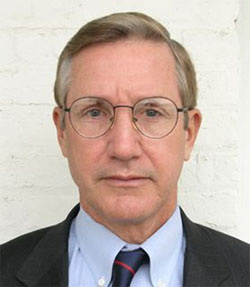
Bruce P. Jackson is a former military intelligence officer and defense industry executive with a long history advocating hawkish U.S. defense policies and supporting neoconservative advocacy campaigns. Perhaps best known for his role in founding the now-defunct Committee for the Liberation of Iraq, an advocacy group that helped build public support for invading Iraq after the 9/11 attacks, Jackson is also the founding director of the Project on Transitional Democracies (PTD), which promotes democratic reform in former Soviet states.
Jackson’s track record includes founding the U.S. Committee on NATO, a precursor to PTD that promoted NATO expansion; serving as an adviser to the American Enterprise Institute and Frank Gaffney’s Center for Security Policy; helping direct the Project for the New American Century; and being a member of a now-defunct Freedom House program called the American Committee for Peace in Chechnya.
Jackson was a U.S. army intelligence officer during 1979-1990 and served as a Pentagon arms control adviser during 1986-1990.[1] While he was at the Office of the Secretary of Defense, Jackson worked under Dick Cheney, Paul Wolfowitz, and Richard Perle.[2] After leaving the Defense Department, Jackson joined Lehman Brothers and, in 1993, became an executive at Lockheed Martin Corporation (then Martin Marietta), where he remained until 2002.[3]
A longtime Republican Party operative, Jackson served as an adviser to the presidential campaigns of both Sens. Bob Dole and John McCain. During the 2000 presidential campaign, he was a delegate committed to then-Governor George W. Bush and chaired the Foreign Policy Subcommittee of the Republican Platform Committee.[4]
Project on Transitional Democracies
After he stepped down from his position at Lockheed Martin in 2002, Jackson focused his attention on the Project on Transitional Democracies. At one time an active organization with several staff members and a website, by 2010 PTD no longer had a website and appeared to exist almost exclusively as a vehicle for Jackson’s advocacy and policy work. On its 2009 Form 990 tax filing, PTD described itself as a “micro-organization which concentrates exclusively on democratic change and societal transformation in the post-Soviet and post-Yugoslav world. We refer to this project as the Project on the Frontiers of Freedom or, alternatively, the Project on Europe’s East.”[5]
Although PTD itself appears largely inactive, Jackson continues to comment on the region from his PTD perch, often taking a more measured tone than his erstwhile neoconservative colleagues. When Russia sent troops into Ukraine’s Crimean peninsula following the 2014 ouster of a pro-Kremlin leader in Kiev, for example, Jackson appeared to rebuff neoconservatives by calling for the United States to exercise caution and to avoid escalating the crisis.
While arguing that Russia had violated Ukraine’s rights to self-determination and sovereignty, Jackson warned against taking an “absolute, maximalist, and nonnegotiable” position on “principles in a country where the United States does not have vital national interests.” Specifically, he cautioned against both U.S. military action and “extreme economic sanctions” against Russia, which he said “would weaken the recovery of European allies, threaten Europe’s energy security, and risk disrupting the international trading system on which life depends.”[6] Instead, Jackson suggested having a small group of European mediators translate Russia’s concerns about the wellbeing of Russian Ukrainians and the Russia-Ukraine relationship into policy recommendations for the new Ukrainian government.[7]
His ideas garnered the ire of hardline neoconservatives, with one writer from the American Enterprise Institute complaining that “Jackson’s proposed response to Russian aggression is to have Europe do the bullying on Russia’s behalf. Instead of imposing sanctions on the aggressor, the EU will issue ultimatums to the victim.”[8]
Jackson’s caution was typical of other recent comments he has made about Russia, Ukraine, and post-Soviet politics more generally. In a 2013 policy paper for the Hoover Institution, Jackson examined the former Ukrainian government’s arrest and imprisonment of former Ukrainian Prime Minister Yulia Timoshenko on charges largely suspected of being politically motivated. Jackson agreed that Timoshenko should be freed, but warned against staging an all-out confrontation with either Ukraine or its allies in Moscow for fear of exacerbating tensions and potentially increasing political repression in both countries. “We have a stark policy choice,” he wrote. “Do we allow the two leading states in the post-Soviet world to enter into crises likely to bring the post-Soviet period to an end, and then just hope for the best? Or, do we now accept that political cultures change over centuries (not merely with the fall of an empire) and that the democratic change we hope will come to the post-Soviet world will arrive over decades of trade, association, and cultural exchange? If the latter, we will have to accept that [Russian President Vladimir] Putin will never share our view of human rights and political values. If the latter, we will not to be able to sacrifice relations with 43 million Ukrainians over a single court case despite our sympathies.”[9] Timoshenko was eventually freed after antigovernment protests brought down the regime in Kiev the following year, precipitating the crisis in Crimea.
Jackson has periodically weighed in on other regional controversies as well. In January 2010, for example, the Baltic News Service asked Jackson his views on the Lithuanian parliament’s investigation of allegations that the CIA ran secret prisons in that country. “I am not aware that there is anything or anybody [in the U.S. government] particularly worried about what’s going on in Lithuania,” he responded. “It is a European sport," he added, "to release damaging information about American activities. I think it would surprise some Lithuanians in Chicago if Lithuania gets into that sport.”[10] Lithuania closed the investigation a year later, but reopened it in 2014 under pressure from European allies and human rights groups, who claimed that Lithuania had operated at least two black site prisons and allowed the use of its airports and airspace for illegal CIA renditions of terrorism suspects.[11]
On other occasions, PTD has engaged in more direct activism. In early 2006, the group made a bid for shares in RosUkrEnergo, a Swiss-based joint energy venture between Ukraine and Russia. Jackson considered the venture an exploitative expropriation of Ukraine’s gas supply. “Due to [PTD's] non-profit status, we will commit to return all profits to the people of Ukraine who are the legal owners of the assets from which the Project would otherwise be improperly and illegally profiting," Jackson said in a PTD press release republished on the Weekly Standard website.[12] He added, seemingly tongue in cheek: "The opportunity to get in on the ground floor of the greatest asset-stripping operation in European history for less than a dollar was something our Board could not pass up. At a minimum, our representatives will be able to attend the secret Board meetings in Switzerland and St. Petersburg where they will get to drink champagne with the FSB and the mafia bosses who have stolen the future of Ukraine."[13]
Activism in Post-Soviet Regions
Jackson was a key conservative activist on the former Soviet Union and supporter of NATO even before founding PTD.
In the lead-up to the U.S. invasion of Iraq, for instance, he helped draft a declaration for the Vilnius 10, a group of Eastern European countries seeking entry into NATO. The declaration supported U.S. action in Iraq with or without UN approval. "Eager for U.S. support for their entry into NATO," reported Tom Barry, "these countries—dubbed the 'New Europe' by Defense Secretary [Donald] Rumsfeld—joined the war coalition, at least in name."[14] The declaration stated: "The newest members of the European community agree that we must confront the tyranny of Saddam Hussein and that the United Nations must now act." According to the American Prospect, "The declaration provided ammunition for the [George W. Bush] administration, but it also created a furor in Western Europe and even in some of the Vilnius 10 countries, where the public, and even the governments, did not want to be identified as part of what one Slovenian writer termed the 'war coalition.'"[15]
Jackson was an avid proponent of NATO expansion and EU integration in the aftermath of the Cold War, but his position on NATO shifted in the wake of the 2008 global recession and the 2010 presidential election in Ukraine, which ushered the Russian-leaning Viktor Yanukovych into power. In an April 2010 article for the Hoover Institution, Jackson wrote that “expansion and integration are huge drains on political and financial capital,” adding that “NATO is a very effective but expensive insurance policy which is not worth purchasing until there is something of political and economic value to secure.”[16] He conceded that in the case of countries such as Ukraine, pushing NATO may not be the best path.[17]
Despite his later appeals for caution, Jackson has been a long-standing critic of Russia, at various times pushing the United States and Europe to pursue antagonistic relations with Moscow. He was a member of the American Committee for Peace in Chechnya (ACPC), a now-defunct organization founded in 1999 by Freedom House. According to the Guardian, "The ACPC heavily promotes the idea that the Chechen rebellion shows the undemocratic nature of Putin's Russia, and cultivates support for the Chechen cause by emphasizing the seriousness of human rights violations in the tiny Caucasian republic. It compares the Chechen crisis to those other fashionable ‘Muslim’ causes, Bosnia and Kosovo—implying that only international intervention in the Caucasus can stabilize the situation there.”[18]
Jackson once characterized tensions between the United States and Russia as a "soft war." According to the Guardian, "Jackson sketches three fronts on the new battlefield of ideas and values between Russia and the west: 'Our institutions versus their Potemkin institutions, free markets versus their coercive state monopolies, and our democracy versus their managed democracy. What we don't want is militarized competition.'"[19]
In 2010, Jackson considered that the “defining policy of the West towards Russia will be a fusion of German economic interdependence and America’s renewed interest in multilateral diplomacy. The engagement of Russia on nonproliferation, Iran sanctions, and other UN Security Council initiatives is likely to persist—at some expense to a vocal activism on human rights and democracy promotion.”[20]
The Defense Industry Activist
Many observers have pointed to apparent conflicts of interest in Jackson’s business and advocacy activities. For instance, while he worked for Lockheed Martin, Jackson cofounded the U.S. Committee on NATO (formerly the U.S. Committee to Expand NATO), which promoted a U.S. foreign policy agenda that potentially benefited the defense industry. Wrote one Jackson critic: "Mr. Jackson was Vice President for Strategy and Planning at Lockheed Martin Corporation, which means that while Jackson was founding the U.S. Committee on NATO and the Project [on] Transitional Democracies; while he was serving on the board of the Project for the New American Century; and while he was chairing the Republican Party subcommittee on foreign policy—all of which advocated more defense—Bruce P. Jackson was also working for a company that stood to gain the most from stepped up spending on weapons.”[21]
A 1997 New York Times article described Jackson's activities in a similar light: "At night, Bruce P. Jackson is president of the U.S. Committee to Expand NATO, giving intimate dinners for Senators and foreign officials. By day, he is director of strategic planning for Lockheed Martin Corporation, the world's biggest weapons maker.”[22]
His allies have also recognized his dual status. An unnamed "prominent neoconservative" once told reporter John Judis that Jackson was the "nexus between the defense industry and the neoconservatives. He translates us to them, and them to us."[23]
Because of Jackson’s prowess as an intermediary, officials in the George W. Bush administration asked him to set up the Committee for the Liberation of Iraq in 2002. “People in the White House said, ‘We need you to do for Iraq what you did for NATO,’” Jackson once said in an interview.[24]