
Eliot Cohen
last updated: January 30, 2017
Please note: The Militarist Monitor neither represents nor endorses any of the individuals or groups profiled on this site.
Affiliations
- Center for a New American Security: Adjunct Fellow (October 2014- )
- Johns Hopkins School of Advanced International Studies: Director, Center for Strategic Studies
- Washington Institute for Near East Policy: Board of Advisers (2014- )
- 2012 Mitt Romney Campaign: Adviser
- Project for the New American Century: Founding Signatory
- Committee for the Liberation of Iraq: Member
- American Enterprise Institute: Member of Council of Academic Advisors
- Naval War College: Member, Strategy Department, 1985
- Harvard College: Assistant Professor of Government and Assistant Dean, 1982-1985
Government
- State Department: Counselor (2007-2009)
- Defense Policy Board: Member (2001-2009)
- Gulf War Air Power Survey: Director and Editor, 1991-1993
- Office of the Secretary of Defense: Policy Planning Staff, 1990
- Department of Defense: Director, National Security Leadership Course
Business
- Strategic Education Associates, LLC: Owner
Education
- Harvard University: PhD, Political Science, 1982
- Harvard College: B.A., Government-Political Science, 1977
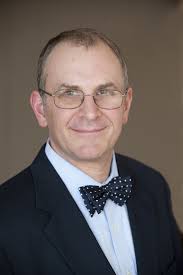
Eliot Cohen, a professor of strategic studies at Johns Hopkins School of Advanced International Studies (SAIS), has been an important supporter of neoconservative-led foreign policy campaigns. Sometimes touted as “the most influential neocon in academe,”[1] Cohen had multiple roles in the George W. Bush administration—including advising Secretary of State Condoleezza Rice and serving on the Defense Policy Board during Donald Rumsfeld’s tenure as defense secretary—and was closely affiliated with the circle of hawks who surrounded Vice President Dick Cheney.[2]
Despite his close ties to the Republican Party, Cohen has joined other neoconservatives like Robert Kagan in opposing Donald Trump. In a January 2017 article for The Atlantic titled “A Clarifying Moment in American History,” Cohen decried Trump’s first week as president, arguing that while there was little surprise in the administration’s moves given Trump’s campaign statements, it revealed that this presidency would likely end in “calamity.” He wrote: “Precisely because the problem is one of temperament and character, it will not get better. It will get worse, as power intoxicates Trump and those around him. It will probably end in calamity—substantial domestic protest and violence, a breakdown of international economic relationships, the collapse of major alliances, or perhaps one or more new wars (even with China) on top of the ones we already have. It will not be surprising in the slightest if his term ends not in four or in eight years, but sooner, with impeachment or removal under the 25th Amendment.”

Several months earlier, in August 2016, near the end of the heated presidential primary campaign, Cohen was one of several dozen former “national security officials” from Republican administrations as far back as Richard Nixon who published an open letter saying they would not vote for Trump. They argued that he would be a “dangerous president,” that he appeared to “lack basic knowledge about and belief in the U.S. Constitution,” has “little understanding of America’s vital national interests,” displays “an alarming ignorance of basic facts of contemporary international politics,” and persistently “compliments our adversaries and threatens our friends and allies.”
Advocacy Affiliations
In October 2014, the “liberal hawk” think tank Center for a New American Security (CNAS) announced that Cohen was joining the center as an adjunct senior fellow contributing on defense and national security issues.In announcing the hiring, CNAS President Richard Fontaine described Cohen as “one of the nation’s foremost thinkers and practitioners in national security affairs.” Michèle Flournoy, cofounder of CNAS and former undersecretary of defense for policy in the Obama administration, added that Cohen “has a deep understanding of policy issues as well as the larger strategic and historical context in which policy decisions are made.”[3]
In November 2013, Cohen also joined the board of advisors of the Washington Institute for Near East Policy, a spinoff of the American Israel Public Affairs Committee.[4]
Previously, Cohen advised or promoted the work of numerous neoconservative organizations that advocated invading Iraq and an expansion “war on terror.” These included the Committee for the Liberation of Iraq, the Project for the New American Century, and the American Enterprise Institute.
On Obama
Cohen was a vociferous critic of Barack Obama, sometimes making seemingly wild accusations about the administrations efforts to pursue negotiations. Ignoring the massive military commitments that Obama made during his presidency, Cohen accused Obama of being insufficiently committed to using military force and of being “promiscuous” in its diplomacy with traditional U.S. adversaries.[5] Diplomacy, Cohen wrote, only works when the military is seen as a “growling mastiff on the leash.”[6]
Cohen blamed the Obama administration for the “wreckage” of U.S. foreign policy and his failure to understand “war is war.” In an op-ed written for theWashington Post during the 2014 Gaza-Israel War, Cohen in effect called for President Obama to support Israel waging a war in Gaza similar to how U.S. Civil War general William Sherman waged war against the South—which Cohen described as marked by “devastation” and the burning “out thoroughly” of the Confederate-controlled Shenandoah Valley.[7]
Cohen also censured Obama’s approach on Russia during the 2014 Ukraine crisis and called for a more provocative approach. “Absent a severe penalty—one that inflicts pain where Putin can feel it, to include Russia’s economy and his personal wealth and control of that country—the lesson learned will be, ‘You can get away with it,’” Cohen purported in a 2014 Washington Post op-ed.[8]
Similarly, Cohen opposed Obama’s 2013 nomination of Chuck Hagel to lead the Department of Defense on the grounds that Hagel had “already made it clear that he does not want to engage in a confrontation with Iran.” What was needed, Cohen said, was someone “who looks as if he’s perfectly capable of waging war against you and happy to do it.”[9]
Cohen called the Obama administration’s approach to Syria “feckless.” In a 2013 Wall Street Journal op-ed, Cohen echoed many neoconservative supporters of an attack by arguing that U.S. “credibility” depended on the willingness of the Obama administration to strike Syria after the regime’s alleged use of chemical weapons in the country’s civil war.
“For better or for worse,” he wrote, “the credibility not only of this president, but of America as a global power and a guarantor of international order, is on the line.” If Washington decides against a strike, Cohen claimed, “profound conclusions will be drawn by a China ready to bully its neighbors, by a North Koreawhose scruples are already minimal, and by an Iran that has already killed many Americans in a covert war waged against us in Iraq and Afghanistan.”[10]
Cohen suggested that a “serious bombing campaign” against “substantial targets” in Syria would be necessary, arguing that a”bout of therapeutic bombing is an even more feckless course of action than a principled refusal to act altogether.”
He warned that such an attack would entail “civilian casualties, at our hands,” as well as U.S. casualties, “because the idea of a serious military effort without risk is fatuous.”[11] He has argued that, given the risks, the president should seek “congressional support and authorization as a matter of good politics” and “out of respect for democratic legitimacy,” but also insisted that “Barack Obama does not need congressional approval to launch a war.”[12]
Cohen has frequently expressed contempt for democratic legitimacy when it comes to the use of force, complaining openly about public exasperation with the neoconservative agenda. Reasoning that most Americans had “not served in the armed forces,” that “no one has raised our taxes to pay for war,” and that “Americans can change the channel if they find the images too disturbing,” Cohen suggested in September 2013 that average Americans had no right to be reticent about sending soldiers into new wars.
“For the great mass of the American public,” he wrote, and “for their leaders and the elites who shape public opinion, ‘war-weariness’ is unearned cant, unworthy of a serious nation and dangerous in a violent world.” For Obama especially, Cohen added, “to confess to war-weariness is to confess weakness.”[13]
Calling Cohen’s tirade against war-weariness “one of the most offensive columns I’ve read in a long time,” Mother Jones blogger Kevin Drum nominated Cohen for his “Asshole of the Year” award and quipped, “Cohen is simply apoplectic at the thought of anyone in America thinking they have a right to be tired of war merely because we’ve been at war for 12 continuous years for virtually zero observable gain.”[14]
For his part, Cohen appeared to disregard the possibility that disillusion with the policies he and other neoconservatives had advocated played any role in the public’s increasing skepticism about foreign interventions. The real problem, according to Cohen, is that younger Americans”take [American] primacy and the stability and prosperity it has brought for granted,” and that “leaders of the isolationist movement … speak loudly on Capitol Hill.”[15]
Romney Campaign
In 2011-2012, Cohen served as an adviser to the Mitt Romney presidential campaign, notably authoring a white paper for the campaign that was intended to provide a strategy “to secure America’s enduring interests and ideals.”
Titled “The American Century”—a not-so-subtle allusion to the nationalistic jingoism of the Project for the New American Century, whose work Cohen supported—the white paper argued that President Barack Obama’s efforts to bridge the sharp diplomatic divide that emerged between the United States and the international community during the Bush years amounted to “a form of unilateral disarmament in the diplomatic and moral sphere.”
Cohen also argued that Obama has promoted the idea of “America in decline,” ignoring how the policies Cohen himself promoted during the Bush administration—like invading Iraq—played a key role in encouraging this notion both in and outside the United States.
He wrote, “This view of America in decline, and America as a potentially malign force, has percolated far and wide. It is intimately related to the torrent of criticism, unprecedented for an American president, that Barack Obama has directed at his own country.”[16]
Romney’s views, according to Cohen, stood in stark contrast to Obama’s. “Mitt Romney rejects the philosophy of decline in all of its variants,” Cohen wrote. “He believes that a strong America is the best guarantor of peace and the best patron of liberty the world has ever known. That is the central lesson Romney finds in the history of America’s role on the world stage.”[17]
In a Boston Globe op-ed coauthored with fellow Romney advisers Meghan O’Sullivan and Eric Edelman shortly before the election, Cohen summed up his critique of the Obama administration in an argument that relied on nebulous notions of American strength, “Because of the last four years we face a world in which our enemies do not fear us, our friends do not believe they can trust us, and those who maneuver between the two camps feel that they will not get in trouble by crossing us.”[18]
Neocons and Hawks
Cohen has been closely affiliated with neoconservatism for decades. He was a founding signatory of the Project for the New American Century—the pressure group founded by William Kristol and Robert Kagan in 1997 that played an important role building support for the invasion of Iraq—and advised the now-defunct Committee for the Liberation of Iraq, which was founded in 2002 by former Lockheed Martin vice president Bruce Jackson with the sole purpose of promoting the overthrow of Saddam Hussein.
As of 2014, Cohen was also a member of the Council of Academic Advisers of the American Enterprise Institute (AEI), which has served as a key bastion of neoconservative ideological promotion. Serving alongside Cohen on the council have been numerous other long-standing neocons, including Gertrude Himmelfarb and Aaron Friedberg.[19]
Bush Years and the Iraq War
Cohen gained media attention in the years leading up to the Iraq War when President George W. Bush and many influential administration figures appeared in public holding Cohen’s 2002 book Supreme Command. The book argued that civilian leaders often have more strategic sense than military leaders.
James Mann, in his 2004 book Rise of the Vulcans, commented on Bush’s purported reading material: “Few recognized the symbolism and subtext of [Bush] carrying Cohen’s book, the determination not to let U.S. military leaders play the powerful political role Powell had exerted at the time of America’s first war with Iraq. Cheney and [Paul] Wolfowitz certainly understood.”[20]
MacKubin Owens, a scholar at the right-wing Ashbrook Center for Public Affairs , wrote, “As Cohen pointed out in his indispensable book Supreme Command, the normal theory of civil-military relations has rarely held. … The fact remains that wars are not fought for their own purposes but to achieve policy goals set by the political leadership of the state. And so it is with President Bush and Iraq. He has outlined his plan and chosen the generals he believes can implement it.”[21]
By 2005, however, Cohen seemed less confident in civilian leaders’ ability to manage a war. In a 2005 Washington Post op-ed titled “A Hawk Questions Himself as His Son Goes to War,” Cohen argued that although the decision to invade Iraq was correct, “what I did not know then that I do know now is just how incompetent we would be at carrying out that task.”[22]
At Johns Hopkins’ SAIS, a beltway institute that has been a base for numerous prominent neoconservatives like Paul Wolfowitz and Gary Schmitt , Cohen heads the Center for Strategic Studies, a program founded in 2003 with a generous grant from Philip Merrill , the now-deceased banker, minor media mogul, and advisor to the hawkish Center for Security Policy (CSP).[23]
In 2001, Cohen was one of a host of hardliners given seats on the Pentagon’s Defense Policy Board (DPB), which at the time was chaired by Richard Perle , a key supporter of the Iraq War based at AEI. (Others with the DPB at the time included James Woolsey , Newt Gingrich , and Richard Allen .) Shortly after the 9/11 attacks, Cohen was part of a core group of neoconservatives who pushed the idea that Iraq should be a primary target in the war on terror—despite any actual connection between Iraq and the 9/11 terrorists.
A founding member of the Project for the New American Century (PNAC), Cohen contributed his name to PNAC’s notorious September 20, 2001 letter to President Bush, which argued that even if Saddam Hussein was not connected to the terrorist attacks, “any strategy aiming at the eradication of terrorism and its sponsors must include a determined effort to remove Saddam Hussein from power in Iraq.”
In a Wall Street Journal editorial a few weeks after 9/11, Cohen provocatively proposed the idea that the war on terror is World War IV. Other prominent neoconservatives—including former Commentary editor Norman Podhoretz , DPB member (and former CIA director) James Woolsey, and CSP’s Frank Gaffney —quickly adopted the term World War IV in their writings.[24]
In his Journal op-ed, Cohen considered several potential names for the war that began, he argued, “well before Sept. 11.” After dismissing the “9/11 War” and the “Afghan War,” Cohen proposed: “A less palatable but more accurate name is World War IV. The Cold War was World War III, which reminds us that not all global conflicts entail the movement of multimillion-man armies, or conventional front lines on a map. The analogy with the Cold War does, however, suggest some key features of that conflict: that it is, in fact, global; that it will involve a mixture of violent and nonviolent efforts; that it will require mobilization of skill, expertise, and resources, if not of vast numbers of soldiers; that it may go on for a long time; and that it has ideological roots.”[25]
Arguing that the invasion of Afghanistan was merely “one front” in this war, Cohen set out an ambitious agenda based on some hyperbolic assertions, including the false claim that Saddam Hussein supported Al Qaeda.
Among Cohen’s proposals were: pushing “free and moderate governance in the Muslim world,” especially in Iran, arguing that the “overthrow of the first theocratic revolutionary Muslim state and its replacement by a moderate or secular government … would be no less important a victory in this war than the annihilation of [Osama] bin Laden”; targeting all regimes that sponsor terrorists, with Iraq being “an obvious candidate, having not only helped al-Qaida, but attacked Americans directly (including an assassination attempt against the first President Bush) and developed weapons of mass destruction”; and finally, mobilizing the U.S. public “in earnest” for The Long War.[26]
In late 2006, with the Iraq War turning sour and conservative “realists” making a comeback in the form of the Iraq Study Group (ISG) led by former Secretary of State James Baker and former Rep. Lee Hamilton (D-IN), Cohen expressed growing frustration with the way the Bush administration was waging the war on terror.[27]
In early 2007, then-Secretary of State Rice echoed the ISG’s call for a “diplomatic offensive” toward Iran and North Korea. Soon after the ISG released its final report, Cohen criticized the group in a Wall Street Journal editorial, “This is a group composed, for the most part, of retired eminent public officials, most with limited or no expertise in the waging or study of war. It consists of individuals carefully selected with an eye to diverse partisan and other irrelevant personal characteristics. These worthies, with not one chairman but two (for balance, of course), turned to several score experts known to disagree vehemently with one another about the best course of action to be pursued in Iraq.”[28]
Cohen concluded, “The creation of the Iraq Study Group reflects the vain hope that well-meaning, senior, former public officials can find ideas that have not already occurred to people inside government; that those new ideas can redeem incompetent execution and insufficient resources. … This is no way to run a war, and most definitely, no way to win it.”[29]
Despite his differences with the State Department, particularly with Rice, in 2007 Cohen was asked to serve as Rice’s counselor. Cohen’s appointment came as surprise to many observers because it came on the heels of several of Rice’s diplomatic overtures in hotspots like North Korea and Iran.
“Condi may feel she needs to have a neocon right next to her to protect her flanks,” surmised Chris Nelson, editor of the Washington insider newsletter the Nelson Report. “And, if she’s really planning to put her foot down on the Israelis, which [Washington] will have to do if it wants to get a real process with the Palestinians under way as part of a bigger regional deal with the Saudis and Iranians, then a guy like Cohen up there on the [State Department’s] seventh floor who is in on it and can claim influence on the outcome can help.”[30]
On Kosovo
In 2001 Cohen co-edited War Over Kosovo, a compendium of writings about the Balkan conflict. His coeditor was Andrew Bacevich, a critic of neoconservative influence on U.S. policymaking who later wrote The New American Militarism (2005). Reviewing the Kosovo book for Foreign Affairs, Stephen Biddle observed that Bacevich and Cohen see the conflict as marking the emergence of a fundamentally new “American way of war.”
According to Biddle, the authors consider the United States particularly suited to “crusades to end fascism or save democracy,” but not suited “to the dirty work of imperial policing to secure second- or third-tier interests.” Thus, to get public support for intervening in places like Kosovo, the Clinton administration decided to do it “on the cheap” through such tactics as air campaigns that minimize American casualties.
Biddle’s review appeared just as the administration began building its case for invading Iraq. President Bush, he concluded, “casts a new war in similar terms yet draws back from asking Americans to make any major sacrifices to wage it. If U.S. aims prove achievable without pain, then the Bush administration will deserve the highest praise from a grateful nation and will be able to justly claim mastery of a new way of war that all should acclaim. If not, however, then one can be forgiven for wondering whether the style of warfare waged in Kosovo has not outlived its usefulness.”[31]